China Shanghai Short Trip First Time Travel Guide for Short Holidays

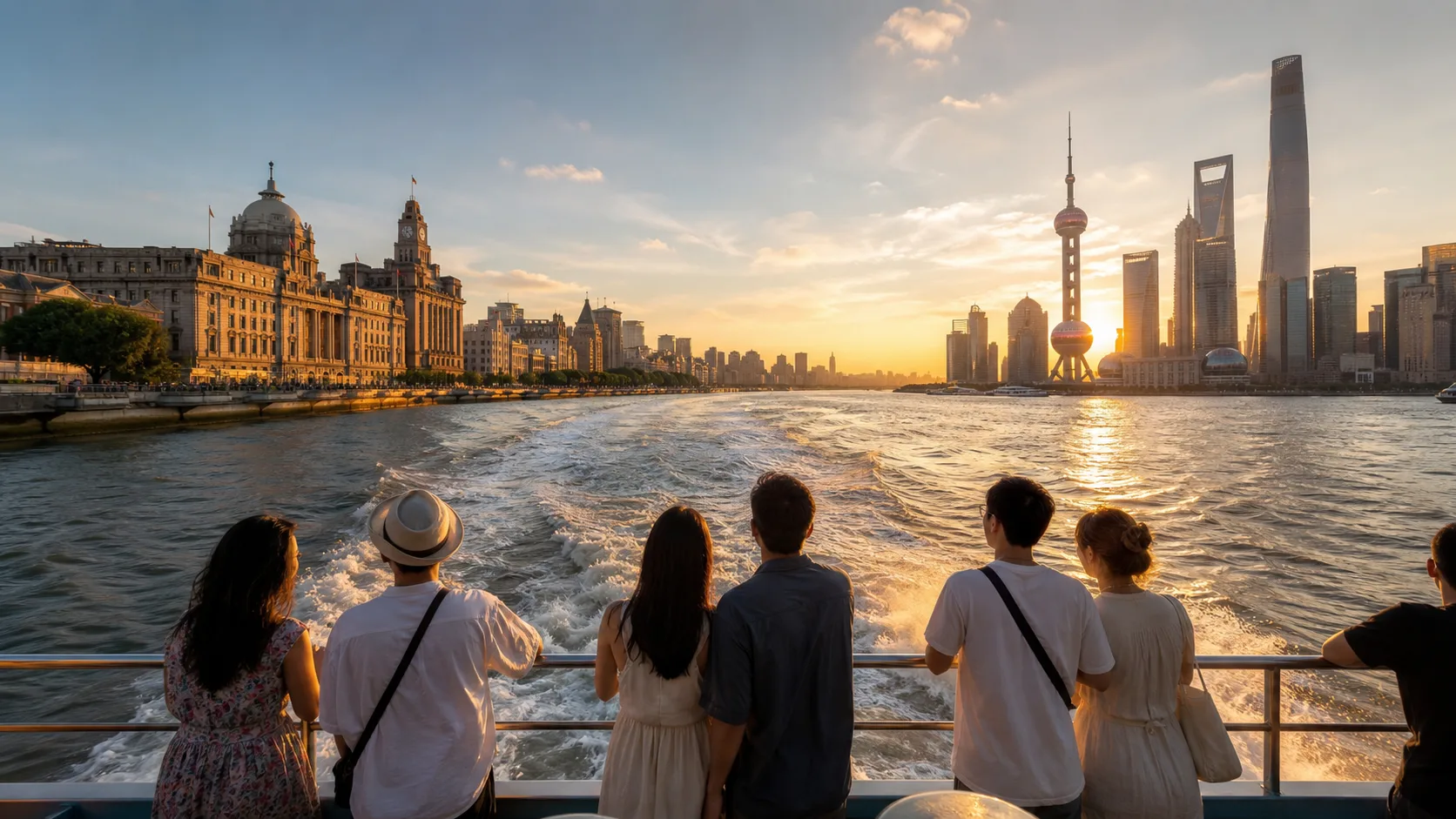
If you only have a short holiday, Shanghai is one of the easiest China trips to plan well. The city gives you a very clear first-time structure: efficient airport access, a strong metro network, walkable heritage areas, modern skyline views, and enough food and shopping to fill three or four days without feeling rushed. For a Singapore-based traveler, it is especially useful because you can build a simple, low-stress city break instead of trying to cover too much of China at once.
1. Fast Answer
For a first Shanghai trip on a short holiday, keep the plan simple: stay near the center, use the metro for most movement, and split the city into a classic old-and-new loop. The best first-timer route is usually Bund area, Nanjing Road, Yu Garden, French Concession, a skyline stop such as a tower or rooftop, and one relaxed meal-heavy evening in a neighborhood with easy transport.
The big mistake is trying to treat Shanghai like a huge checklist city. It is better to pick a compact base, book the main museums or observation decks only if you really want them, and leave room for weather, queue time, and slow meals. If you are flying from Singapore, the city works well for 3D2N or 4D2N breaks, but the trip is only enjoyable if you do not overbook every hour. Think efficient, not exhaustive.
Use the first day to recover from the flight and understand the city layout. Use the second day for the core landmarks. Use the third day for a neighborhood walk, shopping, or one focused side trip. If you have a fourth day, add depth rather than distance: better food, a museum, a tea break, or a second skyline view.
2. Context You Need
Shanghai is China’s most internationally legible big city. For a first-time traveler, that matters because the city gives you a clearer entry point into mainland China travel than places that rely more heavily on local language, car-only movement, or very specific seasonal planning. Shanghai is large, but the parts most visitors care about are concentrated enough that you can make a good short trip without feeling lost.
The city’s appeal comes from contrast. You get colonial-era riverfront views at the Bund, commercial energy around Nanjing Road, old-town texture around Yu Garden, leafy urban streets in the French Concession, and a dramatic modern skyline across the river in Pudong. A short trip works because these areas are different enough to feel like a complete introduction, yet close enough to connect by metro, taxi, or a short ride-hailing trip.
For a Singapore-based reader, Shanghai is usually best treated as a city break with a strong logistics backbone. It is not a “move around by instinct” destination; it is a “pick your base, move intentionally, and enjoy the city in layers” destination. English is more available than in many smaller Chinese cities, but you should still assume that mobile payment, translation apps, and a bit of route planning will make the trip much smoother.
The other reason Shanghai is a smart first China short trip is pacing. You do not need to spend long distances between major sights, so the city suits travelers who want a good return on a limited number of days. That makes it ideal for a public holiday, school break, or long weekend trip where your goal is to come back feeling like you actually saw something, not just transited through a city.
3. Step-by-Step Guide
Start by deciding what kind of Shanghai trip you want. Most first-time visitors really want one of three versions:
| Trip style | Best for | Core areas |
|---|---|---|
| Classic first-timer | First visit, photo spots, easy logistics | Bund, Nanjing Road, Yu Garden, Pudong skyline |
| Food-and-stroll trip | Slower pace, cafes, local meals, walking | French Concession, Xintiandi, heritage streets |
| Balanced short holiday | People who want a bit of everything | Central Shanghai with one skyline stop and one neighborhood day |
Once you choose the style, build the trip in sequence.
1) Pick a central base
For a short holiday, location beats hotel flash. A central hotel near a major metro interchange is more valuable than a larger room far from the core area. If this is your first Shanghai trip, look for a base that makes it easy to reach both Puxi and Pudong without spending half the day in transit.
The practical sweet spot is usually somewhere that connects easily to the metro and sits within a short ride of the Bund, People’s Square, Nanjing Road, or the French Concession. That lets you go out, come back to rest, and go back out again without feeling like every excursion is a project.
2) Decide your arrival day plan
If you arrive in the afternoon or evening, do not schedule major sightseeing right away. Use arrival day for check-in, a simple neighborhood walk, and an easy dinner. That first night should help you reset time, not exhaust you.
3) Set your anchor sights
For a first trip, choose one landmark from each category:
- One riverfront or skyline view
- One heritage or old-town area
- One shopping or pedestrian street
- One slow neighborhood for food and coffee
That is enough for a short holiday. If you want to add a museum or observation deck, do it only after you have fixed the base route.
4) Build the days in geographic order
A good Shanghai short-trip pattern is:
- Arrival and neighborhood dinner.
- Bund, Nanjing Road, and Yu Garden in one long sightseeing block.
- French Concession, Xintiandi, and a slower food day.
- Optional side trip, shopping, or a final skyline stop before departure.
This approach reduces backtracking. It also keeps your energy aligned with the city’s structure: old center, modern riverfront, and relaxed inner neighborhoods.
5) Book only the parts that benefit from advance planning
Not everything in Shanghai needs to be booked early. Some experiences are spontaneous by nature, such as walking the Bund or exploring a café district. Others may be worth advance planning if you are traveling in a busy period or want a specific time slot, such as popular observation decks, certain museums, or restaurant reservations.
Use a simple rule:
- Book if the attraction has timed entry, limited capacity, or a long queue risk.
- Do not overbook if the place is better enjoyed flexibly.
6) Keep your daily movement short
Shanghai rewards travelers who cluster sights. The city is easy to ruin with zig-zagging. A first-timer should aim for two main blocks per day, not five unrelated stops. For example:
- Morning Bund and riverfront.
- Afternoon Yu Garden and old-town streets.
- Evening Nanjing Road or dinner in a different district.
7) Use this practical packing checklist
- Passport and any required entry documents.
- A phone with working data roaming or a China eSIM.
- Mobile payment setup where possible.
- Offline maps and translation app.
- Comfortable walking shoes.
- A light layer for air-conditioned indoor spaces.
This is the kind of trip where convenience matters more than gear. If you can move, pay, and navigate without friction, Shanghai becomes a very easy city.
4. Costs, Hours, and Logistics
Shanghai is not a low-cost destination in every category, but it is very manageable if you spend carefully. Transport is generally affordable, while sightseeing and dining vary widely depending on how premium you go. For a short holiday, the main risk is not one expensive item; it is death by a thousand convenience choices such as taxis for every hop, premium drinks every night, and high-end observation deck tickets you do not really need.
Typical cost buckets
| Item | Typical feel | Planning note |
|---|---|---|
| Metro ride | Low-cost, usually only a few RMB for short to medium trips | Best value for most inner-city movement |
| Taxi or ride-hailing | Moderate for short hops, higher in peak time or long cross-city routes | Useful after late dinners or with luggage |
| Casual meal | Usually affordable relative to most major global cities | Food streets and local chains help control budget |
| Mid-range dinner | Can add up fast in stylish districts | Reserve for one or two special meals |
| Attraction ticket | Free to several tens of RMB for many sights, more for premium decks and special exhibits | Check whether a timed booking is needed |
Opening hours and timing habits
Many major Shanghai sights follow a fairly standard daytime rhythm, often with morning-to-early-evening operating windows. That said, exact hours can change by season, weekday, holiday period, maintenance, and special events. For first-time planning, the safest approach is to assume that popular spots are best visited earlier in the day, then confirmed on the official listing before you leave your hotel.
There is one Shanghai rule that matters more than people expect: the city can feel very different between weekday and weekend. Streets around the Bund, Nanjing Road, and major shopping zones are often busier after work and on weekends, while museums and observation decks can get peak-hour pressure on holidays. If your trip includes a public holiday, build in more buffer time than you think you need.
Transport details
The metro is the default best option for most first-timers. It is fast, broadly predictable, and ideal for the city center. The two-airport structure also matters:
- Pudong is the main long-haul gateway for many international arrivals.
- Hongqiao is extremely useful for domestic connections and some shorter regional routes.
If you are landing with luggage and arriving late, a taxi or ride-hailing trip can be worth it for your first transfer. After that, the metro usually takes over for daily movement. If you want a fast airport-to-city experience and your route suits it, the Maglev is a memorable option, but it is more of a transport novelty than the cheapest solution.
Payment methods
Shanghai is much easier when your payment setup is ready before you land. In many places, mobile payment is the norm, and cash may not be the smoothest fallback for every situation. Foreign travelers should make sure they can pay in a way that works across transport, convenience stores, and restaurants. If you have not traveled to mainland China recently, this is one of the most important practical differences to prepare for.
2026 caveats
The most important 2026 caveat is that travel and payment systems keep evolving. Entry rules, transit rules, app compatibility, and ticketing flows can change. Before booking non-refundable hotels or timed attraction tickets, check the current official guidance and be conservative about any plan that assumes a policy will stay the same all year.
For a short holiday, the smartest move is to keep your itinerary flexible enough that one changed rule does not break the trip. Use refundable bookings where they matter and leave one daily slot open in case a line is unexpectedly busy, weather turns bad, or you discover a better food or neighborhood plan after arriving.
5. Variations and Edge Cases
Shanghai looks straightforward on paper, but your trip changes a lot depending on season, budget, and the type of traveler you are.
If you are traveling in summer
Summer in Shanghai can be hot, humid, and tiring for long walks. That changes the shape of the trip. You should reduce outdoor cross-city walking, avoid packing too many afternoon open-air stops, and place more weight on metro connections, indoor meals, and shaded neighborhoods. Summer is not impossible; it just requires better pacing.
If you are traveling in winter
Winter is easier for walking, but the weather can still be damp and chilly enough to make riverside sightseeing less enjoyable for long stretches. The practical response is to keep the same route, but shorten outdoor segments and add more indoor breaks between major stops.
If your budget is tight
Shanghai can be done on a moderate budget if you prioritize transport efficiency, simple meals, and free walking areas. The easiest savings come from:
- Staying centrally so you do not spend extra on transport.
- Using the metro instead of repeated taxis.
- Choosing one premium attraction instead of three.
- Eating one nice meal per day rather than every meal.
If you are traveling as a couple
A couple’s trip usually benefits from one slower neighborhood and one scenic evening. Shanghai is excellent for this because it has enough atmosphere to feel like a proper getaway, but enough structure that you do not need a complicated booking program. A simple dinner, a riverfront walk, and one memorable skyline stop is often enough.
If you are traveling with parents
For older travelers, reduce transfer fatigue. Put the hotel closer to the core, avoid too many subway changes, and consider taxis for the first and last part of the day. Use breaks more aggressively than you would on a solo trip. The city is more enjoyable when nobody feels rushed from one landmark to another.
If you want a side trip
A short Shanghai holiday is not automatically the right time to force in nearby cities. Side trips can be good, but only if you have enough days left after the core city route. If your trip is only three days, Shanghai itself is usually the better use of time. If you have four or more days, you can consider a controlled side trip, but only if it does not turn the trip into train logistics instead of a holiday.
6. Mistakes to Avoid
The most common Shanghai mistakes are very predictable.
First, do not overestimate how much you can do in one day. Shanghai is well connected, but distance still costs time, and a “just one more stop” plan often turns into a tiring zig-zag. Keep your itinerary grouped by area.
Second, do not ignore payment setup. This is one of the easiest ways to lose time on arrival. If your mobile payment, roaming, or translation setup is not ready, even small tasks become annoying.
Third, do not book every meal and attraction like a fixed tour. Shanghai is a good city for a short holiday because it rewards flexibility. Leave some room to follow a neighborhood that feels better in person than it did in your notes.
Fourth, do not assume weather will cooperate. If your plan depends entirely on long outdoor walks, you are one rainy afternoon away from a frustrating day. Always keep at least one indoor or semi-indoor backup.
Fifth, do not chase breadth over quality. It is better to have one excellent Shanghai short trip than to say you “saw a lot” but remember very little.
7. FAQ
How many days do I need for first-time Shanghai?
Three days is enough for a compact introduction if you keep the route tight. Four days is more comfortable because it gives you one slower half-day for shopping, food, or a museum. If you only have a short holiday, I would rather you do less well than more badly.
Is Shanghai good for first-time China travelers?
Yes. Shanghai is one of the easiest first China city breaks because the city is large but navigable, and the major tourist zones are familiar enough for a first-timer to orient quickly. It is a strong “start here” destination before you try more complex regional trips.
Should I stay near the Bund?
If your budget allows it, staying near the Bund or another central interchange area makes a first trip easier. But you do not need to be directly on the waterfront to have a good trip. The practical goal is fast access, not the most famous hotel address.
Do I need to book everything in advance?
No. Book the pieces that have capacity limits or timed entry. Leave ordinary meals, neighborhood walks, and casual sightseeing flexible. Overbooking is the easiest way to make Shanghai feel more exhausting than it should.
Is the metro enough?
For most first-time travelers, yes. The metro handles the bulk of city movement very well. You may still want taxis or ride-hailing for late-night returns, luggage transfers, or especially hot or rainy stretches, but the metro should be your default.
What is the best first-timer area to focus on?
If you only have a few days, focus on the Bund, People’s Square or Nanjing Road area, Yu Garden, and the French Concession. That gives you a strong mix of skyline, old-city atmosphere, shopping energy, and calmer neighborhood texture.
Is Shanghai better for food or sights?
It is strong for both, but the best short-trip experience usually comes from combining them. A Shanghai trip is better when you use sights to anchor the day and food to define the pace between those sights. That is why the city works so well for a short holiday.
8. Next Steps
If you are planning Shanghai for a short holiday, the next move is simple: choose your trip length, choose a central hotel area, and decide whether your trip is a classic sightseeing break or a slower food-and-neighborhood trip. Once those three choices are made, the rest of the plan becomes easy.
Do not start with a giant list. Start with one base, one skyline view, one heritage area, and one relaxed neighborhood block. That is enough to make a first Shanghai trip feel complete without turning it into a rushed checklist.
Related: china-shanghai-short-trip-esim-and-wifi-guide-for-singapore-travelers
Related: china-shanghai-short-trip-tour-vs-diy-guide-for-singapore-travelers
Related: china-shanghai-short-trip-itinerary-for-singapore-travelers