China Shanghai Short Trip Culture Guide for First Time Visitors

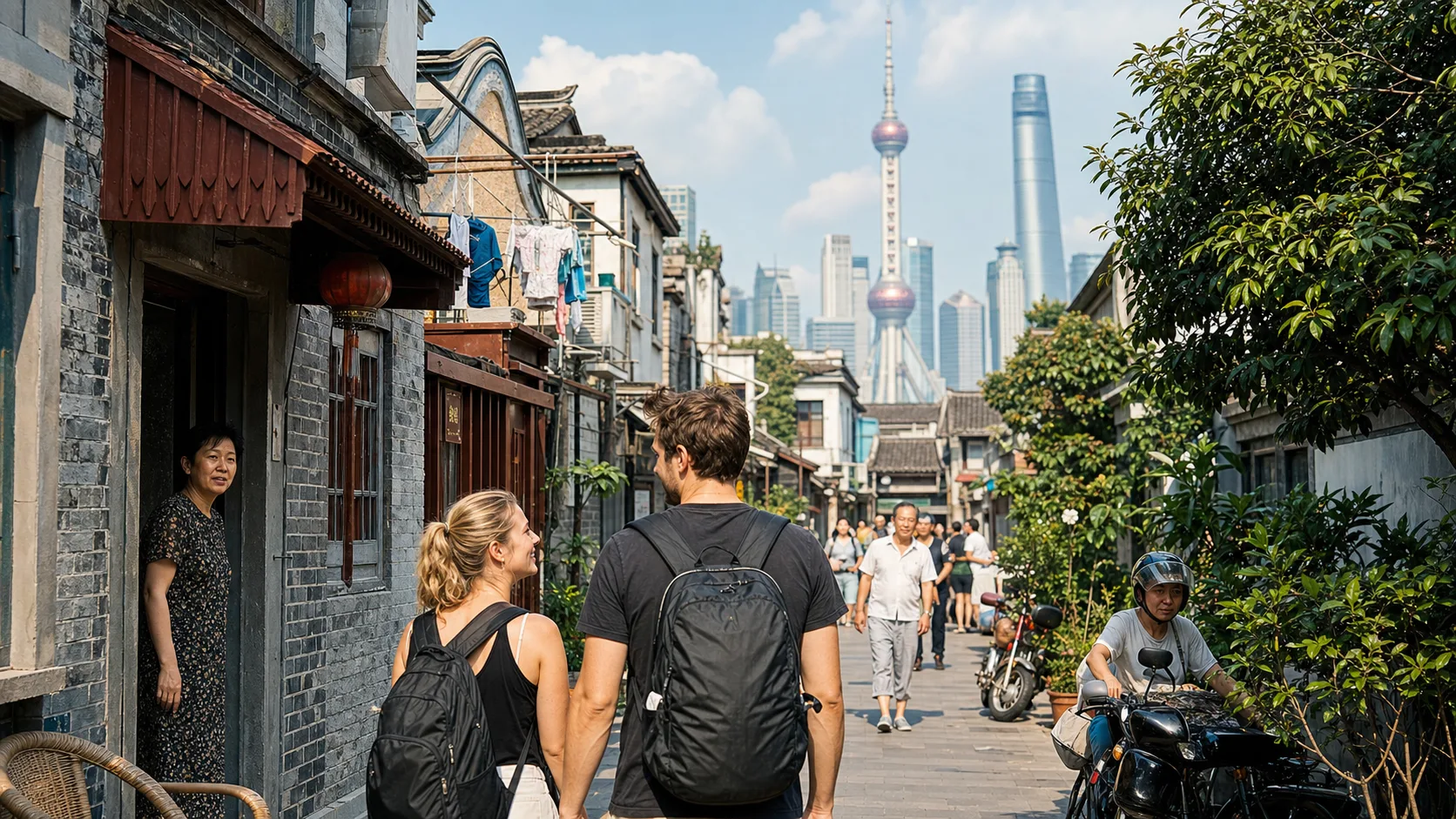
If you only have a short window in Shanghai, the right approach is not to try to "see everything." It is to understand the city's rhythm quickly enough that you can move with confidence. Shanghai rewards first-time visitors who plan around neighborhoods, transit, meal timing, and payment habits instead of trying to improvise each stop. The result is a trip that feels polished instead of rushed, even if you only have two or three full days.
Fast Answer
Shanghai is one of the easiest places in China for a short first trip if you treat it like a city of layers. The skyline, old lanes, riverfront, museums, shopping streets, and food neighborhoods all sit close together, but they do not work like a simple sightseeing grid. You need to choose a base, group attractions by district, and assume that the most efficient trip is the one with the fewest cross-city moves.
For a Singapore-based traveler, the smartest framing is simple: Shanghai is not a "checklist city." It is a city where culture shows up in transport behavior, queue discipline, food ordering, payment habits, and how you move between modern commercial areas and older residential streets. If you understand that before arrival, everything becomes easier. A short trip becomes more than a skyline stopover, and a long weekend starts to feel like a real city experience instead of a collection of photo stops.
If your trip is only two nights, focus on the Bund, one major museum or heritage area, one food lane or neighborhood walk, and one evening in a district that shows Shanghai at night. If you have three or four nights, add a slower cultural half-day, such as a classical garden, an art museum, or a riverfront walk that is not built around shopping. The biggest mistake is treating Shanghai like a theme park of famous landmarks. The better strategy is to let the city show itself through contrasts: old and new, formal and casual, local and international, fast and slow.
Context You Need
Shanghai matters because it is often the first Chinese city where first-time visitors realize how modern, dense, and internationally oriented mainland travel can feel while still being distinctly Chinese. That mix is what makes it useful for a short trip. You can arrive with limited time, limited Mandarin, and a packed itinerary, yet still have a trip that is practical if you understand the basics of how the city works.
For first-time visitors, the cultural background that matters most is not a deep dynastic history lesson. It is the contrast between Shanghai as a treaty-port era commercial center, a 20th-century financial and industrial city, and a present-day global metropolis. The architecture, street patterns, and commercial energy still reflect those layers. You see it when a colonial-era façade sits near a glass tower, when a neighborhood lane survives beside a luxury mall, or when a traditional tea house and a high-end coffee chain occupy the same walkable radius.
That layered identity is why Shanghai can feel more legible than some other major Chinese cities on a short trip. The city is big, but it is organized around recognizable districts and public transit. A traveler who stays near a well-connected metro line can move through the center without needing to plan around private cars. Even better, Shanghai is used to visitors, so signage, service expectations, and tourism infrastructure are generally more forgiving than many newcomers expect.
Culture in Shanghai is often expressed through pace. The city can look polished and international, but it still has a distinctly local cadence. People move with purpose, meals are scheduled around convenience, and the city is full of routines that make sense once you stop expecting a single "authentic Shanghai experience." There are business districts, riverside promenades, neighborhood snack streets, museum blocks, and restored heritage lanes. Each one gives a different answer to the same question: what does a modern Chinese city look like when it is trying to preserve a sense of self?
For a Singapore traveler, this usually feels familiar in one important way: Shanghai is a city where efficiency matters. The best days are the ones where your hotel location, transit plan, and meal timing all support one another. If you arrive expecting to wander aimlessly between attractions, the city can feel larger than it is. If you arrive with a district-based plan, it becomes much easier to enjoy the cultural surface without wasting time on logistics.
Step-by-Step Guide
The cleanest way to experience Shanghai on a short trip is to build the visit in layers: arrival, neighborhood selection, a daily route pattern, and a final evening that leaves room for atmosphere instead of exhaustion.
1. Choose a base that reduces friction
Your hotel choice matters more in Shanghai than in many smaller cities because the city is spread out enough that the wrong location can eat your time. For a first visit, staying near a central metro interchange or a district with easy access to the Bund, People's Square, Jing'an, or Lujiazui usually works best. The goal is not luxury for its own sake. The goal is to reduce transfer count.
If you are arriving from Singapore on a short trip, you will likely land tired, hungry, and somewhat time-pressed. A hotel that lets you drop bags, walk to dinner, and reach the metro without confusion is worth more than a slightly cheaper room in a remote district. Shanghai rewards convenience because its best days are built from short, well-timed movements.
2. Build the trip around districts, not individual sights
Instead of asking, "How do I fit in the most famous places?" ask, "Which parts of Shanghai belong together?" That question leads to better routing.
Use this simple grouping:
| Day pattern | Best fit | Why it works |
|---|---|---|
| Historic core + Bund | Bund, riverfront, nearby heritage streets | Easy first-day orientation |
| Museum + old town / lane area | Art, history, local walking | Slower cultural depth |
| Modern skyline + dinner | Lujiazui, riverside, night view | Good finale for a short trip |
The point is to keep each day geographically coherent. Shanghai is a city where a 20-minute taxi can become a 45-minute day drain if you stack attractions badly. Grouping by district reduces fatigue and helps you notice how the city changes from block to block.
3. Start with an orientation walk
On your first real sightseeing day, do not begin with the hardest or farthest destination. Start with a walk that teaches you the city. The Bund, a nearby side street, a tea break, and one subway ride are enough to reveal a lot. You will see the density of the riverfront, the scale of the skyline, and the relationship between old civic architecture and newer commercial development.
This is also the best time to learn how you want to move. Some travelers like the metro immediately. Others prefer rideshare or taxis for the first day while they adjust to the city. Either is fine. What matters is that you do not burn your energy on the first morning by trying to optimize everything at once.
4. Add one serious cultural stop per day
Short trips fail when every stop becomes a photo break. To make Shanghai feel meaningful, add at least one stop that asks for more than ten minutes of attention each day. That could be a museum, a classical garden, a curated heritage street, a temple, or a neighborhood walk with a clear theme. The city becomes more memorable when you allow one place to slow the pace.
For first-time visitors, a good rule is:
- One anchor attraction in the morning
- One neighborhood walk or lunch stop in the afternoon
- One evening view or food stop at night
That rhythm keeps the trip from becoming too fragmented. It also mirrors the way Shanghai locals often organize a day: work or a main errand first, then a meal, then a slower evening.
5. Eat strategically, not randomly
Shanghai food on a short trip should be chosen for contrast, not novelty overload. You do not need ten complicated meals. You need a few meals that help you understand the city. Look for a mix of local breakfast items, classic Shanghainese dishes, a noodle or dumpling stop, and one comfortable dinner where ordering is easy.
A useful approach is to make one meal per day slightly more local and keep the others simple. That way you can try xiaolongbao, noodles, or seasonal dishes without forcing every meal to be an exploration project. It is also easier on jet lag, especially if you have just flown in from Singapore and are still adjusting to the time difference and the city pace.
6. End each day with a predictable return
The best short-trip habit in Shanghai is to end the day with a route you already understand. After a late lunch, museum visit, or evening riverfront walk, return to your hotel in a way that does not require new decisions. When the city gets busy, that predictability matters more than squeezing in one last stop.
This is particularly helpful for first-time visitors who are still getting used to Chinese payment systems, metro exits, and digital navigation apps. You want your final move of the day to be simple, not experimental.
7. Use a simple planning checklist
Before you leave the hotel each morning, check five things:
- Do I know which district I am starting in?
- Do I know how I will get back?
- Is my main stop booked or ticketed?
- Do I have a payment method that will work?
- Have I left enough time for a meal and a rest break?
If the answer is yes to all five, your day will usually go well. If the answer is no to two or more, simplify the plan before you leave. Shanghai is not a city that rewards overpacked movement.
Costs, Hours, and Logistics
Shanghai can be relatively expensive or very manageable depending on where you spend your money. For first-time visitors, the main cost variables are hotel location, attraction choice, and how often you use taxis instead of the metro. Food and local transit are usually not the budget killers; premium riverfront dining, upscale shopping, and last-minute ride-hailing are more likely to move the total.
Public transport is the easiest place to save money. The metro is extensive, stations are well marked, and most central journeys are inexpensive. That makes it the default choice for a short trip unless you are traveling late, carrying heavy luggage, or moving between areas with awkward transfers. Taxis and ride-hailing are useful when you are tired or moving as a pair, but they should be a convenience tool, not your entire transport strategy.
Payment is the other major logistics issue. Shanghai is highly digital, but first-time foreign visitors should not assume every payment situation will be frictionless. Some places are happy with foreign cards, others prefer local mobile payment setups, and some small vendors still operate in ways that are easiest to handle with a backup payment method. The safest approach is to arrive with at least two working options and to test them early, not after you are already standing in line for food or tickets.
Hours and reservation rules are the last thing to keep in mind. Major museums, gardens, and heritage venues often have fixed closed days, timed entry, or real-name booking systems. That is normal in China and does not mean the site is difficult to visit. It does mean you should not treat opening hours as a casual detail. For a short trip, one booking mistake can remove an entire half-day from the itinerary.
Here is the practical version:
| Category | What to expect | Planning tip |
|---|---|---|
| Metro | Cheap, frequent, easy for central routes | Use it for structure and savings |
| Taxi / ride-hailing | Convenient but slower in traffic | Use for luggage, late nights, or awkward transfers |
| Meals | Wide range from affordable to premium | Mix local and simple meals |
| Museums / heritage sites | May require reservations or timed slots | Book ahead and verify closing days |
| Shopping districts | Flexible hours, longer evening activity | Good for late-day filler, not core culture |
On 2026 logistics, the safest rule is to verify anything that can move: entry rules, reservation systems, holiday openings, and digital payment compatibility. China travel rules and venue policies have changed enough in recent years that a guide should not pretend static certainty. If your trip depends on a visa waiver, a transit exception, or a specific attraction schedule, check the official source shortly before departure and again the day before you visit.
Variations and Edge Cases
Shanghai is straightforward for some travelers and more complicated for others. The difference usually comes down to pace, language comfort, and whether the trip is purely sightseeing or part of a broader China itinerary.
If you are traveling in summer, heat and humidity matter more than first-timers expect. A Shanghai day can feel perfectly walkable on paper and still become tiring after a few hours outdoors. In that case, the best answer is not to cut the trip short. It is to build in air-conditioned breaks and reduce the number of open-air transitions between stops. A museum lunch break can save the entire afternoon.
If you are traveling in winter, the issue is less about snow and more about how the city feels in motion. Wind off the river and damp cold can make riverfront walks less pleasant than they look online. You can still do them, but you should treat the river as one part of the experience rather than the whole day. A winter trip benefits from more indoor anchors and shorter outdoor segments.
Budget travelers can still do Shanghai well if they avoid the temptation to overpay for convenience everywhere. A central hotel, a metro pass mindset, and simple meals can keep the trip efficient without feeling stripped down. The best savings usually come from choosing neighborhoods carefully, not from cutting the cultural stops.
If you are traveling with parents or a small group, Shanghai gets easier when you prioritize rest and clarity. Older travelers often appreciate direct routes, fewer transfers, and one strong meal rather than an all-day string of minor stops. In group settings, it helps to agree on the day’s pace before you leave the hotel. That prevents the classic problem where half the group wants to linger and the other half wants to move on.
If you are adding Shanghai to a larger China itinerary, think about how it functions in relation to other cities. Shanghai is often best as an arrival city, a recovery city, or a finale city because it is comparatively easy to navigate and offers a strong range of hotels, transport, and food. It can also work as a reset after a more intense inland or historical route.
There is also a cultural edge case worth noting: some first-time visitors expect Shanghai to feel either completely Westernized or completely traditional. It is neither. The city is strongest when you let it be hybrid. The appeal is not that it chooses one identity over another. The appeal is that it shows how a Chinese metropolis can hold multiple identities at once.
Mistakes to Avoid
The most common mistake is trying to overpack the day. Shanghai looks compact on a map compared with the size of China, but the city still has real movement costs. If you plan six "must-see" stops in different districts, you will spend too much of the day inside transport.
The second mistake is assuming every attraction works like a spontaneous walk-in. That is increasingly risky for museums, popular gardens, and some heritage sites. For a short trip, one missed booking matters more than saving ten minutes at lunch. Check the rules before you go.
The third mistake is making payment and connectivity problems into a surprise. Solve them on day one, not at the first ticket gate or dinner counter. A little setup time saves a lot of stress later.
The fourth mistake is treating Shanghai as only a skyline city. The skyline is part of the identity, but the city becomes more interesting when you also pay attention to food lanes, local streets, and older architectural layers.
FAQ
How many days do I need for Shanghai?
Two full days is enough for a useful first impression. Three or four days is better if you want one slower cultural stop, one evening skyline experience, and one neighborhood meal that is not rushed. If you are using Shanghai as part of a longer China trip, even a short stop can work well as long as you keep the route coherent.
Is Shanghai good for first-time visitors to China?
Yes. It is one of the easiest major entry points because it combines strong transit, lots of hotel options, international experience, and recognizable urban districts. It is still a big Chinese city, so you should not assume every process will mirror Singapore, but the learning curve is manageable.
Should I use the metro or taxis?
Use both, but for different purposes. The metro is best for predictable, low-cost movement in the center. Taxis or ride-hailing are best when you are tired, traveling with bags, or crossing awkward gaps between districts. If you are on a short trip, the metro should do most of the heavy lifting.
Do I need to book attractions in advance?
For many major museums and cultural venues, yes. At minimum, check whether timed entry, real-name booking, or a closed day applies. Do not assume that a famous site can be handled entirely on the day of visit, especially on weekends or holiday periods.
Is Shanghai expensive?
It can be, but it does not have to be. Hotel choice is the main budget lever. Food and transit can remain reasonable if you avoid turning every meal into a premium booking and if you use the metro for the bulk of your movement. The city becomes expensive when convenience is the default for everything.
What should I prioritize if I only have one full day?
Choose one riverfront or skyline area, one cultural stop, and one neighborhood meal. Do not try to convert a one-day trip into a city survey. Shanghai works better when you experience one clear route than when you rush through too many shallow stops.
Next Steps
If Shanghai is your next China stop, the best move is to lock in a district-based plan before you start booking individual attractions. Choose your hotel area first, then pick one day that leans historic, one that leans cultural, and one that ends with an easy evening view or dinner. That sequence gives you the best chance of feeling the city instead of just passing through it.
Once the route is set, verify attraction reservations, confirm your payment setup, and leave some daylight in the schedule for a slower walk or an unplanned meal. Shanghai is most rewarding when the trip has structure, but not so much structure that the city cannot surprise you.
Related: china-shanghai-short-trip-theme-park-and-family-ticket-guide
Related: china-shanghai-short-trip-booking-guide-for-first-time-visitors
Related: china-shanghai-short-trip-itinerary-for-singapore-travelers