China Budget Accommodation Guide: Hostels, Guesthouses & Capsule Hotels

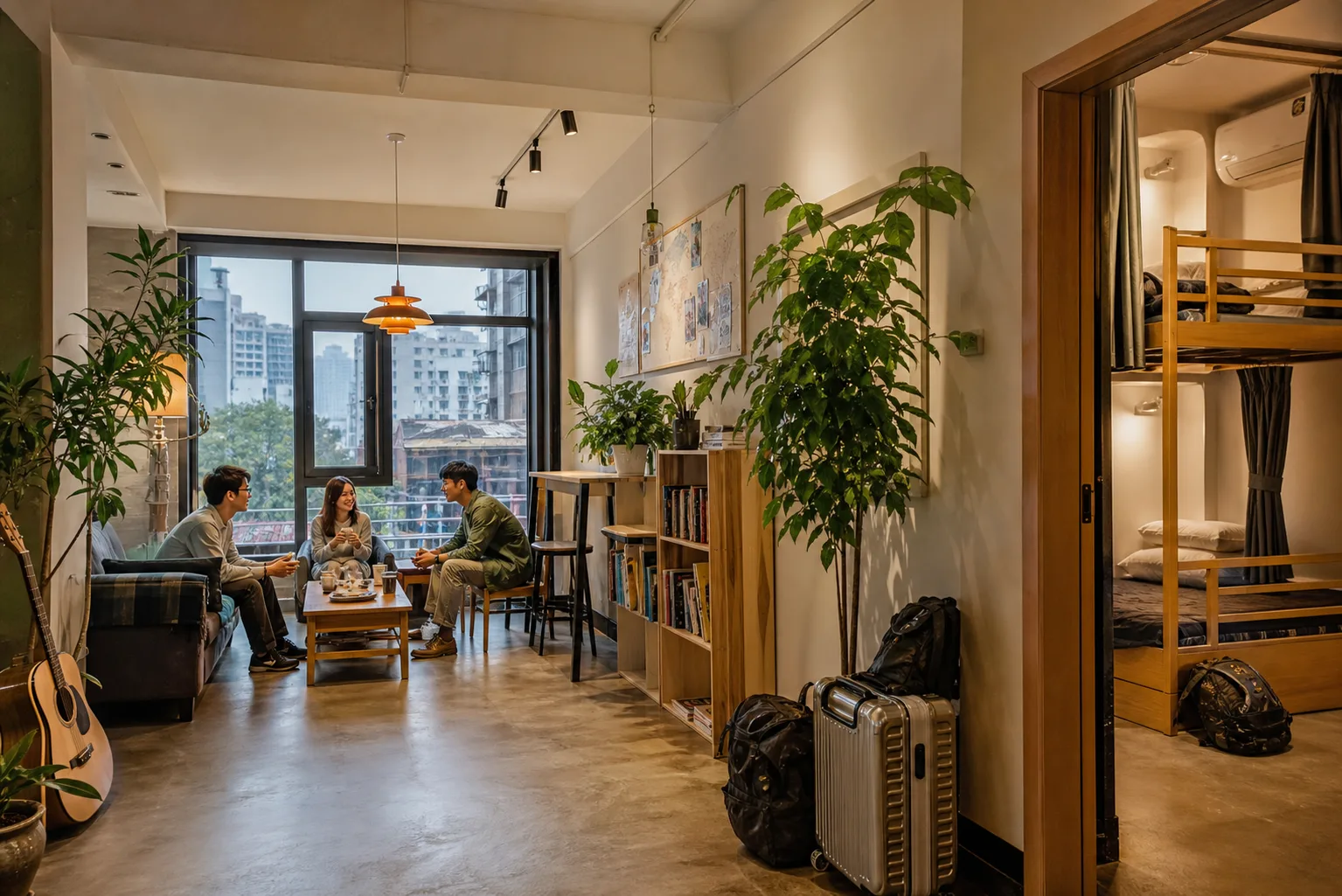
If you are trying to keep a China trip affordable, where you sleep can change the whole budget. The good news is that China has a deep stack of low-cost options, from social hostels in big cities to family-run guesthouses near station hubs and compact capsule-style rooms in a few urban markets. The hard part is not finding something cheap. It is knowing which kind of stay actually works for foreign travelers, which neighborhoods are worth the money, and when a slightly more expensive room saves you time, paperwork, or noise.
Introduction
Budget accommodation in China is not one single category. A dorm bed in a youth hostel, a small guesthouse room in a neighborhood near the metro, and a capsule-style pod in a transit-heavy district can all sit in roughly the same price band, but they solve different problems. Hostels are best when you want a social base, shared kitchens, laundry, and staff who are used to international guests. Guesthouses often give you a quieter, more local feel, but they vary more in quality. Capsule hotels are usually the most space-efficient option, and they are convenient when you only need a clean, short overnight stop.
The main tradeoff in China is not just price. It is location, registration, language, and consistency. A cheaper room far from the metro can cost more in time and transport than a slightly pricier one in a central district. A private room that looks fine online can be a bad pick if the property does not handle foreign check-in smoothly. And a hostel that is lively in photos may be too noisy if you need real sleep before an early train. This guide breaks down the main budget stay types, what they are good for, how much to expect to pay, and how to avoid the most common booking mistakes.
If you are planning the rest of the trip around low daily spend, this fits directly into a broader budget plan. You can pair it with How to Travel China on a Budget: Cheap Transport, Food & Stays for transport and food strategy, then use China Travel Planning: Visa, WeChat Pay, High-Speed Rail & Practical Guide for the paperwork and payment side of the trip.
Primary Topic Section
What counts as budget accommodation in China?
In practical terms, budget accommodation in China usually means one of four things:
- Hostel dorm beds or simple private rooms
- Small guesthouses or family-run inns
- Capsule hotels or pod-style sleeping spaces
- Older business hotels that are discounted enough to compete with the options above
The right choice depends on how you travel. Solo travelers often gravitate toward hostels because dorm beds are cheap and the social spaces make it easy to meet people. Couples and friends usually prefer guesthouses or budget hotels because privacy matters more than a shared lounge. Capsule hotels work best for short stays, late arrivals, train connections, or nights when you care more about sleep and shower access than room size.
China is a massive market, so standards vary by city. In Beijing, Shanghai, Shenzhen, Guangzhou, Hangzhou, Chengdu, and other big cities, a well-run hostel can feel polished and international. In smaller cities, the cheapest option may be a no-frills guesthouse near a station or a local hotel that is aimed more at domestic travelers than backpackers. That does not make it bad, but it does mean you need to read the listing carefully.
The most important thing to understand is that low price is not the same as low total cost. A room that is closer to the metro, easier to check into, and quieter at night often produces a better trip even if it costs a little more. When you are on a multi-city route with trains and luggage, those small savings in energy matter.
Hostels in China
Hostels are the most familiar budget option for international travelers. In the best cases, they give you dorm beds, private lockers, common spaces, laundry, luggage storage, and staff who can answer basic route questions in English. In popular backpacker cities, hostels are also where you will find the strongest community feeling. It is easier to ask about food streets, local transport, and day trips when you are staying somewhere built for independent travel.
Typical hostel pricing in China in 2026 usually falls into these rough ranges:
- Dorm bed in a major city: about RMB 60-180 per night
- Dorm bed in a smaller city: about RMB 40-120 per night
- Private room in a hostel: about RMB 180-450 per night
- Higher-end or design-oriented hostel private rooms: about RMB 350-700+ per night
These are planning ranges, not fixed rates. Peak travel periods, national holidays, and city-center locations push prices up quickly. A hostel bed in Shanghai during a crowded weekend can cost far more than the same style of bed in Xi'an, and a private room in a stylish hostel can cross into mid-range hotel pricing if the building is in a popular district.
Hostels work best when you want:
- A social environment
- Easy access to international travel advice
- Flexible short stays
- Shared laundry, kitchen, or lounge space
They are less ideal when you need complete quiet, if you are traveling with heavy luggage, or if you want the fastest possible room turnaround after late-night arrivals. Not all hostels are noisy, but the risk is higher than in a standard hotel.
Guesthouses and local inns
Guesthouses sit in the middle ground between hostels and hotels. They are often cheaper than standard business hotels and more private than a dorm. In China, these can be very different from one another. Some are clean, simple, and run by hosts who know the area well. Others are basic rooms above a shop, in an older building, or in a residential block with limited signage.
For budget travelers, guesthouses are useful because they can be a quiet, low-cost base in neighborhoods where hotel prices are inflated. They are especially appealing if you are not interested in hostel dorms but do not want to pay for a full-service hotel. They can also be a decent option for longer stays if the room is comfortable, there is reliable Wi-Fi, and the area has convenient food and transit.
What guesthouses usually do well:
- Lower prices than branded hotels
- More privacy than dorms
- A local neighborhood feel
- Simple rooms that are often good enough for sleeping and storing bags
What to watch for:
- Unclear check-in procedures
- Smaller rooms than the photos suggest
- Thin walls or poor soundproofing
- Limited English support
- Uneven cleanliness standards
If you are booking a guesthouse, read recent reviews carefully. Look for comments about cleanliness, hot water, Wi-Fi, elevator access, and whether the location is practical for the subway or station you will actually use. In China, a place can look centrally located on the map and still be awkward if the surrounding streets are large, hard to cross, or not pedestrian-friendly.
Capsule hotels and pod-style stays
Capsule hotels are more niche in China than in Japan, but you do see pod-style lodging in some major cities, airports, train-adjacent districts, and dense commercial areas. They are designed for efficiency rather than comfort in the traditional sense. You get a compact sleep space, shared bathrooms, and usually a very streamlined experience.
These properties are useful when:
- You arrive late and only need one night
- You are taking an early train or flight
- You want a private sleep pod without paying for a full room
- You are traveling light and do not need a large workspace
Capsules are not ideal for long stays or for travelers who need a lot of luggage space. They can also feel more enclosed than a hostel bed. That said, if the property is well run, they can be a good value for one-night transit stays because they save time and simplify logistics.
In 2026, typical capsule-style pricing in China is usually in the broad range of RMB 120-300 per night, with location and season pushing the number up or down. Airport-adjacent and prime downtown locations can be more expensive than you expect because you are paying for convenience, not square footage.
How to choose between them
The best option depends on your trip style:
- Choose a hostel if you want the cheapest social base and plan to meet other travelers.
- Choose a guesthouse if you want privacy, a quieter room, and a lower price than a standard hotel.
- Choose a capsule hotel if you are mainly buying sleep, shower access, and a convenient overnight location.
- Choose a discounted business hotel if you care more about reliability, soundproofing, and private space than atmosphere.
The biggest decision point is usually not room type but neighborhood. A cheap bed in an isolated district is not a bargain if you lose an hour every time you want dinner or a train connection. In China, proximity to metro lines, rail stations, and food streets often matters more than amenities on the room listing.
Secondary Topic Section
Where budget accommodation works best
China’s budget accommodation landscape is strongest in cities and corridors where independent travel is common. Large cities with international traffic tend to have better English-friendly hostels and more polished guesthouses. Transport hubs also tend to have more capsule-style or transit-oriented lodging.
In general, the most useful areas for budget stays are:
- Near metro lines in central districts
- Within a short taxi or subway ride of a major train station
- In neighborhoods with late-night food and convenience stores
- Near long-distance bus hubs if you are moving onward the next day
If you are planning a multi-city route, a slightly more expensive central room is often worth it because it reduces friction. This is especially true in cities where the airport, station, and old-town areas are all spread out. Saving RMB 50 on the room does not help if you spend that much on transport and lose an extra hour each day.
Foreign traveler realities: passports, check-in, and registration
For foreign travelers, the most important operational detail is smooth check-in. Hotels and many licensed accommodation providers in mainland China are expected to register foreign guests with local public security systems during the check-in process. In practice, that usually means you need your passport at the front desk and the property should handle the registration step for you.
This matters because not every cheap listing is equally prepared. A place can be legal, but if the staff rarely deals with foreign passports or the listing is outdated, check-in may take longer than expected. The best protection is to book properties with recent reviews from foreign travelers, clear front-desk procedures, and active customer support.
If you are considering a very small guesthouse, ask yourself three questions before booking:
- Does the listing explicitly accept foreign guests?
- Are recent reviews from non-Chinese travelers?
- Is there a staffed front desk rather than an informal key handoff?
If the answers are unclear, you may still be able to stay there, but the risk goes up. For a short trip, reliability is usually worth more than saving a few yuan.
Booking platforms and what to look for
Most budget travelers book through a mix of international platforms, local Chinese platforms, and direct hotel contact. For this article, the most important thing is not the platform name but the signals on the listing.
Look for:
- Recent reviews from the last few months
- Photos of the actual room, bathroom, and entrance
- A clear address in both English and Chinese
- Confirmation that foreign guests are accepted
- Flexible cancellation if your rail plan changes
When a listing has many photos but very few recent reviews, be cautious. Some budget stays in China cycle through renovations, management changes, or platform updates, and the pictures do not always reflect the current room condition. Recent reviews are more useful than polished promotional images.
If the property is near a rail station or in a busy commercial district, pay attention to check-in hours. Some budget stays have a late-night desk, but not all of them do. A cheap room becomes inconvenient fast if you arrive after midnight and have to arrange a difficult check-in.
Practical Guide
Prices, what they usually include, and what changes the rate
Budget accommodation prices in China move with city, season, and neighborhood more than most travelers expect. The same bed can be cheap on a weekday and much more expensive during a holiday, convention, or festival period.
As a rough 2026 planning guide:
- Hostel dorm bed: RMB 40-180
- Hostel private room: RMB 180-700+
- Guesthouse or simple inn room: RMB 120-350
- Capsule-style stay: RMB 120-300
- Basic budget hotel room: RMB 180-450
The listed price may or may not include towels, toiletries, laundry, or breakfast. A lower nightly rate can hide add-ons, so compare the total stay cost rather than just the headline price. If you are staying multiple nights, check whether weekly or multi-night discounts are available. On some platforms, the nightly rate drops meaningfully for longer stays.
How to get there
For budget accommodation, "how to get there" matters as much as the room itself. A property that is technically close to a subway stop may still require a long walk with luggage, stairs, or confusing navigation through a large block. Before booking, verify the following:
- The nearest metro station name
- Which exit is easiest for luggage
- Whether the building has an elevator
- Whether the property is on a main road or buried in an alley
- Whether late-night check-in is possible if your train arrives late
If you are arriving by high-speed rail, a hotel near the station can be a smart first-night choice, especially after a long day of transfers. If you are staying several days in one city, a neighborhood with good metro access usually beats a hotel right next to the station but far from food and attractions.
Booking strategy for 2026
For 2026 travel, a practical booking strategy is:
- Reserve the first one or two nights before arrival.
- Choose a property with confirmed foreign-guest acceptance.
- Prioritize a room near transit rather than the absolute lowest rate.
- Check cancellation terms before locking in the rest of the route.
- Rebook only after you confirm the neighborhood works for your itinerary.
That approach gives you enough flexibility to handle delays or route changes without committing the entire trip to one accommodation style. It also helps if you are still refining the trip around visa timing, digital payment setup, and train bookings.
When to pay extra
Budget does not always mean cheapest. There are times when paying a bit more is the correct move:
- You arrive late and need a fast, low-stress check-in
- You have early train departures
- You are staying in a city with long taxi rides between districts
- You need quiet sleep for work or jet lag recovery
- You are carrying bulky luggage or traveling with family
The extra amount is often worth it for one night, especially at the start of a trip. Once you are rested and oriented, you can decide whether to move to a cheaper place later.
Tips & Common Mistakes
What most guides miss
Most budget accommodation advice stops at "book a hostel if you are solo." That is too simplistic for China. The real trick is matching the stay to the city layout and transit pattern.
Three details matter more than most travelers realize:
- Subway access beats map distance.
- Foreign check-in readiness beats a lower nightly rate.
- Quiet neighborhoods beat glamorous listings if you need sleep.
Another overlooked point is that Chinese cities can be huge. A place that looks convenient on a map may still be a difficult walk if the street network is broad or if the route crosses major roads and station complexes. In practice, the best cheap stay is often the one that gets you to food and transit with the least friction.
Common mistakes to avoid
Do not assume every low-cost property accepts foreign passports. Some listings are not set up for it, and that can create a check-in problem you do not want after a long travel day.
Do not book by price alone. A room with no elevator, awkward transit access, or bad soundproofing may be cheap but miserable.
Do not ignore recent reviews. Budget properties can change management or quality quickly.
Do not overvalue decorative photos. A stylish lobby does not guarantee a good bed, a clean bathroom, or stable Wi-Fi.
Do not forget luggage logistics. A cheap room on the fourth floor with no elevator is very different from a cheap room with easy access.
Do not plan on every guesthouse having the same operating style as a branded hotel. Some are run informally, and that can be fine if you are prepared for it.
Small upgrades that are worth it
If you are trying to keep costs low, a few small upgrades often pay back immediately:
- A private room instead of a dorm for the first night
- A location near the metro rather than a remote cheap option
- A property with 24-hour check-in if you arrive late
- A hotel or hostel with laundry if you are traveling for more than a week
These are not luxury choices. They are efficiency choices. In a fast-moving China itinerary, they often reduce stress more than they increase spend.
How this fits into a cheap China trip
Budget accommodation is only one piece of the total trip cost. If you save money on lodging but pay more for poor route planning, you have not really saved. The best setup is usually:
- Cheap but practical accommodation
- Simple food near the hotel or hostel
- A transport plan that avoids unnecessary backtracking
- Enough flexibility to shift one night if a better location makes sense
That is why accommodation should be chosen together with the city route, not after it. A good bed in the wrong place is still a bad booking.
FAQ
Are hostels common in China?
Yes, especially in large cities and popular travel corridors. The quality varies, but many are well suited to solo travelers and short stays. In bigger cities, you can often find hostels with international-style dorms, private rooms, and travel-friendly services.
Can foreign travelers stay in guesthouses?
Often yes, but you should confirm that the property accepts foreign guests before booking. The safest approach is to choose listings with recent reviews from international travelers and a clear front desk process for passport registration.
Are capsule hotels a good option in China?
They can be, but mostly for short transit stays. Capsule-style lodging works best when you need one night near a station, airport, or busy district and do not care about room size. For longer stays, a hostel private room or small hotel is usually better.
What is the cheapest safe option?
Usually a well-reviewed hostel dorm bed in a central, transit-friendly area. That said, "cheapest safe option" depends on the city. Sometimes a basic guesthouse or budget hotel room is only slightly more expensive and gives you better sleep and easier check-in.
Should I book budget stays in advance?
Yes, at least for your first nights and for arrival days. Advance booking is especially helpful if you are arriving late, crossing multiple cities, or want to make sure the property can handle foreign check-in smoothly. For longer trips, you can leave some flexibility once you understand the route.
Conclusion
China has enough budget accommodation variety that almost every traveler can find something workable, but the right choice depends on more than price. Hostels are best for social travel and flexibility. Guesthouses are useful when you want privacy without paying hotel rates. Capsule hotels solve the short-stay, transit-night problem. Discounted business hotels can be the smart compromise when reliability matters more than atmosphere.
The most practical approach is simple: book for location, not just for rate; confirm foreign-guest acceptance; and prefer a room that reduces friction around transit, sleep, and arrival time. If you do that, budget lodging in China can be clean, efficient, and perfectly good enough for a well-run trip.
If you are still building out the rest of your China route, use accommodation as the anchor and then fill in transport, food, and logistics around it. That is usually how a cheap trip stays cheap without becoming exhausting.