Busan's Haedong Yonggungsa Temple: The Seaside Shrine Guide

Introduction
Are you planning a trip to Busan and looking for an experience that combines breathtaking natural beauty with profound spiritual tranquility? Often, travelers overlook the unique charm of Haedong Yonggungsa Temple, mistaking it for just another mountain sanctuary. Unlike most Korean temples nestled in the mountains, Haedong Yonggungsa offers an unparalleled coastal vista, making it a truly one-of-a-kind destination. This guide will help you navigate this magnificent seaside shrine, from its fascinating history and unique architecture to practical tips for an unforgettable visit, ensuring you don't miss any of its serene beauty or hidden gems.
The Dragon Palace Temple: A Maritime Masterpiece with a Storied Past
Haedong Yonggungsa Temple, established in 1376 by the esteemed Buddhist teacher Naong during the Goryeo Dynasty, stands as a rare and captivating example of Korean temple architecture. Originally known as Bomun Temple, its initial tranquility was shattered by the Japanese invasions (Imjin War) in the late 1500s, leading to its destruction. For over three centuries, the temple lay in ruins, a testament to the tumultuous history of the peninsula.
Its rebirth began in the 1930s, and in 1974, it was rededicated and given its current evocative name: Haedong Yonggungsa, meaning "Korean Dragon Palace Temple." This renaming was inspired by a profound vision experienced by the monk Jeongam, who saw the Goddess of Mercy ascending to heaven on the back of a dragon. This mystical origin story beautifully intertwines with its unique coastal setting, as the Goddess of Mercy is traditionally believed to reside by the sea.
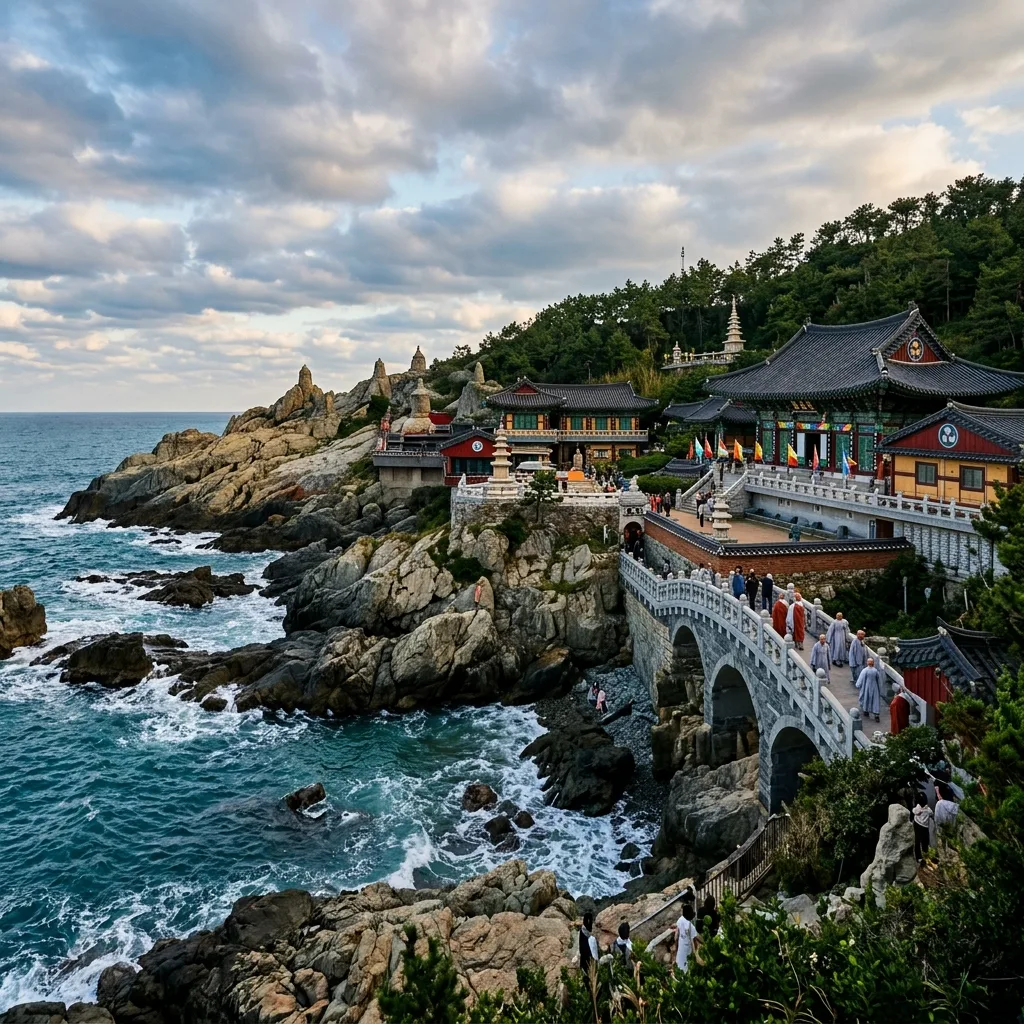
Unlike the vast majority of Korean temples, which are nestled deep within mountain ranges, Haedong Yonggungsa is dramatically perched directly on the rocky shoreline of the East Sea. This unparalleled location offers stunning panoramic views, where the rhythmic sounds of ocean waves provide a serene backdrop to spiritual contemplation. The harmony between the sacred architecture and the crashing sea creates an atmosphere of profound peace and unique visual splendor, making it a truly one-of-a-kind destination in Korea.
Symbols, Serenity, and Significant Sites: A Deeper Dive
Beyond its breathtaking location, Haedong Yonggungsa is a tapestry woven with rich symbolism and spiritual significance, inviting visitors to a journey of discovery.
The 108 Steps to Enlightenment
As you approach the main sanctuary, you'll descend 108 stone steps. Each step is deeply symbolic, representing the 108 agonies or earthly desires that Buddhists aim to overcome on their path to enlightenment. Taking each step mindfully is believed to help shed these worldly burdens, preparing visitors for the spiritual sanctity of the temple below.
The Wish-Granting Motto
The temple is renowned for its inspiring belief: "at least one of your wishes will be answered here through sincere prayers." This motto infuses the air with a sense of hope and spiritual potency, drawing countless visitors seeking blessings and fulfillment.
Key Attractions and Their Stories:
- The 12 Zodiac Statues: Lining the entrance path, these impressive stone figures represent the oriental zodiac. Visitors often seek out their own zodiac animal for good fortune. Notably, in 2026, the Year of the Horse, the Horse statue will be a special focal point for those seeking prosperity and success in the coming year.
- Haesu Gwaneum Daebul (Seawater Great Goddess Buddha): Standing majestically atop a hill overlooking the entire complex and the vast ocean, this colossal stone statue of the Sea Goddess of Mercy is one of the temple's most iconic features. Her serene gaze extends protectively over the sea, embodying compassion and wisdom.
- Daeungjeon Main Hall: This central prayer hall is the spiritual heart of the temple. Unlike traditional mountain temples where the main hall faces inland, the Daeungjeon at Haedong Yonggungsa is purposefully built directly facing the sea, further emphasizing its unique maritime connection. The hall is exquisitely adorned with traditional dancheong colors and intricate Buddhist artwork.
- Three-Story Pagoda with Four Lions: This distinctive pagoda features four lions, each symbolizing joy, anger, sadness, and happiness—the fundamental emotions of human existence. It stands as a reminder of the cyclical nature of life and the pursuit of inner peace amidst emotional fluctuations.
- Sunrise Rock: For those seeking an unforgettable experience, the flat rocky outcrop known as Sunrise Rock offers a prime vantage point to witness the spectacular sunrise over the East Sea. It's a moment of profound beauty and tranquility, often considered a highlight of any visit.
- Golden Pigs: Situated near the main hall, these charming golden pig statues are believed to bring wealth and prosperity to those who gently rub them. They are a popular spot for visitors to make wishes for good fortune.
- Hagamun (Dragon Gate) and Gulbeopdang (Cave Law Hall): These notable structures further contribute to the temple's mystical aura, each with its own architectural beauty and spiritual purpose.
Throughout the temple grounds, numerous stone lanterns, smaller statues, and dedicated prayer sites invite quiet reflection, all harmonized by the constant, soothing rhythm of the ocean waves. The temple is especially vibrant during Buddha's Birthday celebrations (May 2026), when thousands of colorful paper lanterns transform the complex into a magical spectacle of light and devotion.
Practical Guide and Essential Tips for Your 2026 Visit
To ensure a smooth and enriching visit to Haedong Yonggungsa Temple in 2026, keep the following practical information and insider tips in mind:
Hours of Operation & Admission
- Operating Hours: The temple typically opens early, around 5:00 AM, and closes at sunset. However, specific hours for certain halls or amenities might vary. It's always a good idea to check the official Visit Korea or Visit Busan websites closer to your travel date for the most accurate information.
- Admission Fee: Entry to the general temple grounds is free. There are no admission fees to simply walk around and enjoy the scenery. However, be aware that parking facilities usually charge a fee (approximately 3,000 KRW for small vehicles).
Best Time to Visit for an Unforgettable Experience
Choosing the right time can significantly enhance your visit:
- Early Morning (Ultimate Hack for 2026): Arrive before 7:00 AM to avoid the typical 11:00 AM tourist rush. This allows for a more serene experience and, if timed correctly, you can witness the breathtaking sunrise over the East Sea, a moment for which the temple is particularly famous.
- Spring (Late March – Early April): The road leading to the temple transforms into a tunnel of cherry blossoms, making the approach itself a picturesque journey.
- Buddha’s Birthday (May 2026): Experience the temple at its most vibrant. Thousands of colorful paper lanterns adorn the entire complex, creating a truly magical and unforgettable night view.
- Autumn (October – November): The surrounding foliage bursts into vibrant hues of red and gold, offering another stunning backdrop for your visit.
How to Get There: Navigating Your Way to the Seaside Shrine
Haedong Yonggungsa is easily accessible from Busan's main areas:
- By Subway & Bus (Recommended):
- Take Busan Subway Line 2 to Haeundae Station (Exit 7).
- From there, transfer to Bus No. 181 or 100. These buses will take you directly to the "Yonggungsa Temple" stop, which is just a short walk from the temple entrance. The bus ride from Haeundae usually takes about 30-40 minutes.
- By Taxi: A taxi ride from popular areas like Haeundae Beach will take approximately 20-30 minutes, depending on traffic, and cost around 10,000–12,000 KRW. This is a convenient option if you're traveling with a group or have limited time.
- Address for Navigation: For GPS or taxi drivers, use the address: 86 Yonggung-gil, Gijang-eup, Gijang-gun, Busan (부산 기장군 기장읍 용궁길 86).
Essential Etiquette and Tips for a Respectful Visit
- Dress Modestly: While there's no strict dress code, modest attire is always appreciated in a religious site.
- Remove Shoes: Remember to remove your shoes before entering any prayer halls.
- Keep Voices Low: Be mindful of those engaged in prayer or meditation by keeping your voice low.
- Comfortable Footwear: You'll be doing a fair amount of walking and climbing steps, including the famous 108 steps. Comfortable shoes are a must.
- Bring a Camera: The temple offers countless stunning photo opportunities, especially with its ocean backdrop.
- Stay Hydrated: Especially during warmer months, carry water with you.
Booking Links & Tours
For general entry, no booking is usually required. However, if you are interested in guided tours or specific experiences that include Haedong Yonggungsa, you might find options on platforms like Klook or local tour operators. Always check official websites for the most current information.
Planning Your Visit: Time, Accessibility & Amenities
- How much time should I allocate for a visit? To fully immerse yourself in the temple's beauty and explore all its corners, plan to spend approximately 1.5 to 2 hours. This allows ample time for photos, reflection, and enjoying the serene atmosphere without feeling rushed.
- Accessibility for Mobility Issues: Due to its dramatic seaside location and the presence of numerous steps (including the 108 steps) and hilly terrain, Haedong Yonggungsa can pose challenges for visitors with mobility issues. While some main areas are accessible, certain parts of the complex might be difficult to navigate. Consider this when planning your visit and allow extra time.
- Dining Options: Several food stalls and small, local restaurants are available near the temple entrance. You can find a variety of snacks, light meals, and refreshing beverages to re-energize before or after your exploration. For more extensive dining, the nearby Haeundae area offers a wider array of restaurants.
- Visiting in Winter: The temple is open year-round, and a winter visit can be quite enchanting. While it can be chilly, the crisp air and the unique beauty of the ocean scenery in winter offer a different, often more tranquil, experience. Ensure you dress warmly.
Exploring Beyond the Temple: Nearby Attractions
Enhance your trip to Haedong Yonggungsa by combining it with a visit to some of Busan's other exciting destinations, all conveniently located nearby in the Osiria Tourism Complex:
- Skyline Luge Busan: Just a 5-minute drive from the temple, this thrilling luge ride offers panoramic views and an exhilarating descent suitable for all ages.
- Lotte World Adventure Busan: A sprawling theme park offering a wide array of rides, shows, and entertainment for families and adventure-seekers. Also located about 5 minutes away by car.
- Gijang Market: For a taste of local life, head to Gijang Market, known for its fresh seafood and vibrant atmosphere. It's a great place to experience authentic Korean market culture.
- Jukseong Dream Cathedral: A picturesque church often used as a filming location, offering stunning ocean views and a peaceful ambiance. A short drive from the temple.
- Busan National Science Museum: An interactive museum perfect for families, offering educational exhibits on various scientific principles.
How to Build the Best Half-Day Route
Haedong Yonggungsa works best when it is not treated as a standalone stop. The temple is beautiful, but the real value comes from pairing it with nearby coastal sights so the trip feels complete rather than rushed.
Option 1: Temple first, seafood second. Arrive early at the temple, spend about 90 minutes walking the grounds, then head to Gijang Market or a nearby seafood restaurant for lunch. This is the most satisfying choice if you like starting your day quietly and ending it with a meal.
Option 2: Sunrise visit, then Haeundae. If you are comfortable waking early, the sunrise timing is the most memorable version of the temple visit. Afterward, return toward Haeundae for coffee, brunch, or a slower beachfront walk. This route feels balanced and keeps the day from becoming too religious-site heavy.
Option 3: Late afternoon into evening. If you are doing a broader Busan itinerary, visit the temple after your other daytime attractions and stay for golden hour. The ocean light is softer, the stone surfaces warm up visually, and the crowds begin to thin.
The mistake many travelers make is stacking the temple with too many other big-ticket stops. Do not try to squeeze in Haedong Yonggungsa, a long seafood lunch, Lotte World, and a sunset beach walk unless you genuinely like moving at speed. The temple deserves enough time to breathe.
Photo Strategy by Time of Day
This is one of the easiest places in Korea to take a good photo and one of the easiest places to take a generic one. The difference is timing.
Early morning: Best for quiet paths, empty railings, and a more reflective mood. If you want the temple to feel spiritual rather than touristic, this is the ideal window.
Late morning to early afternoon: Best for clear ocean color, but also the busiest period. If you visit then, focus on wide landscape shots and accept that some compositions will include other people.
Sunset: Best for dramatic contrast on the water and warmer tones on the stone statues. The downside is that the temple can get crowded with photographers who all want the same angle.
Rainy weather: Surprisingly strong for mood. Wet stone, mist, and softer colors make the temple look more cinematic. Just wear shoes with grip because the steps can become slick.
If photography is a priority, remember one basic rule: once you get the obvious front-gate shot, keep walking. The less-crowded angles are usually deeper into the complex near the side paths and lower platforms facing the sea.
Accessibility and Comfort Notes
Haedong Yonggungsa is not a flat, barrier-free site. That matters if you are traveling with older family members, small children, or anyone who struggles with stairs.
For seniors: A taxi drop-off close to the entrance is the simplest approach. Plan extra rest time and do not try to push through the full loop if knees or balance are an issue. The temple is still enjoyable even if you only see the main hall and a few nearby viewpoints.
For families: Strollers are awkward on the stair sections, so a lightweight carrier is often a better choice for small children. If your child wants to run ahead, keep an eye on the wet stone surfaces near the shoreline.
For travelers with limited mobility: Expect some compromise. You can still appreciate much of the temple from the lower arrival area and the easier walking paths, but the full experience is step-heavy. If mobility is a concern, build in more time and consider whether a shorter visit is the right version for you.
For summer visits: The site has exposed sections with very little shade. A hat, water, and sunscreen matter more than they do at a forest temple.
Temple Etiquette That Improves the Visit
Respectful behavior here is not just about Buddhist protocol. It also makes the visit calmer for everyone else.
- Keep your voice low near prayer spaces.
- Pause before entering the main hall and watch how other visitors move.
- Do not stand directly in front of people who are praying.
- Take photos after you have stepped aside rather than in the center of the walking flow.
- If you buy an offering or make a wish, do it slowly instead of turning it into a quick photo opportunity.
The more slowly you move, the more the temple gives back. This is a site where lingering is part of the point.
A Good Busan Day Around the Temple
If you only have one day near this part of Busan, the temple can anchor the schedule:
- Morning at Haedong Yonggungsa
- Lunch in Gijang or near the Osiria area
- Coffee or dessert in Haeundae
- Optional beachfront walk or market stop
That itinerary works because it alternates scenery, food, and rest. It does not overcomplicate the logistics, and it keeps the day from becoming a checklist of disconnected attractions.
Conclusion
Haedong Yonggungsa Temple offers a unique blend of spiritual solace and natural splendor, making it an indispensable stop on any Busan itinerary. Its dramatic coastal setting, rich history, and intricate Buddhist art create an atmosphere of profound serenity and wonder. By following this guide, you're well-equipped to experience the full magic of this "Dragon Palace Temple," returning home with not just stunning photographs, but also a renewed sense of peace and a deeper appreciation for Korea's cultural heritage. Don't just visit Busan; immerse yourself in its spiritual seaside charm at Haedong Yonggungsa.
If you are pairing it with the rest of the city, connect it to the Busan neighborhood guide, the Buddhist etiquette guide, or the top destinations beyond Seoul guide. That keeps the temple visit tied to a proper Busan route.