Travel Insurance for Korea, Japan and China: What Singapore Travelers Need

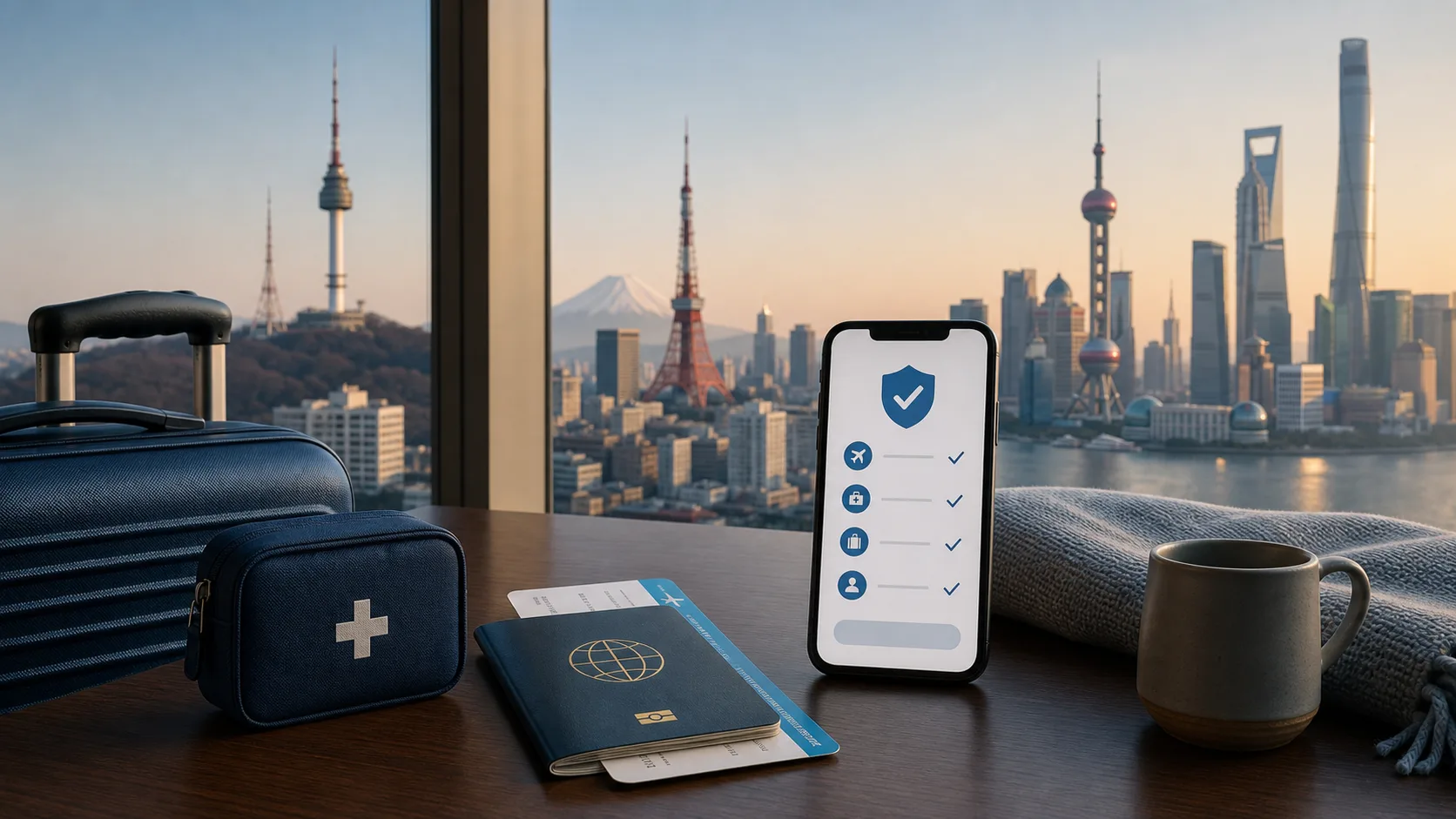
Travel insurance for Korea, Japan, or China is not a single checkbox. A useful policy decision starts with the bookings, travellers, health circumstances, activities, transit points, and the things that could disrupt the trip. This guide is general travel-planning information, not personal insurance, legal, or financial advice. Read the current official insurer policy wording and seek licensed, personalised advice when your circumstances require it.
The short answer
Compare current official policy wording against your specific itinerary before you buy: who is insured, when cover starts, emergency medical assistance, cancellation, delays, baggage, activities, exclusions, excesses, and claim documents. Do not rely on a marketing summary or another traveller’s experience. A policy can only be understood through the terms that apply to the product you actually purchase.
Start with the trip rather than a product label
Start with the trip rather than a product label is an insurance comparison task. List flights, accommodation, rail, tours, tickets, transit countries, planned activities, and every traveller. Then read the current official policy wording, product disclosure or summary, certificate, and assistance instructions for the policy being considered. Definitions, limits, exclusions, eligibility, waiting periods, and evidence requirements can differ by insurer and product.
For Singapore-based travelers, standard MediShield Life and Integrated Shield Plans provide zero reimbursement for emergency overseas medical care in Japan, Korea, or China. Dedicated travel insurance must serve as your primary financial shield against astronomical private hospital admission bills.
Save your insurance policy certificate, emergency assistance policy number, and claims portal URLs in an offline digital wallet on your phone before departing Singapore Changi Airport.
Read the official policy wording
Read the official policy wording is an insurance comparison task. List flights, accommodation, rail, tours, tickets, transit countries, planned activities, and every traveller. Then read the current official policy wording, product disclosure or summary, certificate, and assistance instructions for the policy being considered. Definitions, limits, exclusions, eligibility, waiting periods, and evidence requirements can differ by insurer and product.
Evaluate medical evacuation provisions closely: air ambulance repatriation from remote regional areas like Hokkaido, Mount Fuji, or Yunnan back to Singapore's Singapore General Hospital (SGH) or Mount Elizabeth routinely exceeds SGD 100,000, demanding unlimited or high-limit emergency evacuation clauses.
Request formal medical diagnosis reports written in English from attending Asian doctors before discharge, ensuring the clinic specifies whether treatment was urgent or routine.
Separate pre-departure from in-trip events
Separate pre-departure from in-trip events is an insurance comparison task. List flights, accommodation, rail, tours, tickets, transit countries, planned activities, and every traveller. Then read the current official policy wording, product disclosure or summary, certificate, and assistance instructions for the policy being considered. Definitions, limits, exclusions, eligibility, waiting periods, and evidence requirements can differ by insurer and product.
Examine pre-departure cancellation triggers: ensure your policy covers trip cancellation due to unexpected retrenchment, severe family illness, or epidemic outbreaks in destination cities, activating coverage from the exact date of premium payment.
Obtain official police theft report documentation within 24 hours of any lost or stolen personal valuables at local Japanese Koban police boxes or Korean police stations.
Compare medical and assistance provisions
Compare medical and assistance provisions is an insurance comparison task. List flights, accommodation, rail, tours, tickets, transit countries, planned activities, and every traveller. Then read the current official policy wording, product disclosure or summary, certificate, and assistance instructions for the policy being considered. Definitions, limits, exclusions, eligibility, waiting periods, and evidence requirements can differ by insurer and product.
Verify overseas medical expense sub-limits for outpatient clinic consultations and inpatient hospital stays in Tier 1 Asian hospitals, ensuring coverage is denominated in adequate Singapore Dollars (minimum recommended SGD 500,000 to SGD 1,000,000).
Secure written airline delay certificates (Property Irregularity Reports or Flight Disruption Certificates) directly from airport check-in or gate agents before leaving the terminal.
Check cancellation and curtailment triggers
Check cancellation and curtailment triggers is an insurance comparison task. List flights, accommodation, rail, tours, tickets, transit countries, planned activities, and every traveller. Then read the current official policy wording, product disclosure or summary, certificate, and assistance instructions for the policy being considered. Definitions, limits, exclusions, eligibility, waiting periods, and evidence requirements can differ by insurer and product.
Understand curtailment clauses: if an unexpected family emergency forces you to abandon your Kyoto or Seoul vacation early, the policy should reimburse the unused portion of pre-paid flights, hotels, and non-refundable bullet train passes.
Preserve all boarding passes, electronic flight tickets, and baggage luggage check tags as conclusive proof of travel dates and flight sectors.
Treat delays as an evidence question
Treat delays as an evidence question is an insurance comparison task. List flights, accommodation, rail, tours, tickets, transit countries, planned activities, and every traveller. Then read the current official policy wording, product disclosure or summary, certificate, and assistance instructions for the policy being considered. Definitions, limits, exclusions, eligibility, waiting periods, and evidence requirements can differ by insurer and product.
Scrutinize flight delay qualification thresholds: Singapore insurers typically require a minimum of 6 consecutive hours of delay before paying cash benefits (usually SGD 100 to SGD 200 per 6-hour block), requiring formal delay endorsement letters from airlines.
Document delayed baggage delivery receipts showing the precise local date and time your suitcases were physically returned to your hotel lobby.
Read baggage and personal-property conditions
Read baggage and personal-property conditions is an insurance comparison task. List flights, accommodation, rail, tours, tickets, transit countries, planned activities, and every traveller. Then read the current official policy wording, product disclosure or summary, certificate, and assistance instructions for the policy being considered. Definitions, limits, exclusions, eligibility, waiting periods, and evidence requirements can differ by insurer and product.
Review baggage delay and loss conditions: distinguish between emergency baggage delay benefits for essential toiletries and clothing versus permanent baggage loss payouts, which enforce strict single-item depreciation caps (often SGD 500 per item).
Keep itemized pharmacy receipts detailing medication names and unit costs alongside the physician's official prescription slip.
Check activities and transport exclusions
Check activities and transport exclusions is an insurance comparison task. List flights, accommodation, rail, tours, tickets, transit countries, planned activities, and every traveller. Then read the current official policy wording, product disclosure or summary, certificate, and assistance instructions for the policy being considered. Definitions, limits, exclusions, eligibility, waiting periods, and evidence requirements can differ by insurer and product.
Verify destination transport activity riders: adventurous activities like hiking above 3,000 meters in China's Jade Dragon Snow Mountain, riding snowmobiles in Niseko, or renting motor scooters in Jeju frequently require optional adventure sports riders.
Take photographs of damaged luggage or personal belongings before discarding or repairing them to substantiate physical damage claims.
Consider each traveller and pre-existing condition
Consider each traveller and pre-existing condition is an insurance comparison task. List flights, accommodation, rail, tours, tickets, transit countries, planned activities, and every traveller. Then read the current official policy wording, product disclosure or summary, certificate, and assistance instructions for the policy being considered. Definitions, limits, exclusions, eligibility, waiting periods, and evidence requirements can differ by insurer and product.
Disclose pre-existing medical conditions accurately: standard off-the-shelf policies automatically exclude chronic ailments like asthma, diabetes, or hypertension unless you purchase specialized pre-existing condition plans (such as Income Pre-Ex or MSIG Pre-Ex).
Save all email correspondence and cancellation confirmation notices from non-refundable hotels, tours, and theme park providers.
Check geography and transit points
Check geography and transit points is an insurance comparison task. List flights, accommodation, rail, tours, tickets, transit countries, planned activities, and every traveller. Then read the current official policy wording, product disclosure or summary, certificate, and assistance instructions for the policy being considered. Definitions, limits, exclusions, eligibility, waiting periods, and evidence requirements can differ by insurer and product.
Account for transit hubs: if your Singapore Airlines, Cathay Pacific, or Scoot flight connects through Hong Kong (HKG) or Taipei (TPE), confirm that your regional policy coverage applies seamlessly across intermediate transit territories.
Maintain a chronological travel log noting dates, times, and names of customer service representatives spoken to during travel disruptions.
Understand excesses and claim deadlines
Understand excesses and claim deadlines is an insurance comparison task. List flights, accommodation, rail, tours, tickets, transit countries, planned activities, and every traveller. Then read the current official policy wording, product disclosure or summary, certificate, and assistance instructions for the policy being considered. Definitions, limits, exclusions, eligibility, waiting periods, and evidence requirements can differ by insurer and product.
Check policy excess deductions: an excess of SGD 100 to SGD 200 means you absorb the initial portion of every claim, making zero-excess policies far more convenient for small outpatient clinic visits.
Retain receipts for essential emergency purchases (toiletries, fresh underwear, phone chargers) incurred while waiting for delayed baggage.
Keep emergency contacts accessible
Keep emergency contacts accessible is an insurance comparison task. List flights, accommodation, rail, tours, tickets, transit countries, planned activities, and every traveller. Then read the current official policy wording, product disclosure or summary, certificate, and assistance instructions for the policy being considered. Definitions, limits, exclusions, eligibility, waiting periods, and evidence requirements can differ by insurer and product.
Keep international SOS assistance hotline numbers stored in your smartphone: insurers like Allianz, FWD, and Singlife operate 24-hour multilingual emergency assistance desks capable of issuing direct payment guarantees to Japanese and Korean hospitals.
Confirm with attending physicians that discharge paperwork clearly records that the patient is medically certified fit to fly home to Singapore.
Collect documents while they exist
Collect documents while they exist is an insurance comparison task. List flights, accommodation, rail, tours, tickets, transit countries, planned activities, and every traveller. Then read the current official policy wording, product disclosure or summary, certificate, and assistance instructions for the policy being considered. Definitions, limits, exclusions, eligibility, waiting periods, and evidence requirements can differ by insurer and product.
Retain all original paper and digital receipts: Asian healthcare clinics and pharmacies require itemized payment breakdowns displaying diagnosis codes (ICD-10) and official hospital seals to satisfy Singapore claims assessors.
Verify that hospital admission deposit receipts reflect the currency paid (JPY, KRW, or CNY) to ensure accurate exchange rate conversion during claim processing.
Use payment benefits carefully
Use payment benefits carefully is an insurance comparison task. List flights, accommodation, rail, tours, tickets, transit countries, planned activities, and every traveller. Then read the current official policy wording, product disclosure or summary, certificate, and assistance instructions for the policy being considered. Definitions, limits, exclusions, eligibility, waiting periods, and evidence requirements can differ by insurer and product.
Review complimentary credit card travel insurance limitations: card-linked insurance (e.g. DBS Altitude, Citi PremierMiles) only activates if the full airfare was charged to that card, and frequently features meager medical and cancellation caps.
Ensure that family policy schedules clearly list the full legal names and birth dates of all traveling children matching their Singapore passports.
Ask material questions in writing
Ask material questions in writing is an insurance comparison task. List flights, accommodation, rail, tours, tickets, transit countries, planned activities, and every traveller. Then read the current official policy wording, product disclosure or summary, certificate, and assistance instructions for the policy being considered. Definitions, limits, exclusions, eligibility, waiting periods, and evidence requirements can differ by insurer and product.
Submit claims digitally via modern mobile apps: most Singapore insurers allow submitting photo evidence online via Singpass login, with approved claim payouts deposited directly into your bank account via PayNow within three to five business days.
Submit all claim documentation through your insurer's online portal within 30 days of returning to Singapore to prevent claim rejection.
Korea, Japan, and China itinerary checks
The destination does not automatically create a special insurance category, but the trip shape can. A Korea city break with separately booked flights and a day tour, a Japan ski or theme-park trip, and a China multi-city rail itinerary each raise different questions about activities, connections, documents, medical assistance, and supplier refunds. Check official destination travel advice and provider terms separately; travel advice, border rules, local law, and insurance are not the same thing.
Top Singapore Travel Insurance Providers for East Asia Trips
| Insurer & Plan | Medical Limit (Overseas) | Emergency Evacuation | Flight Delay (per 6 hrs) | Pre-Existing Cover |
|---|---|---|---|---|
| Income Insurance (Classic / Deluxe) | Up to SGD 500,000 – 1,000,000 | Unlimited | SGD 100 – 150 | Available (Enhanced Pre-Ex) |
| FWD Travel Insurance (First / Business) | Up to SGD 1,000,000 | Unlimited | SGD 150 – 200 | Not included standard |
| Singlife Travel (Plus / Prestige) | Up to SGD 500,000 – 2,000,000 | Unlimited | SGD 100 – 150 | Available (Singlife Pre-Ex) |
| MSIG TravelEasy (Standard / Elite) | Up to SGD 500,000 – 1,000,000 | Unlimited | SGD 100 – 150 | Available (TravelEasy Pre-Ex) |
| Allianz Travel (Silver / Gold) | Up to SGD 500,000 – 1,000,000 | Unlimited | SGD 100 – 150 | Not included standard |
A comparison sheet
Use identical headings for each policy: eligibility, dates, destinations, medical and assistance, cancellation, curtailment, delay, baggage, liability, activities, exclusions, excess, emergency contact, and claims deadline. Record the exact page or section in the official wording rather than a promotional phrase. Mark unanswered questions and resolve them in writing. The sheet makes a rushed checkout slower in a useful way.
Final checklist
Before purchase, confirm the travellers, dates, destinations, bookings, conditions, activities, exclusions, excess, emergency route, and claim documents. Before departure, save the official wording and contacts. After an incident, preserve evidence and follow the insurer’s process. This is general information, not personal insurance advice.
Related: korea-family-trip-first-day-setup-guide
Singapore General Insurance Association (GIA) Advisory Guidelines
Key consumer rights and policy conditions for Singapore residents traveling across East Asia:
- The 30-Day Notice Rule: Singapore general insurers strictly require that any claim notice or event of loss be reported through official digital portals within 30 days of returning to Singapore Changi Airport.
- PayNow Direct Benefit Distribution: Ensure your Singapore NRIC is bound to PayNow. Approved claim disbursements are deposited directly into your bank account within three to five business days following final document verification.
- Retaining Physical Paper Documents: Keep all original medical receipts, doctor prescriptions, and stamped police reports in a secure file for at least six months following claim settlement in case of statutory post-payment audit reviews.