Korea Summer Travel Guide: Beating the Heat, Monsoon & Beach Options

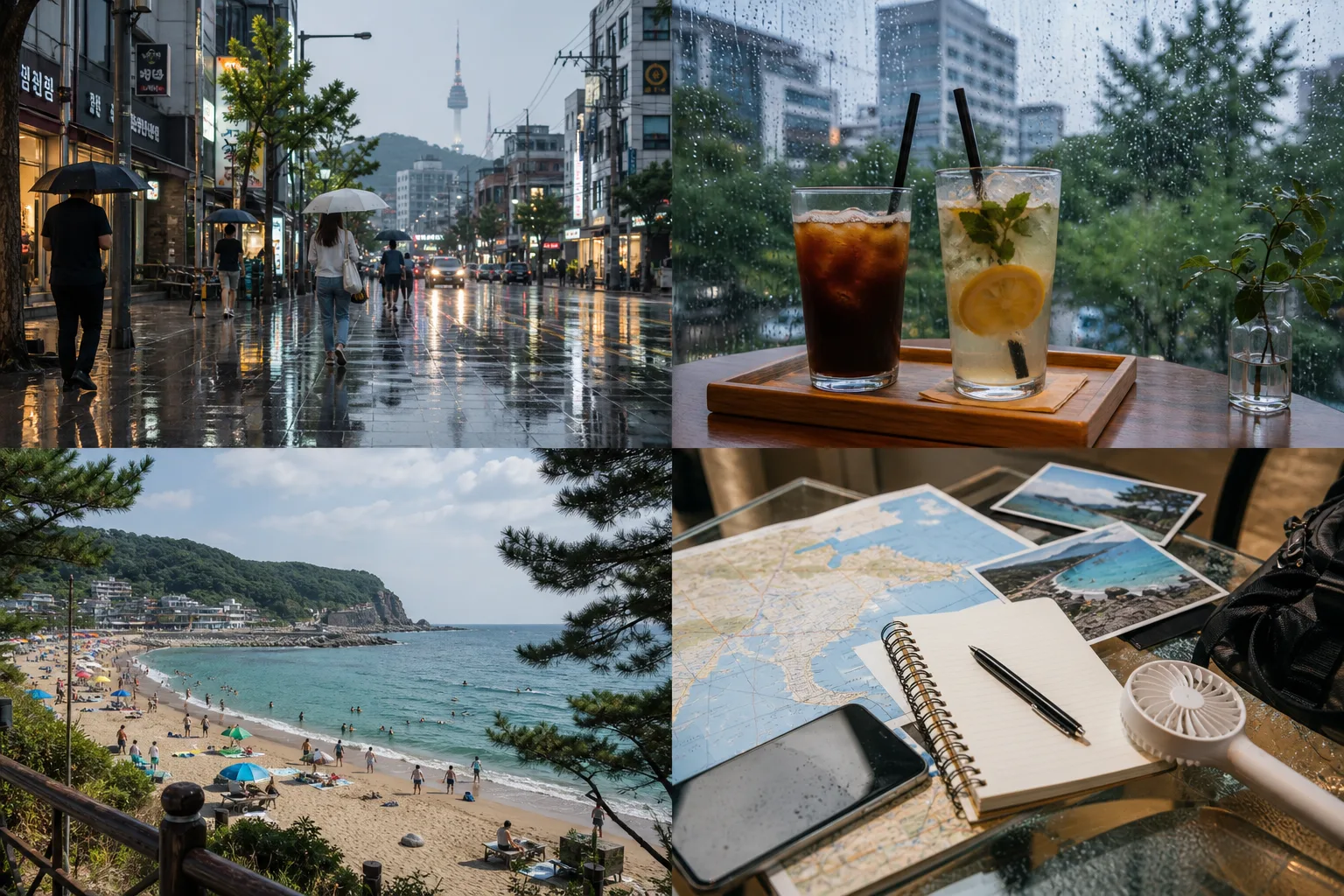
Summer in Korea can be a great trip if you plan for the season instead of fighting it. The same week can deliver blazing sun, sudden rain, and a beach day that feels perfect by sunset. This guide shows you how to stay comfortable, choose the right regions, and build a trip that still works when the weather changes.
What Korea Summer Actually Feels Like
The best summer trip to Korea is not the one that avoids every hot day. It is the one that assumes heat, humidity, and rain will happen, then builds in shade, transit, and indoor backups so you can still enjoy the coast, the city, and the food.
Heat, humidity, and sunlight
Korea in summer feels different from spring or autumn because the weather stops being forgiving. Daytime temperatures can push high enough that walking long blocks, climbing station stairs, or waiting outside for a bus becomes exhausting fast. Even if you are used to humid weather, the combination of dense city heat, reflected sunlight from pavement, and sudden downpours can make a short errand feel like a full workout.
The practical answer is to front-load your outdoor time. Start early, finish your longest walk before lunch, and then treat the hottest part of the day as a break for cafes, museums, malls, or a hotel reset. If you are in Seoul, that means planning around the subway rather than around scenic walking routes. If you are in Busan or another coastal city, it means accepting that the beach is not only for swimming. Shade, seafood lunch, and an evening promenade are often the better value.
Monsoon reality
Korea does not get one neat rain week and then move on. Summer usually includes a monsoon season, and rain can arrive as a heavy block of hours, a full wet day, or a short but intense burst that floods sidewalks and turns hills slippery. The key thing for travelers is not panic. It is flexibility. A rainy day does not ruin a trip if you have a museum, a sauna, a cafe cluster, or a shopping district ready to swap in.
The monsoon is also why summer packing matters more than in many other months. A compact umbrella, quick-dry clothing, a spare shirt, and shoes that can take a soaking are more useful than one more outfit that looks great but is miserable on wet pavement. If you are traveling with children, older parents, or a long-haul arrival on day one, the rain factor should influence both your hotel location and how far you plan to walk after arrival.
Regional differences
Not every part of Korea behaves the same in summer. Seoul and inland cities can feel harsher in the middle of the day because the heat lingers between buildings and there is less sea breeze. Busan, Geoje, and the southeast coast often feel easier when the sea wind is moving, but the humidity still stays high. The east coast can be the most beach-friendly choice if your goal is pure coastline, while inland mountain areas can be a good escape if you want cooler air and more shade.
That regional split matters for trip planning. If you only want one city, Seoul works best as a base for food, shopping, and indoor attractions. If you want a true summer feel, Busan is the easiest big-city add-on because you can shift from transit and cafes to sand and water without needing a complicated transfer. For readers deciding between a city-heavy route and a coast-heavy route, Korea Seasonal Travel Guide: Best Time to Visit by Month is the right companion article to check before you lock dates.
How To Choose Where To Go
Summer in Korea rewards a simple question: do you want to escape the heat, work around it, or lean into it? Once you answer that, the destination choice gets easier. The biggest mistake first-time visitors make is booking a route that treats July or August like shoulder season. It is not shoulder season. Your itinerary should show that.
Seoul and nearby inland cities
If your trip is short, Seoul is still the easiest summer base because transit is strong, food options are everywhere, and you can pivot between indoor and outdoor plans without losing a day. The city is especially good for travelers who want a mix of palace visits, neighborhood walks, cafe time, and one or two major day trips.
The trick is to avoid overcommitting to full-day walking itineraries. In summer, even classic routes can feel draining if you stack them back to back. A palace in the morning, a long lunch, and a museum or shopping center in the afternoon is a better rhythm than trying to cross the city on foot. If you want a nearby cooler reset, mountain trails work best when you treat them as dawn or sunset outings rather than midafternoon activities.
Busan and the southeast coast
Busan is the easiest answer for travelers who want beaches without giving up city convenience. You get sand, seafood, skyline views, and enough transport options that you do not need to rent a car to make the trip work. It is the rare Korean destination where a summer day can still feel relaxed even when the weather is hot, because the coast gives you natural ways to slow down.
The best Busan strategy is not to chase every famous beach in one day. Pick one beach zone, one nearby food area, and one evening viewpoint. That leaves you enough energy to enjoy the trip rather than rush through it. Families often like the convenience of Haeundae for a first visit, while travelers who want a more social evening scene often prefer Gwangalli. If you are building a longer first-timer route, The Ultimate 10-Day South Korea Itinerary for First-Timers is the right place to see how Busan fits into a balanced itinerary.
East coast beaches
The east coast is the better choice when the trip is specifically about beach time rather than urban sightseeing. It can feel less overwhelming than the biggest city beaches, and the scenery often looks more open and relaxed. If you want a summer trip that is more about swimming, seafood, and slow evenings, that coast can be a strong fit.
The downside is logistics. Beach towns may look close on a map but feel much slower to move through without a direct transfer plan. In summer, that is usually fine if you are staying long enough to justify the travel. It is less ideal if you are trying to squeeze a beach day into an already packed Seoul route. For a short stay, the east coast is usually a replacement for something else, not an extra.
Islands and ferry caveats
Island destinations can be wonderful in summer, but they add another layer of weather dependency. If the wind picks up or the rain gets heavy, ferry schedules become one more thing to monitor. That does not make islands a bad choice; it just means they are better for travelers with some flexibility in the middle of the trip.
If your summer priority is ease, stay with destinations that do not collapse when the forecast changes. If your priority is scenery and slower pacing, islands can be worth the extra planning. The decision comes down to how much risk you want to carry in exchange for a more dramatic coastline.
Beach Options By Travel Style
Not every beach is the right summer answer for every traveler. Some beaches are best when you want easy access from the city. Others work better if you want space, quieter water, or a more local feel. Thinking in terms of travel style will save you from forcing a beach day that does not match the rest of your route.
Best beaches for easy city access
For most first-time visitors, Busan is the simplest beach city because the coast fits naturally into a broader travel plan. Haeundae is the obvious starting point if you want the most recognizable name, the most tourist infrastructure, and the easiest set of nearby hotels, cafes, and transit connections. Gwangalli works well if your ideal beach day ends with a dinner view and an evening walk under the bridge lights.
The advantage of these beaches is not that they are hidden or pristine. It is that they are practical. You can swim, rent gear, eat lunch, rest, and return to your hotel without needing a full logistical puzzle. That matters in July and August, when simply changing clothes and cooling off can become the difference between a decent day and a miserable one.
Best beaches for slower pacing
If your goal is to slow the trip down, look beyond the biggest headline beaches and think about how much time you want to spend sitting still. A beach that is a little less famous can be better if you want fewer crowds, easier breathing room, and a less compressed day. That often matters more than a famous name on a map.
This is also where coastal food matters. A slower beach day works best when it includes a straightforward lunch, a shaded break, and enough time to linger after the water. Koreans do summer well when the plan is simple: a manageable swim, a cold drink, and then a long evening. There is no prize for packing too much into the hottest hours.
When not to force a beach day
There are times when a beach day is the wrong choice even if the beach itself looks great. If the forecast shows heavy rain, if you are arriving jet-lagged, or if your hotel is far from the coast and you only have half a day, it may be better to choose a museum, a market, or a neighborhood walk instead. Summer travel gets easier when you stop treating the beach as mandatory.
That is especially true for travelers with kids or older family members. A beach can be tiring in a different way than a city walk because the heat, the sand, and the gear all add friction. In those cases, one reliable beach stop is usually enough. The rest of the trip should stay simple.
If you are already in Seoul and want one outdoor day that feels cooler than the city center, a mountain day can sometimes be the smarter choice. Hiking Bukhansan National Park: Top Trails Near Seoul is worth considering, but only if you go early and treat it as a heat-managed outing, not a casual afternoon stroll.
Practical Guide
This is the part of summer planning that actually saves your trip. Weather strategy is useful, but your trip succeeds or fails on small practical decisions: when you go out, how you get between places, what you pay for, and how much flexibility you leave in the day.
Hours, admission, and prices
For public beaches in Korea, the base entry cost is often simple: many are free to access, but the things you use around the beach are not. Parasols, lounge chairs, shower facilities, lockers, tube rentals, water sports, and private cabanas can all cost extra, and the exact fees vary by beach and operator. In other words, budget for the beach experience, not just the sand.
Hours are also more seasonal than many travelers expect. Some beach zones are active as summer bathing beaches for only part of the year, with lifeguards, rental stands, or special management periods that align with peak season. Because municipal schedules can change year to year, the safest move is to check the local city notice a week or two before departure, especially if you are traveling in late June, July, or August.
For city attractions and most everyday sightseeing, the deeper summer question is not admission price but timing. Morning is the cheapest luxury because it gives you better energy, lighter crowds, and less heat exposure. If there is one habit that makes Korean summer travel easier, it is leaving the hottest part of the day open instead of filling every hour.
How to get there
Korea is one of the easiest countries in Asia for moving between cities without a car, which is one reason summer trips can work so well even when the weather is uncomfortable. Trains, intercity buses, and city subways let you keep your outdoor commitments relatively short. That matters because the worst summer days are the ones where every transfer adds more walking than you planned.
For a first-time visitor, the main decision is whether to anchor the trip in Seoul or split it between Seoul and Busan. Seoul is better if you want a broad city itinerary with flexible day trips. Busan is better if you want the coast to be part of your daily rhythm. If you are traveling from a hotter climate like Singapore or Southeast Asia, you may find Seoul's inland heat more punishing in the afternoon than you expect, which is one more reason to keep your hotel close to transit.
Local transit also shapes beach logistics. A beach that is simple to reach from a subway station is more realistic than one that requires a long transfer plus a climb through summer humidity. The more steps you add, the more important it becomes to plan your exit as carefully as your arrival. Nobody enjoys carrying wet clothes through a crowded platform after a surprise rain shower.
Booking and reservations
You do not need to prebook every summer activity in Korea, but you should prebook the expensive or limited ones. Hotels near the coast, popular KTX times, intercity buses on holiday weekends, and any activity with a small capacity can sell out or become inconveniently timed. If the beach is the heart of your trip, book lodging early and keep the rest of the plan loose.
For normal sightseeing, many choices can remain flexible. That is useful in summer because a forecast can change your day. If the weather suddenly improves, you can switch to a beach or a river walk. If it gets worse, you can retreat to an indoor district without losing money on everything else. Flexible planning is one of the cheapest forms of travel insurance.
If you want tours, transfers, or tickets that reduce friction, book only the parts that genuinely save time or solve a transport problem. In summer, the most valuable booking is often not an attraction at all. It is a hotel with good air conditioning, a location near transit, and enough space to reset between outdoor blocks.
What to pack
Packing for Korea in summer is not complicated, but the details matter. Bring breathable clothing, a compact umbrella, a small towel, sunscreen, a refillable water bottle, and shoes that dry quickly. If you wear glasses, bring a way to keep them from fogging or slipping when the humidity climbs. If you plan beach time, add a dry bag or waterproof pouch for your phone and transit card.
A second useful habit is packing by day block instead of by outfit. One bag section for heat, one for rain, one for evening. That makes it much easier to keep moving when the weather flips. If you are traveling with kids, the same logic applies to snacks, wipes, and an extra shirt.
Cashless payments are common in Korea, so you do not need to carry much cash for routine spending. Still, keep a little local currency for small purchases, lockers, or situations where you want the fastest possible option. The goal is not to over-prepare. It is to avoid needing a convenience store in the middle of a storm because you packed for a fantasy version of summer.
Tips & Common Mistakes
The most common summer mistake is trying to do too much outdoors at midday. Travelers often build a spring-style schedule and then wonder why they feel drained by 2 p.m. The fix is simple: do your longest walk early, move the lunch window forward, and treat the afternoon as a reset block instead of a productivity test.
The second mistake is choosing accommodation too far from your main summer activity. If you want beach days, stay close enough that going back to your room is easy. If you want Seoul sightseeing, stay near a strong transit line. Summer is not the season to add avoidable transfers.
The third mistake is assuming rain means a wasted day. In Korea, rain is usually a scheduling problem, not a cancellation. Museums, department stores, food streets, and neighborhood cafes can rescue a day quickly if you already know where to go. The more you travel in summer, the more you learn to swap the order of your activities instead of abandoning them.
The fourth mistake is underestimating how tiring coast days can be. A beach day sounds restful, but hauling towels, changing clothes, and moving through heat can be more work than a simple indoor day. Choose beaches intentionally, not because you feel like every summer trip should include one.
Another easy mistake is over-optimizing for Instagram instead of comfort. A famous beach at noon is less pleasant than a less famous beach at 4 p.m. with a breeze and enough shade. The same logic applies to mountain viewpoints, riverside walks, and even city streets. Timing is often more important than prestige.
If you are traveling with a partner or family group, the best compromise is usually one anchor activity per day. One morning palace, one afternoon cafe, one evening walk. Or one beach, one seafood meal, one indoor stop. Korea summer travel gets better when you stop trying to make every day a marathon.
FAQ
Is summer a bad time to visit Korea?
No. It is a harder time to visit than spring or autumn, but it is still a good time if your trip is built around heat management. If you want beaches, late evenings, seasonal food, and a more lively outdoor atmosphere, summer has advantages. If you want effortless walking weather, another season is easier.
Which is better in summer, Seoul or Busan?
Seoul is better for variety and indoor-outdoor balance. Busan is better if you want beaches to be part of the trip instead of just a day trip. For many first-timers, the answer is both: Seoul first for city sightseeing, then Busan for the coast.
Do I need to rent a car for a summer trip?
Usually no. Korea's transit system is strong enough for most routes, and not driving is often better in heavy rain or dense city traffic. A car only becomes attractive if your route is highly coastal, spread out, or designed around smaller beach towns rather than major cities.
Are Korean beaches free?
Often yes at the basic entry level, but not free in the full sense. You may still pay for gear, lockers, showers, rentals, food, and premium seating. Always budget for the operational parts of the beach day, not just the sand itself.
What should I do if it rains for a full day?
Shift the day indoors. Korea is one of the easiest places in Asia to recover a rainy day because you can move between cafes, shopping, markets, museums, beauty services, and food areas without needing a car. Keep one or two indoor backups ready and you will rarely lose the whole day.
Conclusion
Korea summer travel works best when you stop expecting the weather to cooperate and start building a trip that can absorb heat, humidity, and rain. Seoul gives you flexibility, Busan gives you coast access, and the east coast or islands can give you a slower beach-focused pace if you have enough time.
The winning formula is simple: early starts, shaded afternoons, flexible indoor backups, and a hotel location that makes recovery easy. If you want a longer route, use a city-and-coast split. If you want a lighter route, keep one big outdoor activity per day and let the rest of the day breathe.
For planning beyond this article, match your dates to the season, then shape the route around weather tolerance and how much beach time you actually want. If you do that, Korea in summer stops being a weather problem and becomes a trip with a very clear rhythm: move early, cool down smartly, and save the coast for when it feels good.