Staying in a Bukchon hanok: the houses, the noise, and the booking call

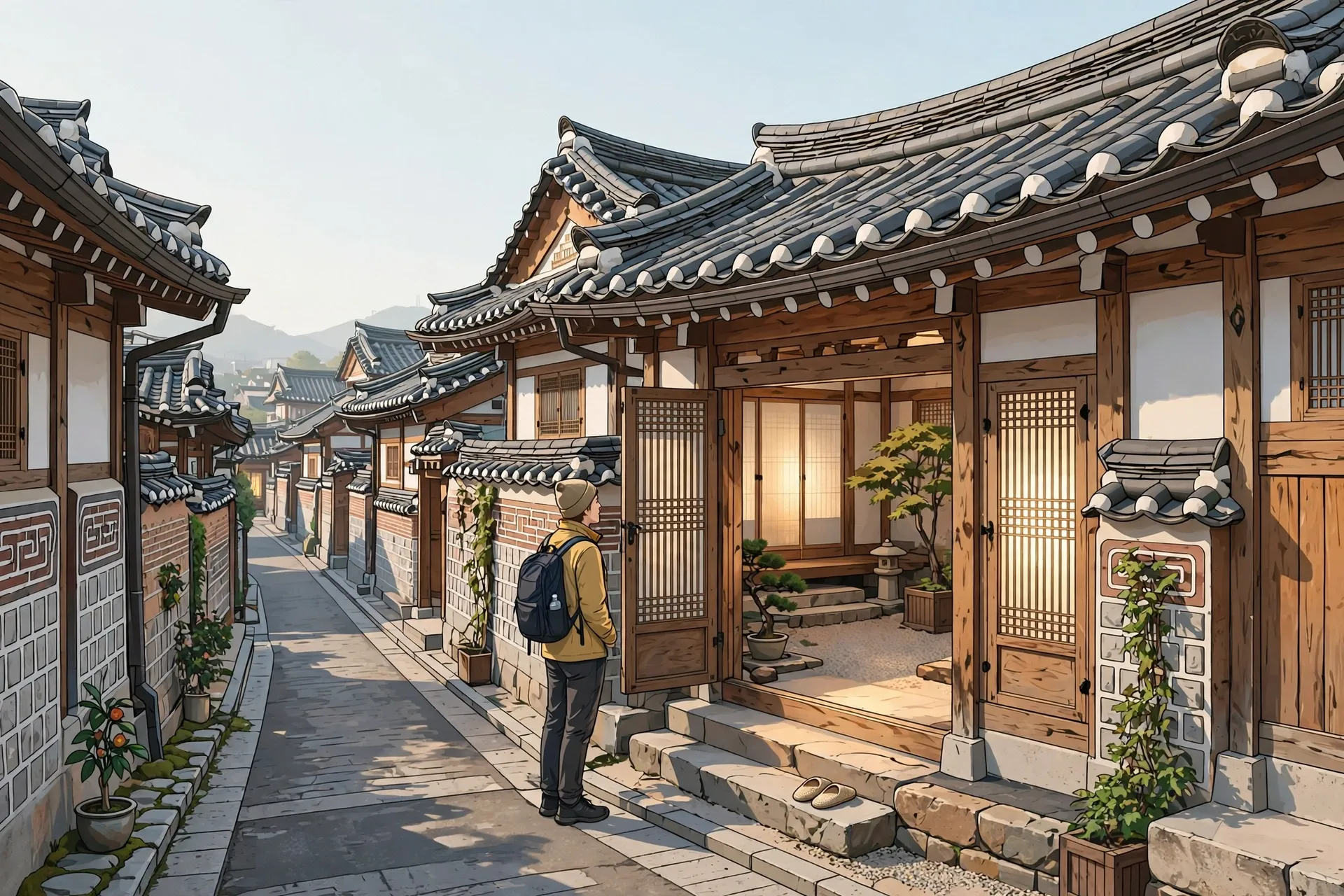
A night in a Bukchon hanok feels different from a night in a standard hotel room in Seoul. You sleep on the floor, slide paper doors shut, and wake to quiet lanes under tiled rooftops. That charm is real, and so are the trade-offs that come with staying in an old house: sound travels, rooms run small, and the bathroom setup varies from house to house. This guide sorts out the choices that matter before you book, so the stay you pick fits how you sleep, how much luggage you carry, and how much quiet you want at night.
Read the house type, noise rules, booking window, and heating and bathroom checks below, then make the location call between sleeping in Bukchon and visiting Ikseon-dong for its cafes during the day.
Which house type: the renovated hanok vs the traditional one
A restored traditional hanok gives you the classic picture: tatami mat rooms, paper sliding doors, and wooden beams, with quiet mornings in alleyways under tiled rooftops. The Bukchon Hanok Experience House fits that picture, with traditional tea ceremonies and calligraphy workshops, and a 10-minute walk from Gyeongbokgung Palace. Prices there start from 180 dollars per night, and bookings are advised 2 weeks in advance.
A renovated hanok guesthouse keeps the traditional rooms but adds the comforts that matter for sleeping well: ondol floor heating, air conditioning, private bathrooms, and free WiFi. Family rooms come with futons, and a complimentary Korean breakfast with 8 side dishes, rice, and bean sprout soup is part of the stay, a short stroll from Anguk Station.
Pick the renovated option if you want the hanok look with reliable heating and a private bathroom. Pick the more traditional option if the workshops, the beams, and the paper doors are the point of the stay for you, and you are happy to trade some comfort for that atmosphere.
Noise expectations: the courtyard sound and the neighbors
Expect paper-door sound. Paper sliding doors do not block sound the way a hotel door does, so sound carries between rooms and from the courtyard, even when the mornings in the lanes feel quiet.
Check the house rules before you book. A Bukchon guesthouse enforces quiet hours from 23:00 to 08:00, and bans parties and pets. That kind of rule helps, but it does not turn paper doors into thick walls, so light sleepers should plan for courtyard sound in the evening and in the morning.
That guesthouse averages 49 dollars, checks in from 14:00, and sits 3 minutes from Bukchon Hanok Village and 5 minutes from Anguk Station. The central location is convenient, and it also means the lanes around you are heavily visited during the day, even if the house itself feels quiet at night.
Booking window: when hanok stays sell out
Book at least 2 weeks ahead. The Bukchon Hanok Experience House advises bookings 2 weeks in advance, and hanok stays run on low stock, so leaving the booking late risks missing the house type you want.
Prices give a sense of the range to expect. A Bukchon hanok stay is listed at about 99 to 113 dollars per night with breakfast included, while the Hanok Experience House lists prices from 180 dollars per night. If your dates are fixed, book the house that fits your bathroom and heating needs as soon as you can, rather than waiting to compare every option.
What to check: heating, bathrooms, and bedding
Heating comes first. Confirm ondol floor heating before you book, and check for air conditioning as well. A Bukchon hanok stay is described as having warm heating despite the rooms feeling small because it is an old house, so heating is a strength to confirm, not a detail to assume.
Bathrooms come next, because not every old house has the same setup. Look for a private bathroom, and ask whether the toilet sits inside or outside the room: the stay described here has a toilet inside and outside the room. If a private bathroom matters to you, do not assume it from the photos alone.
Bedding is the last check. Family rooms with futons are the norm in the guesthouse described here, so confirm the futon setup suits how you sleep, especially if you are used to a raised bed. Rooms feel small because the house is old, so check the room layout against your luggage as well as your bedding.
The location call: Bukchon vs Ikseon-dong for sleeping
Sleep in Bukchon for quiet residential lanes. Bukchon is residential hanok, heavily visited, near Anguk Station on Line 3. That residential character is what makes the mornings quiet, even with visitors passing through during the day.
Visit Ikseon-dong for its cafes, rather than sleeping there. Ikseon-dong is hanok alleys that are all commercial, near Jongno 3-ga Station on Lines 1, 3, and 5. The commercial alleys suit daytime wandering and cafe stops, while Bukchon suits sleeping.
Luggage decides the call for many travelers. Bukchon's narrow, sloping streets are beautiful but tough with luggage, with visitors hauling suitcases uphill. Traveling light and wanting something immersive makes Bukchon a strong place to stay, while three bags and a need for easy street access point to a different Seoul neighborhood. Pack light if you sleep in Bukchon.
Before you book, also check travel insurance for Korea, Japan, and China so the practical side of the trip is covered alongside the stay itself.