Korean sauna first-timer guide: jjimjilbang etiquette, what to bring, and where to go

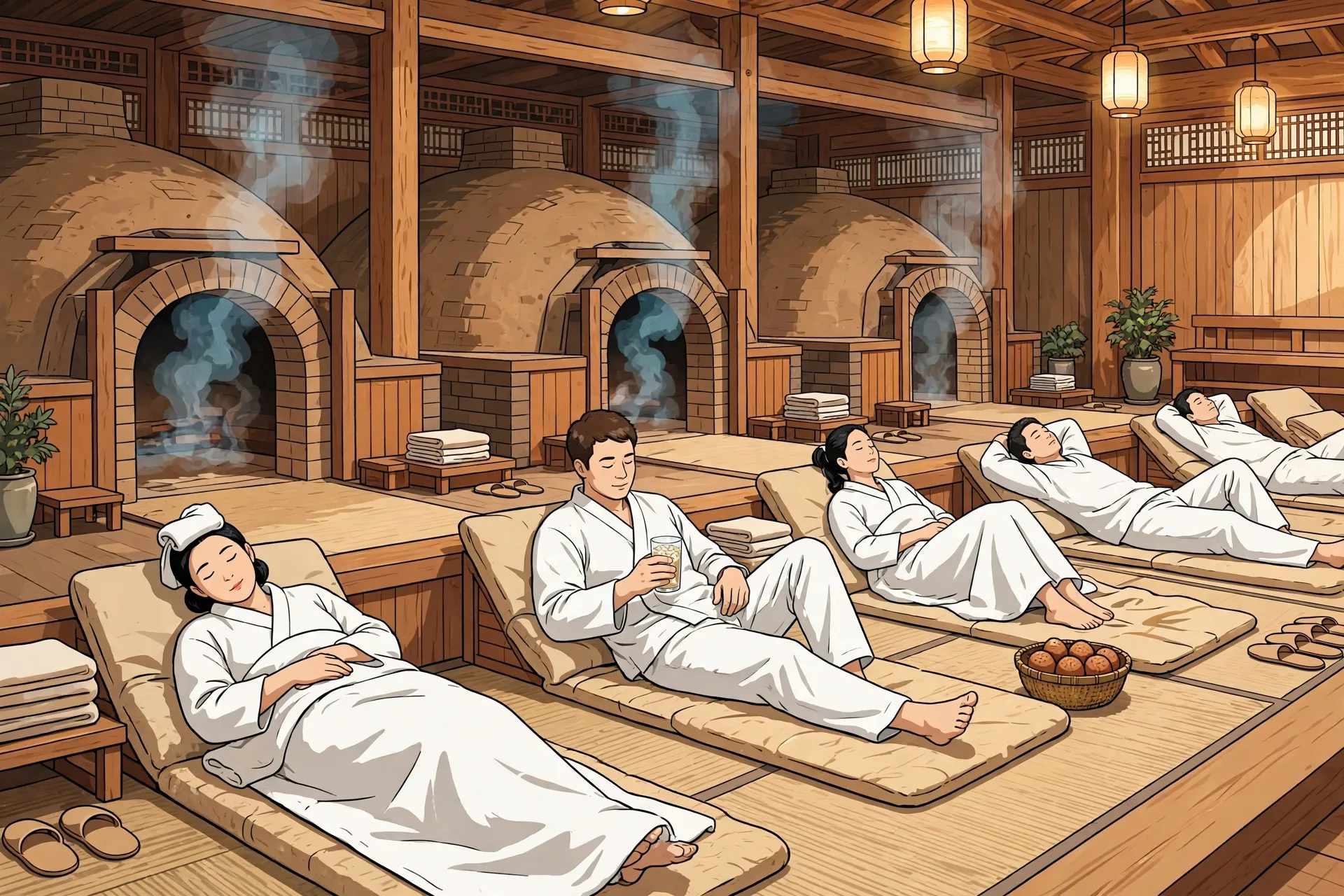
You land in Seoul after a red-eye, your shoulders feel like concrete, and a friend mentions the Korean sauna. You picture a wooden box with steam. What you get instead is a 24-hour bathhouse theme park: hot mineral pools, kiln-like sauna rooms, a food court, and Koreans cheerfully sleeping on heated floors like it is the most normal thing in the world. It is, in fact, one of the best-value experiences in Korean travel — full entry usually costs less than a coffee date in Singapore. The only catch: nobody hands you a manual, and the first five minutes can feel bewildering if you don't know the sequence. This guide is that manual — how to enter, how to behave in the nude baths, what to pack, where to go in Seoul, and exactly what it costs.
Jjimjilbang vs sento vs sauna: what you are walking into
A jjimjilbang is Korea's full-day bathhouse complex: gender-separated nude bathing areas plus co-ed dry sauna rooms, lounges, restaurants, and sleeping halls, with one entry fee covering roughly 12 hours. It layers a Japanese-style sento and a Finnish-style sauna together with food, naps, and social space.
The key mental model is two zones. The bathing zone is gender-separated and completely nude — no swimwear allowed, towels only for modesty walking between stations and on your head, never in the water. The sauna zone is co-ed: big kiln rooms (often themed — charcoal, salt, jade, clay), sleeping rooms with heated ondol floors, snack bars, and lounges where everyone wears the loose cotton uniform provided at check-in. You will switch between zones a few times, so the routine below matters.
Two practical notes for Singapore-based visitors. First, the whole place runs on a wristband key you receive at the front desk: it opens your lockers and doubles as a payment tab for food and drinks inside, which you settle when you leave. Second, most venues are cashless-friendly (cards accepted), and a first visit is genuinely easiest at a larger chain that sees tourists regularly — staff are used to confused first-timers and will point you to the right locker room.
What a first-timer usually worries about
Nudity is the big one, and the honest answer is that it stops feeling strange within about ten minutes — everyone is there for the water, nobody is looking. Phones and cameras are banned in the changing rooms and bath sections, and photography there is actually illegal in Korea, not just house policy, so leave the phone in the locker. Tattoos are the other common worry: policies vary by venue, with modern chains increasingly relaxed about small decorative tattoos while family-oriented neighborhood bathhouses can still refuse extensive full-body ink. If you are heavily tattooed, call ahead or pick a large tourist-facing venue.
The full routine: showers, hot baths, and kilns in order
Do it in this order and you will look like a regular. Shoes off at the door into a shoe locker, key in hand. Pay at the front desk — typically ₩10,000–15,000 in Seoul — and receive a wristband key with your locker number plus a set of cotton uniforms. The wristband also acts as your locker key and your payment tab inside the building.
Head to the gender-separated locker room (the staff point left or right at the desk; ask "yeoja?" or "namja?" if unsure — women's and men's sides). Store everything, strip completely, and bring only a small towel and your toiletries into the bathing area with the wristband on your wrist. The cardinal rule comes before anything else: shower first. Find a shower station, sit on the stool, and wash your entire body with soap before you touch a single tub. Soap is provided at the stations; shampoo and conditioner often are not, which is why bringing your own helps.
Work through the pools from warm to hot. Baths are usually labeled with temperatures, and starting with the warmest one lets your body adjust — ending with a cold plunge feels dramatic and is genuinely refreshing. Keep your hair tied up so it doesn't trail in the water, keep the small towel out of the water (folded on your head is the classic look), and keep noise down — the baths are a quiet zone. Some bathers do a full seshin body scrub here: the scrub stations on the edge of the bath area are run by independent attendants, typically ₩25,000–30,000, and they may take cash separately from the key tab. It is exfoliation at a level you have never experienced — decide based on your tolerance, not your curiosity.
When the heat starts to feel like enough, dry off slightly, change into the provided cotton uniform, and move to the co-ed sauna rooms. These kiln rooms run from mildly warm to genuinely punishing; start with the cooler ones (often 60–70°C) before attempting the hottest (90°C+). Sessions of 10–15 minutes with breaks in between are the norm — drink water between rounds, and there is usually a cold room or ice room to cool down. Between rounds, the lounge area is for napping, snacking on sikhye (sweet rice drink) and baked eggs (about ₩3,000–4,000 each), or just lying on the heated floor. A full visit naturally spans 3–5 hours; your entry covers roughly 12 hours, and lingering past the cutoff can add about ₩1,000–2,000 per extra hour depending on the venue.
How long to stay and how to pace it
Plan three to five hours for a full visit: roughly an hour in the baths, two to three sauna rounds of 10–15 minutes with cool-down breaks, a snack and rest in the lounge, and a final shower. Arriving in the morning gives you the full day for the same fee; arriving after 20:00 at venues like Sparex shifts you onto night pricing but unlocks the overnight option, which is genuinely practical if your flight lands late. There is no checkout pressure — your entry covers roughly 12 hours — but do check the day/night cutoff when you pay, since lingering past it can add a small hourly surcharge. The mistake first-timers make is rushing the baths to "get to the saunas"; the hot pools are the main event, so take your time there first.
A note on late-night arrivals
Staff sometimes check government ID or passports for arrivals late at night, so keep your passport or a photo of it accessible. This is also when the sleeping halls come into their own: overnight stays on the heated floors are normal, usually included in admission, and a legitimate budget move if your flight lands after midnight.
What to bring and what the facility provides
Travel light — the facility covers more than you expect. Provided as standard: at least one towel (sometimes a large and a small), the cotton co-ed uniform, basic body wash and soap at the shower stations, and lockers. Larger or premium venues add shampoo, conditioner, and better lounge amenities, but treat anything beyond soap as a bonus.
Bring these: your own shampoo and conditioner (the provided selection is usually just bar soap or basic body wash), a hair tie if your hair is long enough to dip into water, a glasses or contact-lens case (glasses fog instantly and metal frames heat up fast), any medication, a small phone charger, and ID. For overnight stays, add the charger, any evening medication, and perhaps a sleep mask if you are light-sensitive — the sleeping halls are dim, not dark. Leave jewelry and metal accessories in the locker: they heat up surprisingly fast in the sauna rooms. Cash is rarely required since cards work and the wristband tab covers inside purchases, but a small amount doesn't hurt for the scrub attendants or vending machines that don't take tabs.
One convenience-store stop covers the gaps. Korean convenience stores sell travel-size shampoo, hair ties, phone cables, and snacks for a fraction of tourist-shop prices — see our guide to what is actually worth buying at CU, GS25, and 7-Eleven before you head in: Korean convenience store buying guide. And since the whole place runs on the wristband key, the most important thing you carry inside the bathing area is the key itself — keep it on your wrist at all times.
Packing for an overnight stay
Overnight guests keep it minimal: charger, medications, a fresh change of clothes for the morning, and skincare. The venue provides towels and the uniform, and the sleeping halls provide mats or you simply claim floor space with your towel. Check-out means settling your key tab at the desk — and note that your shoe locker won't open until the tab is settled, so don't try to skip the counter.
Etiquette rules that actually matter
Most "etiquette guides" pad this section with twenty rules. In practice, five cover it. First, wash thoroughly with soap before entering any bath — this is the non-negotiable one, and regulars notice. Second, the baths are nude: no swimwear, towels out of the water, hair tied up. Third, phones and cameras stay in the locker; photography in changing and bath areas is illegal in Korea, and staff take it seriously. Fourth, keep noise down in the bath area and sleeping halls — the jjimjilbang is a resting place, not a bar. Fifth, settle your key tab before leaving, because your shoe locker will not release your shoes until you do.
Beyond those, a few courtesies smooth the visit. Don't splash or hog the shower stations during busy times. Rinse off briefly between the pools and the sauna rooms if you are sweaty. In the co-ed areas, the uniform stays on at all times.
Kids, age rules, and families
Children use the jjimjilbang in Korea, and families do visit together — but the bathing areas are strictly gender-separated, so fathers take sons and mothers take daughters into the baths. Age cutoffs for children entering the opposite-gender bath area are set per venue and vary, so ask at the desk if you are traveling as a family with young kids. The co-ed sauna rooms, lounges, and restaurants are where everyone regroups, and they are the easiest part of the building for a mixed group. If you are visiting as a couple, expect to spend the bath portion apart and the sauna portion together — that is the normal rhythm, and the uniform change marks the transition.
And regarding tattoos: the trend in 2026 is toward tolerance at modern venues, but it is not universal — neighborhood bathhouses oriented at families still turn away extensive ink. If your tattoos are large or full-body, a quick phone call or message to the venue before you go saves an awkward refusal at the desk. The venue picks below favor first-timers, including the heavily tattooed.
What not to worry about
Body hair norms, exact shower technique, which pool is "correct" — none of this is policed. Sit where there's space, move when you're done, and follow the five rules above. First-timers who do this blend in within minutes.
The best jjimjilbang in Seoul for first-timers
Pick a large, tourist-familiar venue for your first visit and you remove most friction. Sparex Dongdaemun, in the Good Morning City building by Dongdaemun History & Culture Park Station (Line 4, Exit 14), is the classic first-timer pick: open 24 hours, with day entry (05:00–20:00) around ₩12,000 and night entry (20:00–05:00) around ₩15,000, plus luggage storage, a sleeping hall, and a food court. Its size and steady tourist traffic mean staff are accustomed to first-timers, and the tattoo policy is on the relaxed end.
Aquafield, inside the Starfield malls in Hanam and Goyang, is the premium option — cleaner, more modern, pricier, and very foreigner-friendly, good if you prefer a resort feel over a traditional one. Itaewon Land is frequently singled out as the most English-friendly pick for first-time tourists, with staff used to explaining the routine. If your trip extends to Busan, Spa Land Centum City is the standout there (around ₩26,000 for 4-hour sessions, with an enormous variety of themed kilns).
One warning that saves real disappointment: several names that dominate older English guides are dead. Dragon Hill Spa in Yongsan has been closed since 2021 and Siloam Sauna near Seoul Station since late 2020, yet stale listings still recommend both. If a blog post sends you to either, the post is outdated. Verify opening hours on the venue's own listing or a current map app before you go, especially for venues outside the big chains.
Neighborhood bathhouses vs tourist chains
For a first visit, a large chain like Sparex or Aquafield is the safer bet: English signage, staff accustomed to foreigners, and relaxed tattoo policies. The trade-off is atmosphere — they feel polished and a bit generic. Neighborhood bathhouses (the small local ones in residential areas) are cheaper and more characterful, but they run in Korean, see fewer foreigners, and are more likely to enforce stricter tattoo or ID rules. The smart progression is to learn the routine at a big venue first, then try a neighborhood one on a later trip when you know the sequence by heart. Either way, the five rules above and the shower-first habit are what separate you from the other tourists.
What it costs: entry, food, scrubs, and sleeping over
Typical Seoul admission runs ₩10,000–20,000 for roughly 12 hours depending on venue and time of day, with larger venues charging toward the top of the range. Inside, sikhye and baked eggs run about ₩3,000–4,000 each, and an optional seshin body scrub costs ₩25,000–30,000. An overnight stay is usually included in admission, so a full visit — entry, snacks, a nap on the heated floor — often lands around ₩15,000–20,000 all-in, which is cheaper than a guesthouse bed. Everything except the scrub typically goes on the wristband key tab, settled at the front desk on exit.
Plan one jjimjilbang visit early in your trip and you will understand something essential about how Koreans rest: not alone in a hotel room, but together in warm water, then stretched out on a heated floor with a baked egg in hand. Go after a long flight, go after a long hiking day, or go the night before you fly home. The routine is simple, the cost is trivial, and the only real requirement is showing up willing to shower first.