Sapporo winter markets and seafood: a cold-weather eating walk

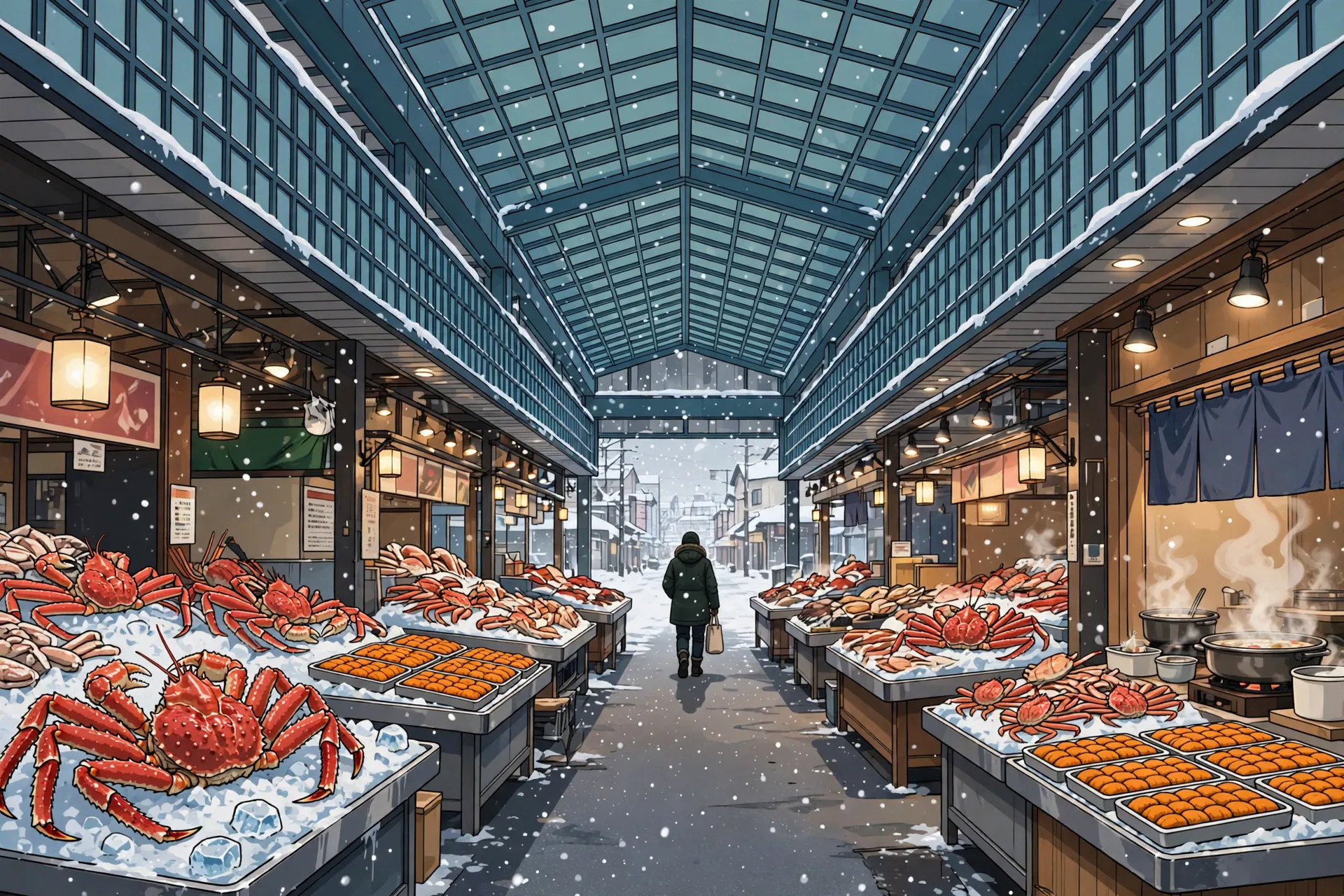
Sapporo in winter is a cold-weather eating city, and its two seafood markets make the best first stop of the day. Start early at Nijo Market in the centre for a seafood bowl breakfast, then ride out to the Curb Market beside the wholesale market for crab and local produce while the morning stock is still full. Winter is peak season for king crab and snow crab, and both markets stay open year-round, so the walk works on any winter day. This guide gives you the order to visit them in, the hours that matter, and what to eat — then finishes with a hot bowl of miso ramen or soup curry to warm up after the cold.
Start at Nijo Market: the central seafood breakfast
Nijo Market is the central stop and the right place to start. Its shops open 7:00–18:00 and its restaurants open 6:00–21:00, with no closing days, so an early breakfast fits the market's own hours. The nearest station is Bus Center mae on the Subway Tozai Line. Hours vary by shop, so treat the posted hours as the market's range rather than a promise from every stall.
Order a seafood bowl for breakfast and eat it at the market. The classic Sapporo kaisendon is the dish to look for here: uni, ikura, and crab, often with scallop, salmon, and sweet shrimp. Winter is the season for it, with king crab at its best roughly November to February and snow crab peaking November to March.
Then the Curb Market: the wholesale-side walk
The Curb Market is the second stop. It is a retail market open to the general public, set next to the Sapporo Central Wholesale Market, and it opens at 6AM. About 60 stores sell fruit, fresh fish, and dried fish, and the market also holds sushi and other restaurants, so it works as a second breakfast stop as well as a walk.
Getting there from central Sapporo is simple: about a 10-minute subway ride from Odori Station to Nijuyonken Station on the Tozai Line, then a seven-minute walk. Go early in the morning rather than late. Market stock depletes after the busy morning hours of 8:00–11:00, so an early arrival sees the fullest stalls.
What to eat in winter: crab, uni, and the seafood bowl
Winter is the point of this walk, because the crab is at its best. King crab is at its best in winter, roughly November to February, and snow crab peaks November to March. If you visit inside those months, crab is the dish to order.
The seafood bowl is the other dish to know. A kaisendon is a bowl of rice topped with raw seafood, and the classic Sapporo version combines uni, ikura, and crab, often with scallop, salmon, and sweet shrimp. Order it at Nijo Market for breakfast, and compare it with what the Curb Market's sushi restaurants offer later in the morning.
Prices are not fixed for this walk. Exact prices for kaisendon and crab at individual stalls vary by shop and season, so check the price at the stall before you order rather than budgeting from a menu seen elsewhere.
How to walk it: timing, route, and the cold
The route is Nijo Market first, then the Curb Market. Start at Nijo Market for breakfast, when its restaurants are open from 6:00, then ride the Tozai Line from Odori Station to Nijuyonken Station and walk seven minutes to the Curb Market. Arrive before the busy 8:00–11:00 hours pass, because stock depletes after them.
Carry yen. Many traditional stalls at Nijo Market take cash only, so a card alone is not enough for the whole walk. Dress warmly, too: the market arcade can feel cold in winter. The markets list no closing days, but each shop sets its own hours, so whether every individual stall is open on a given winter day is something to confirm on the day.
Warm up after: miso ramen and soup curry
Finish with a hot dish. Miso ramen was invented in Sapporo, and soup curry is the city's other signature hot dish, so either one is a fitting warm finish after a cold market morning. Eat it near the markets or back in central Sapporo, and let the walk end warm.
If baseball is also on your Japan plan, how to buy baseball tickets as a foreigner covers that stop before the morning starts.