Japan Cash Back and Tax-Free Shopping: How to Maximize Savings

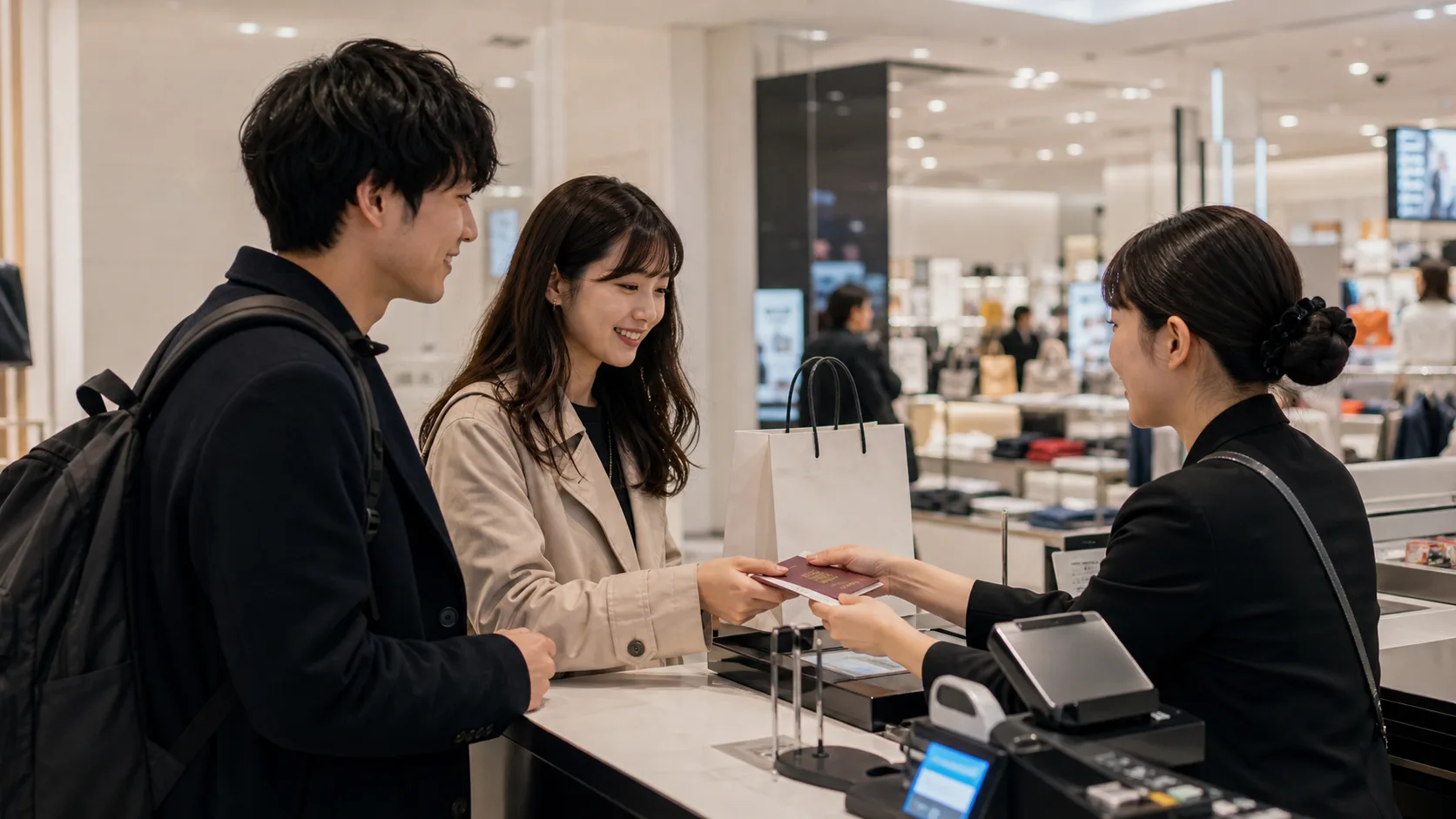
Travelers often treat shopping in Japan as an impulse decision: if the price looks good, buy it, then hope the tax-free process somehow fixes the budget later. That is backwards. The best savings come from planning what you will actually buy, knowing which stores can remove consumption tax at checkout, and using the right card or payment method so you do not leave money on the table. If your trip also includes transport and arrival logistics, keep Japan Travel Planning: Visa, IC Card, Rail Pass & Essential Logistics Guide nearby as the operational companion to this shopping strategy.
What Tax-Free Shopping Actually Saves
If you are visiting Japan as a short-term traveler, tax-free shopping is the most straightforward way to reduce the cost of eligible purchases. In the simple version of the system, participating stores can remove Japan's consumption tax from qualifying goods at the point of sale when you meet the visitor requirements and show your passport. The savings are not exotic, but they are real, and they add up quickly if you are buying electronics, cosmetics, medicine, snacks, or gifts.
The core idea is easy: do not pay tax on things you were going to buy anyway. That sounds obvious, but many visitors still miss the benefit because they shop first and ask questions later. Some stores apply the tax-free process automatically at checkout. Others require you to go to a specific counter. Some large shops have well-marked tax-free lanes; smaller neighborhood stores may only do the process if you ask. The more organized you are, the less time you lose.
For most travelers, the best use of tax-free shopping is not to buy more. It is to spend the same money on better-value items. That could mean the same skincare budget but a higher-quality brand, the same electronics budget but a more useful model, or the same souvenir budget but fewer random purchases. Tax-free only helps if you were already planning to buy something.
The other important point is that cash back and tax-free are not the same thing. Tax-free is a legal consumption-tax exemption for eligible foreign visitors. Cash back usually means a separate benefit from your card issuer, payment app, or shopping mall loyalty program. In practical terms, the best shoppers in Japan stack them carefully: tax-free at the store, then cashback or points from the payment method, then no foreign transaction fee if possible.
The result is a cleaner travel budget. You are not relying on one giant discount. You are combining small, reliable savings that each do a specific job.
The basic savings stack
Think of shopping savings in Japan as three layers:
- Tax-free reduction at the store
- Credit card or payment-app cashback
- Reward points, mall coupons, or store membership benefits
Only the first layer is universal enough to matter for most travelers. The second and third layers depend on your payment setup and the shop you visit. That is why you should decide what you want before entering the store. If you are wandering randomly, you end up comparing prices too late and using whatever payment method is easiest instead of the one that saves the most.
Who tax-free shopping is for
Tax-free shopping is useful if you are:
- Buying gifts in bulk
- Purchasing Japanese cosmetics or personal care items
- Replacing tech accessories or small electronics
- Stocking up on snacks or packaged souvenirs
- Picking up items that are better value in Japan than at home
It is less useful if you are:
- Buying one cheap item
- Shopping without a plan
- Staying long enough that your visitor status may not qualify
- Purchasing things you will open and use immediately in Japan if the category rules do not permit it
The most common mistake is treating tax-free as a reason to spend more. The tax saving does not make a bad purchase good. It only makes a good purchase slightly cheaper.
How Tax-Free Shopping Works
Japan's tax-free system is built around temporary visitor status and qualifying purchases. In practice, that means you usually need to present your passport and shop at a store that participates in the program. The store then removes the consumption tax from eligible items or arranges a refund-style process, depending on how it is set up.
For many travelers, the easiest rule to remember is this: if the shop advertises tax-free shopping, bring your passport and ask at checkout before you pay. If you wait until after the receipt is printed, you may have already made the process harder than it needs to be.
The system is especially helpful in department stores, electronics retailers, drugstores, airport shops, and large souvenir chains. Those are the places where the savings can be meaningful enough to justify the time. In tiny shops, the tax-free process may be possible but not worth the extra complexity unless you are making a larger purchase.
What usually qualifies
Qualifying purchases generally fall into two broad groups:
- General goods such as clothing, electronics, accessories, and souvenirs
- Consumable goods such as snacks, cosmetics, toiletries, and medicine, when sold under the tax-free system's conditions
The important thing is that the store must handle the category correctly. A traveler may assume everything in the basket is tax-free, but the cashier may need to separate items or apply different rules. That is common in drugstores and supermarkets, where some items may qualify and others may not.
If you are buying mixed items, do not rush the checkout. Ask the store to confirm which goods are eligible. That takes less time than discovering later that the receipt was processed incorrectly.
What can trip you up
The tax-free process gets messy when travelers:
- Do not have a passport on them
- Try to combine eligible and ineligible goods without asking
- Forget that some stores have minimum purchase conditions
- Assume every branch of a chain handles tax-free the same way
- Leave the store before the tax-free step is complete
The process is usually simple once you understand it, but it is not automatic in the way tap-to-pay is automatic. You still need to follow the store's instructions.
The 2026 timing issue
There are reports in early 2026 that Japan plans to tighten tax-free shopping rules from November 2026 to curb misuse. If your trip is before that, the usual visitor process should still matter most. If your trip is after that, re-check the rules before you buy high-value items. That is especially true if you are planning a large electronics purchase or a shopping-heavy itinerary.
For a traveler, the practical takeaway is simple: do not assume the rules are frozen. Verify the store process close to departure if your trip is near the change window.
Cash Back Is Different from Tax-Free
This is where many shopping guides get sloppy. They use the phrase “cash back” to describe tax-free shopping, but those are separate mechanisms.
Tax-free shopping is a retailer-side exemption from consumption tax for eligible foreign visitors. Cashback is a payment-side rebate from your bank, credit card, or wallet. They can both reduce the effective cost of a purchase, but they operate independently.
That distinction matters because the best payment method for tax-free shopping is not always the same as the one with the highest cashback. Sometimes the best value is a card that earns travel points. Sometimes it is a card with no foreign transaction fee. Sometimes it is a local payment app only if the merchant accepts it and the promotion is active. The right answer depends on the actual purchase size.
When cashback is worth caring about
Cashback matters most when:
- You are making a large purchase and the percentage adds up
- Your card has no foreign transaction fee
- You will pay the bill in full and avoid interest
- The merchant accepts the card without a surcharge
Cashback matters less when:
- You are buying a low-value souvenir
- The card has hidden FX markup or fees
- The promotion requires a lot of extra steps
- You will not actually use the rewards later
The simplest rule is to prioritize the cheapest final cost, not the most exciting reward headline. A 3 percent cashback offer is worthless if a bad exchange rate quietly eats more than that.
Why points can beat cashback
In some cases, points are more useful than cash rebates. That is especially true if your card or loyalty program gives you:
- Flexible travel redemptions
- Airline transfer options
- Hotel points you already use
- Bonus categories for overseas shopping
If you are disciplined about redemption value, points can outperform a flat cashback rate. If you are not, cashback is easier to understand and easier to use. For most travelers, easy beats theoretically optimal.
Where to Shop
Not all shopping zones in Japan are equally good for savings. The right location can lower your total spend before tax-free even enters the picture. In practice, the best strategy is to separate “buying” from “looking.”
Buy where the prices are stable and the tax-free process is efficient. Look around in areas that are interesting, but do not assume every scenic shopping district offers the best value.
Department stores
Department stores are one of the cleanest places to use tax-free shopping because the process is usually well organized. They often have dedicated counters, multilingual support, and a wide range of eligible goods. That makes them useful for travelers buying gifts, cosmetics, sweets, or branded goods.
Department stores are not always cheap, though. They are good for process efficiency, not automatically for low prices. If the item is branded and you want confidence in authenticity, the premium can be worth it. If you are only chasing the lowest possible sticker price, compare first.
Drugstores
Drugstores are a major tax-free sweet spot for visitors. They often stock packaged snacks, skincare, medicine, toiletries, and small souvenirs in one place. If you are shopping for gifts that many people will use, drugstores can be more efficient than specialty stores.
The trick is to know what you are buying. Some products are better in a drugstore because of convenience, not because they are uniquely cheap. If you are in a rush, the tax-free counter can still save time compared with going to multiple shops.
Electronics retailers
Electronics stores are where tax-free savings can become genuinely meaningful. A phone accessory, camera item, travel adapter, earphones, or compact appliance may be priced competitively enough that the tax-free benefit is only one part of the value. But for larger purchases, the percentage reduction matters.
This is also where a careful buyer should compare warranties, compatibility, and voltage before getting distracted by the tax-free sticker. Cheap is not cheap if the item does not work properly at home.
Supermarkets and souvenir chains
Supermarkets and souvenir chains are great when you are buying edible gifts or stock-up items. The advantage is breadth: you can pick up multiple small purchases in one visit. The disadvantage is that not every item may qualify, so the basket needs a little more attention.
If you are buying snacks for friends, do not assume a mass-market snack aisle is automatically cheaper than airport retail. It often is cheaper, but only if you shop outside the most tourist-heavy branch.
How to Maximize Savings
The best savings strategy is not one big trick. It is a sequence of small decisions that keep you from paying unnecessary premiums.
1. Decide your shopping list before you leave the hotel
Walk into the store with a list. You do not need a rigid spreadsheet, but you should know:
- What you want to buy
- Roughly how much you expect to spend
- Which items are must-buys and which are optional
- Whether the purchase is worth tax-free processing
If you do not know this in advance, you will spend time wandering instead of buying.
2. Check the tax-free threshold and store rules on the spot
Most travelers focus on the headline tax-free message and skip the details. That is risky because stores can have their own rules around minimum spend, eligible categories, or how they separate items. Before you queue up, look for the tax-free sign or ask a staff member.
If the store is unfamiliar, say exactly what you want:
- “Tax-free?”
- “Passport needed?”
- “Can I combine these items?”
The point is not fluency. The point is clarity.
3. Compare the final cost, not just the sticker price
Japanese shopping can trick you with nice displays and clean branding. A product that looks cheap may cost more after FX fees, poor exchange rates, or a suboptimal payment method. A product that looks expensive may actually be the better buy if it includes tax-free and a card reward.
The final cost is the only number that matters.
4. Use a payment method that matches the purchase size
For small purchases, a simple no-fee card or wallet you already use is usually enough. For larger purchases, check whether your card gives points or cashback that justify the spend. If a merchant offers a store-specific payment promotion, make sure the discount is real and not a marketing gimmick.
If your card charges foreign transaction fees, that fee can quietly erase a lot of the benefit of tax-free shopping on a mid-sized basket. Do the math before you tap.
5. Keep receipts and document high-value purchases
This is practical, not paranoid. Receipts help with returns, warranty claims, and purchase tracking. For electronics or branded goods, keeping the receipt is simply smart. If you later need support, the paper trail is worth the small inconvenience.
6. Time the shopping around your trip
Tax-free shopping is more useful when the purchase is placed at the right point in the trip.
- Early in the trip: useful for items you will use during the journey
- Mid-trip: good for gifts and replacement purchases
- End of trip: best if you are buying things to take home and do not want to carry them around for long
If you buy too early, you lug the items around. If you buy too late, you may be rushed and make bad decisions. The sweet spot is usually somewhere in the middle or close to your departure airport.
Practical Guide
The practical side of saving money in Japan is less about finding a secret hack and more about avoiding friction. If shopping is too hard, you will revert to convenience and pay more.
Hours
Shopping hours vary by store type, but the broad pattern is consistent:
- Major department stores usually operate during the day and into the evening
- Drugstores often have long hours, and some urban branches stay open very late
- Electronics chains often keep mall-style hours
- Airport retail depends on flight and terminal schedules
When in doubt, check the specific branch rather than the chain brand. A store name is not a guarantee of identical hours.
Admission and prices
There is no admission fee for shopping, but there is a psychological cost: it is easy to overspend. The best way to avoid that is to set a target before entering the store.
Use simple budget buckets:
- Small souvenir run: keep it under a specific yen cap
- Gift shopping: set a total ceiling before the first item goes into the basket
- Electronics: compare at least two stores before buying
If you are trying to maximize savings, you need to treat the shopping trip like a route, not entertainment.
How to get there
The best shopping districts are usually easy to reach by train, subway, or airport transfer line. That is useful because the cheapest items in Japan often sit just a few stops away from the most expensive tourist zone. If you are already using an IC card and moving efficiently around the city, the extra trip is often worth it.
For Tokyo, Osaka, Kyoto, and other major hubs, I would prioritize these criteria:
- Direct train access
- Clear tax-free signage
- Multiple stores in one building or block
- Easy baggage handling
If the route is too complicated, the trip stops being a savings strategy and becomes a logistics chore.
Booking links if applicable
There is no booking requirement for ordinary tax-free shopping. If your shopping plan includes a specialty experience such as a guided market visit, a department-store food tour, or a private styling session, then booking may make sense. But for the standard traveler, the better move is simply to arrive with a list and enough time.
If you are combining shopping with a broader Tokyo, Kyoto, or Osaka trip, the transportation and arrival planning guide linked above is the better place to decide your airport, rail pass, and base location. That choice often matters more than the store itself because it determines how many good shopping districts you can reach without friction.
Tips & Common Mistakes
Most shopping mistakes in Japan are not about missing a discount. They are about shopping in a way that creates waste. The goal is savings that stay savings.
Tip 1: Buy useful items, not just tax-free items
Tax-free status is not a reason to fill a suitcase with things you would never buy at full price. If you would not buy it without the discount, you are probably not saving money. You are rationalizing spending.
Tip 2: Separate browsing from buying
Browsing is fun. Buying is financial. If you mix them too much, you start spending because you are in the mood rather than because the item is useful. Set a window for browsing and a window for decision-making.
Tip 3: Keep an eye on baggage weight
Savings vanish fast if you need to pay for overweight luggage or buy a second bag. This is especially relevant for cosmetics, snacks, and boxed gifts. A better shopping haul is the one you can actually carry home efficiently.
Tip 4: Do not assume every branch handles tax-free the same way
Some chain stores have very different tax-free procedures by location. A branch in a tourist district may be highly optimized. A branch in a suburban mall may be slower or have different rules. Ask before you queue.
Tip 5: Watch the checkout line
If a store is packed, the tax-free process may add a little time. That is not a reason to avoid tax-free shopping, but it is a reason to avoid shopping in a rush. The savings are better when you are calm.
Common mistake: ignoring exchange rates
This is the big one. A purchase can look well-priced in yen but still be mediocre if your card applies a bad FX spread. Compare the total in your home currency when possible. The yen amount alone does not tell the full story.
Common mistake: paying a fee to save a fee
Some travelers chase cash back or rewards so aggressively that they sign up for a payment method with worse economics than the thing they were trying to optimize. If the new card has an annual fee, foreign transaction fee, or promotion rule you would never use again, it may not be worth the trouble.
Insider advice: save shopping for the day you can carry it
If you shop on the same day you move between hotels or leave the city, your time and baggage flexibility are already constrained. Try to place the shopping run on a lighter day so you can compare prices, deal with tax-free processing, and still get back to your hotel without stress.
FAQ
Do I need to pay tax and claim a refund later?
Not always. Many participating stores handle tax-free shopping at checkout when you present your passport and meet the visitor requirements. In other cases, the process may look more like a refund-style step. The important thing is to ask before paying.
Is cash back the same as tax-free shopping?
No. Tax-free shopping is a tax exemption mechanism for eligible visitors. Cash back is a reward from a payment method or store promotion. They can both lower your effective cost, but they are separate systems.
Can I use a credit card and still get tax-free?
Yes, if the store accepts your card and handles tax-free checkout for eligible items. In fact, that is often the best combination because you can pair the tax exemption with card rewards or no foreign transaction fee.
What should I buy tax-free in Japan?
The best categories are usually electronics, cosmetics, toiletries, packaged snacks, souvenirs, and other goods you already planned to purchase. The best purchase is the one you actually needed, not the one with the most dramatic discount label.
Are tax-free rules changing in 2026?
Yes, there are reports that Japan plans to tighten tax-free shopping rules from November 2026. If your trip falls near or after that window, check the current process before you shop, especially for high-value purchases.
Conclusion
If you want to maximize savings in Japan, do not think of tax-free shopping as a bonus at the end of the trip. Treat it as part of your travel plan from the start. Decide what you need, buy it in a store that handles tax-free properly, use a payment method that does not quietly erase your savings, and avoid paying for convenience you do not need.
The most reliable formula is simple: buy only useful items, compare the final cost, and use the tax-free system the way it was meant to be used. That leaves more money for the parts of the trip that are harder to replicate later.
If you want the broader trip to support your shopping strategy, revisit the logistics guide for rail cards, airport choice, and daily movement planning. If your travel budget also needs better food control, the Japan food strategy article is a good companion for keeping meals from undoing your shopping discipline.
For a tighter day-to-day budget on the same trip, pair this with How to Travel Japan on a Budget: Cheap Eats, Transport & Stays so your shopping savings are not canceled out by expensive meals or transit.