Japan Accommodation Guide: Capsule Hotels, Ryokan & Budget Hostels

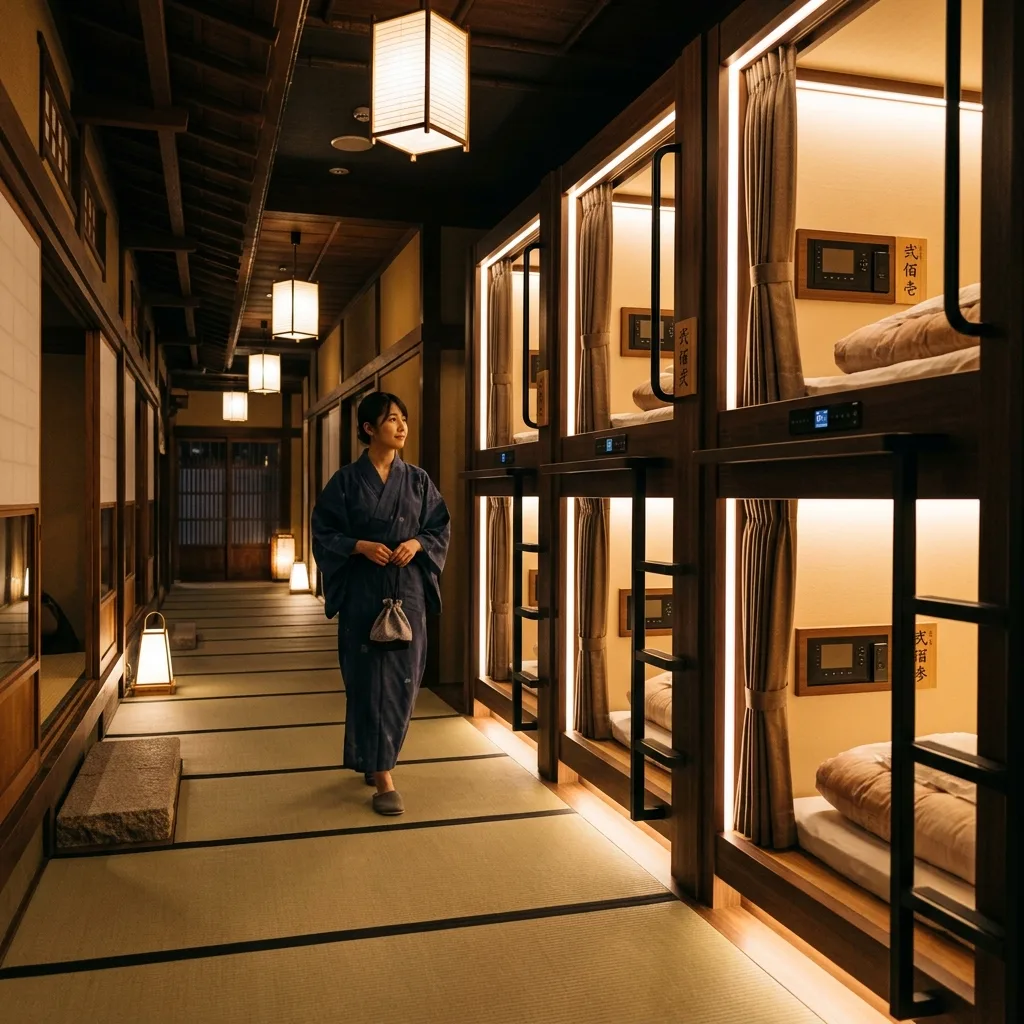
Planning a trip to Japan means navigating a world of unique accommodation options, each offering a distinct cultural experience. From the futuristic minimalism of capsule hotels to the serene elegance of traditional ryokan, and the budget-friendly communal vibe of hostels, choosing where to stay is an integral part of your adventure. This comprehensive guide will walk you through the best of Japan's lodging landscape, providing insights into what to expect, updated pricing for 2026, and insider tips to help you make the perfect choice for your Japanese journey. Whether you're a solo explorer on a shoestring budget, a couple seeking a romantic getaway, or a family eager to immerse yourselves in local traditions, understanding these options is key to unlocking an unforgettable stay.
Introduction
Japan's accommodation scene is as diverse as its landscape, offering travelers an unparalleled range of choices that blend tradition with cutting-edge innovation. Unlike many Western countries, or even nearby destinations like The Ultimate 10-Day South Korea Itinerary for First-Timers, where hotels are the primary option, Japan presents a fascinating array of lodging types, each providing a unique window into Japanese culture and hospitality. For first-time visitors, this variety can be both exciting and a little overwhelming. This guide aims to demystify these options, helping you understand the nuances of capsule hotels, ryokan, and budget hostels so you can confidently book the perfect base for your adventures. We'll cover everything from what defines each type of stay to their typical costs in 2026, crucial booking tips, and recommendations to ensure a smooth and memorable experience.
Capsule Hotels: The Future of Efficient Stays
Capsule hotels, often seen as a symbol of Japan's ingenuity and efficient use of space, have evolved significantly since their inception. What began as simple, affordable overnight stays for business travelers has transformed into a diverse offering, including high-tech "smart stays" with amenities that might surprise you. These hotels offer individual sleeping pods, providing privacy in a compact, communal setting. They are an excellent choice for solo travelers, those on a budget, or anyone looking for a novel experience.
What to Expect in Capsule Hotels
Each capsule typically includes a bed, lighting, power outlets, and sometimes a small television or radio. Luggage storage is usually provided in lockers separate from the sleeping area. Bathrooms and showers are communal, often meticulously clean, and sometimes feature traditional Japanese bathing facilities. Many modern capsule hotels, like The Millennials, now incorporate advanced technology, such as app-controlled pods and personalized sleep analysis reports, elevating the guest experience beyond mere utility. Gender segregation is common, with entire floors or sections dedicated to male or female guests, ensuring comfort and privacy.
Capsule Hotel Prices and Booking Tips (2026)
As of April 2026, capsule hotel prices typically range from ¥4,500 to ¥12,000 ($30–$80 USD) per night, depending on the city, location, and the level of luxury. In major hubs like Tokyo, Osaka, and Kyoto, you'll find a wide spectrum of choices.
Tokyo Top Picks for 2026:
- The Millennials Shibuya: Offers smart pods with beds converting to sofas, and some even feature 80-inch projection screens. Prices range from ¥7,000 – ¥11,000. Book on Agoda.
- 9h nine hours Akasaka: Known for its minimalist design and sleep analysis reports. Prices from ¥4,500 – ¥6,500. Book on Booking.com.
- Anshin Oyado Shinjuku: A slightly more luxurious option, offering amenities like communal baths and massage chairs. Prices from ¥6,500 – ¥8,500. Book on Agoda.
- First Cabin Akasaka: Designed to mimic first-class airplane cabins, offering more space than typical capsules. Prices from ¥6,000 – ¥9,000. Book on Booking.com.
- Hotel Owl Tokyo (Nippori): A very budget-friendly option, with prices from ¥2,800 – ¥4,500. Book on Agoda.
Osaka Top Picks for 2026:
- HOTEL Cargo Shinsaibashi: Modern and well-located. Prices from ¥5,500 – ¥8,000. Book on Booking.com.
- J-SHIP Osaka Namba: Conveniently located near Namba. Prices from ¥5,000 – ¥7,500. Book on Agoda.
- NINJA & GEISHA (Awaji): A unique themed experience. Prices from ¥4,000 – ¥6,000. Book on Booking.com.
- Grand Sauna Shinsaibashi: Offers a sauna and spa experience. Prices from ¥3,000 – ¥5,000. Book on Agoda.
Kyoto Top Picks for 2026:
- The Millennials Kyoto: Similar to its Shibuya counterpart, offering smart amenities. Prices from ¥6,500 – ¥9,500. Book on Agoda.
- First Cabin Kyoto Nijojo: Located near Nijo Castle. Prices from ¥5,500 – ¥8,500. Book on Booking.com.
- Tsukimi Hotel (Gion): A great option for exploring the Gion district. Prices from ¥4,500 – ¥7,000. Book on Agoda.
For the best 2026 rates, Agoda and Booking.com are highly recommended for their English-language support and instant confirmation. Booking in advance, especially during peak seasons like cherry blossom season or autumn foliage, is always advisable.
Ryokan: Embracing Traditional Japanese Hospitality
Stepping into a ryokan is like stepping back in time. These traditional Japanese inns offer a deeply immersive cultural experience, characterized by tatami mat rooms, futon bedding, communal (and sometimes private) onsen (hot springs), and exquisite multi-course kaiseki meals. A ryokan stay is not just about sleeping; it's about experiencing the meticulous hospitality (omotenashi) and serene beauty that define traditional Japan.
What to Expect at a Ryokan
Upon arrival, you'll typically be greeted with green tea and a sweet treat. You'll change into a yukata (a casual kimono) provided by the ryokan, which you can wear throughout your stay and even to stroll around the local area if it's a hot spring town. Your room will feature tatami flooring, sliding shoji doors, and a low table. In the evening, staff will prepare your futon bedding. The highlight for many is the onsen experience. Many ryokan have gender-segregated public baths, while higher-end options might offer private rotenburo (open-air baths) either in-room or available for private booking. The kaiseki dinner and breakfast, featuring seasonal and local ingredients, are culinary masterpieces, often served in your room or a private dining area.
Ryokan Prices and Booking Tips (2026)
Ryokan prices in 2026 vary significantly based on location, the exclusivity of the ryokan, and whether meals are included. Rates are usually quoted per person and typically include both dinner and breakfast.
- Budget (¥30,000 – ¥45,000 / $200 – $300 for two people): These are often family-run or older properties that still provide the essential traditional experience (tatami, yukata, onsen) but might have shared bathrooms or simpler facilities.
- Mid-Range (¥50,000 – ¥85,000 / $350 – $550 for two people): This is the sweet spot for many, offering high-quality seasonal meals, excellent service, and often options for private baths.
- Luxury (¥90,000 – ¥230,000+ / $600 – $1,500+ for two people): Expect top-tier ryokan like Hoshinoya or Gora Kadan, featuring private open-air baths, world-class architecture, and gourmet dining that rivals Michelin-starred restaurants.
Top Ryokan Recommendations & Booking Links (2026):
- Hakone – Gora Kadan (Luxury): A member of Relais & Châteaux, known for its exquisite design and service. Book on Agoda.
- Mt. Fuji – Kozantei Ubuya (Luxury): Offers stunning views of Mount Fuji and Lake Kawaguchiko. Book via Selected Ryokan.
- Kyoto – HOSHINOYA Kyoto (Luxury): Accessible by private boat, an unparalleled experience of Kyoto's natural beauty. Book on Official Site.
- Hakone – Hakone Ashinoko Hanaori (Mid-Range): Modern comforts with a traditional touch, overlooking Lake Ashi. Book on Booking.com.
- Kinosaki – Nishimuraya Honkan (Mid-Range): A historic ryokan in a famous hot spring town. Book on JAPANiCAN.
- Kyoto – Ryokan Sakura Urushitei (Budget): A charming and affordable option for experiencing Kyoto's traditional side. Book on Expedia.
- Atami – SOKI ATAMI (Mid-Range): A contemporary ryokan with ocean views. Book on Agoda.
Recommended Booking Platforms for Ryokan:
- Jalan.net: One of Japan's largest booking sites, often featuring exclusive deals.
- JAPANiCAN: Run by JTB, specializing in high-quality ryokan packages.
- Selected Onsen Ryokan: Excellent for finding luxury inns with private hot springs.
- Booking.com / Agoda: Reliable for English support and flexible cancellation policies.
Booking Tips for 2026: For peak seasons (Cherry Blossoms in late March/April or Autumn Colors in November), book 4 to 6 months in advance. Always confirm that your booking includes "Half Board" (dinner & breakfast) for the full ryokan experience. If you have dietary restrictions, notify the ryokan at least 72 hours prior to arrival.
Budget Hostels: Social, Affordable & Modern
For the social traveler, backpacker, or those simply looking to maximize their budget, Japan's hostels offer a fantastic solution. Far from the stereotypical dingy dorms, Japanese hostels are renowned for their cleanliness, modern facilities, and often stylish designs, providing excellent value without sacrificing comfort or social opportunities.
What to Expect in Budget Hostels
Japanese hostels typically offer dormitory-style rooms with bunk beds, but many also provide private rooms. Common areas are usually vibrant, well-designed spaces, including communal kitchens, lounges, and sometimes bars or cafes. These areas are perfect for meeting fellow travelers, sharing tips, and planning your next adventure. Many hostels organize social events, from walking tours to cooking classes, fostering a strong sense of community. Facilities are generally excellent, with clean shared bathrooms, laundry facilities, and secure lockers for valuables.
Budget Hostel Prices and Booking Tips (2026)
In April 2026, dormitory beds in Japanese hostels typically range from ¥2,500 to ¥6,000 (€15–€40) per night. Private rooms will naturally be higher.
Tokyo Budget Hostel Picks (2026):
- &AND HOSTEL MINAMISENJU: High-tech, minimalist, and very budget-friendly. From €11 / $12 (Dorm). Book on Hostelworld | Booking.com.
- CITAN Hostel (Nihonbashi): A 2026 Hoscar winner, famous for its basement bar and DJ sets. From €19 / $21 (Dorm). Book on Hostelworld | Booking.com.
- UNPLAN Shinjuku: Modern, social, located in the heart of Shinjuku’s nightlife. From €28 / $30 (Dorm). Book on Hostelworld | Booking.com.
Osaka Budget Hostel Picks (2026): Just as you might explore Exploring Busan: A Complete Guide to South Korea's Coastal Gem for its vibrant hostel scene, Osaka offers equally compelling budget-friendly stays.
- Backpackers Hotel Toyo: One of the most affordable options near Shin-Imamiya. From €14 / $15 (Dorm). Book on Hostelworld | Booking.com.
- The Pax Hostel: An artistic space featuring an on-site record shop and cafe. From €26 / $28 (Dorm). Book on Hostelworld | Booking.com.
Kyoto Budget Hostel Picks (2026):
- K’s House Kyoto: Consistently top-rated for cleanliness and social atmosphere. From €15 / $16 (Dorm). Book on Hostelworld | Booking.com.
- Piece Hostel Sanjo: Offers an upscale "boutique" hostel experience at a budget price. From €22 / $24 (Dorm). Book on Hostelworld | Booking.com.
Hiroshima Budget Hostel Picks (2026):
- The Evergreen Hostel: Quiet, friendly, and within walking distance to the Peace Memorial Park. From €16 / $18 (Dorm). Book on Hostelworld | Booking.com.
Booking Platforms for Hostels:
- Hostelworld: The go-to platform for hostel bookings worldwide, with extensive reviews.
- Booking.com: Also offers a wide selection of hostels and often good deals.
Pro Tip for Hostels: For the best rates and availability, especially during peak seasons, book at least 2–3 months in advance. Hostels, particularly the highly-rated ones, can fill up quickly.
Practical Guide to Booking Accommodation in Japan
Navigating the booking process for Japanese accommodation can be slightly different from other countries. Here are some essential tips for a smooth experience in 2026:
Booking Platforms
For capsule hotels and budget hostels, Agoda, Booking.com, and Hostelworld are your best bets. For ryokan, consider Jalan.net, JAPANiCAN, Selected Onsen Ryokan, or directly through the ryokan's official website, in addition to the global platforms. Always compare prices across multiple platforms, as deals can vary.
Payment and Cancellation Policies
Most accommodations in Japan prefer payment upon arrival, but some may require a deposit or full prepayment, especially for ryokan with meal plans. Always check the cancellation policy carefully. Many offer free cancellation up to a few days before arrival, but others may have stricter policies, particularly for non-refundable rates.
Check-in/Check-out Times
Japanese hotels and ryokan typically have strict check-in (usually 3 PM) and check-out (usually 10 AM or 11 AM) times. Early check-in or late check-out may be available for an additional fee, but it's not always guaranteed. Most places will happily store your luggage before check-in or after check-out.
Wi-Fi and Amenities
You can expect free Wi-Fi in almost all accommodations across Japan. Other common amenities include complimentary toiletries, kettles in rooms, and sometimes communal lounges or laundromats. Luxury ryokan and hotels will naturally offer a wider range of services.
Tips & Common Mistakes When Choosing Accommodation
Understanding "Per Person" vs. "Per Room" Pricing
A common mistake, especially with ryokan, is misunderstanding the pricing. Ryokan rates are almost always quoted per person, per night, often including meals. Hotels and hostels typically quote per room or per bed respectively. Always clarify before booking.
Don't Underestimate the Size of Capsule Hotels
While an incredible experience, capsule hotels are small. If you're claustrophobic or traveling with a lot of luggage, consider a private room in a hostel or a budget hotel instead. Lockers for luggage are standard, but large suitcases might need to be stored elsewhere.
Ryokan Are More Than Just a Place to Sleep
A ryokan stay is a destination in itself. Don't plan a packed itinerary on your ryokan day; instead, embrace the slower pace, enjoy the onsen, and savor the kaiseki meals. It's an opportunity to relax and immerse yourself in Japanese tradition.
Location, Location, Location!
Japan's public transportation is excellent, but choosing accommodation near a major train station (e.g., Shinjuku or Shibuya in Tokyo, similar to navigating The Ultimate Seoul Travel Guide: Where to Stay & What to See efficiently, Osaka/Umeda in Osaka, Kyoto Station in Kyoto) can save you considerable travel time and hassle, especially when dragging luggage. However, don't shy away from quieter neighborhoods if you prefer a more local experience, as long as they are well-connected by train or subway.
Consider Seasonal Fluctuations
Prices for all accommodation types can skyrocket during peak seasons like cherry blossom (late March to early April), Golden Week (early May), and autumn foliage (November). Booking well in advance is critical during these times to secure desirable options and reasonable rates.
FAQ: Your Japan Accommodation Questions Answered
Q1: Do I need to book accommodation far in advance for Japan?
A: Yes, especially for popular periods like cherry blossom season (late March-early April), Golden Week (early May), and autumn foliage (November). For these times, booking 4-6 months in advance for ryokan and 2-3 months for capsule hotels and hostels is highly recommended to secure the best options and prices.
Q2: Are capsule hotels suitable for couples?
A: Generally, no. Most capsule hotels are designed for individual travelers and often have gender-segregated floors or sections. While some newer, more upscale capsule hotels might offer "double" capsules, they are not common and don't provide the privacy of a traditional hotel room.
Q3: What should I bring to a ryokan?
A: Very little! Ryokan provide everything you need: yukata, towels, toiletries, and sometimes even socks. Just bring your personal essentials. Embrace the provided yukata – it's part of the experience!
Q4: Can I use public transportation easily from hostels and capsule hotels?
A: Absolutely. Most hostels and capsule hotels are strategically located near train or subway stations, making it incredibly convenient to explore. Japan's public transport system is world-class, punctual, and easy to navigate.
Q5: Is it customary to tip at Japanese accommodations?
A: No, tipping is not customary in Japan and can sometimes be considered impolite. The service charge is usually included in the price, especially at ryokan and higher-end hotels. Excellent service is simply part of the omotenashi culture.
Q6: What's the difference between a traditional ryokan and a modern hotel with Japanese-style rooms?
A: While some modern hotels offer rooms with tatami mats and futons, a true ryokan experience encompasses much more. It includes the full omotenashi service, kaiseki meals, and often communal onsen, all within a setting designed to evoke traditional Japanese aesthetics and hospitality. Modern hotels with Japanese rooms typically don't offer this holistic cultural immersion.
Conclusion
Choosing accommodation in Japan is an exciting part of planning your trip, with each option offering a unique slice of Japanese culture and hospitality. Whether you opt for the efficiency and novelty of a capsule hotel, the deep cultural immersion of a traditional ryokan, or the social and affordable atmosphere of a modern hostel, you're guaranteed an experience unlike any other. By understanding the distinctions, leveraging updated 2026 pricing and booking tips, and avoiding common pitfalls, you can ensure your stay in Japan is not just comfortable, but truly unforgettable. Embrace the adventure, and let your accommodation be an integral part of your incredible journey through the Land of the Rising Sun. Remember to book well in advance, especially for popular periods, to secure your preferred Japanese home away from home.