How to Use Japan's Discount Pass System: JR, Kintetsu & More

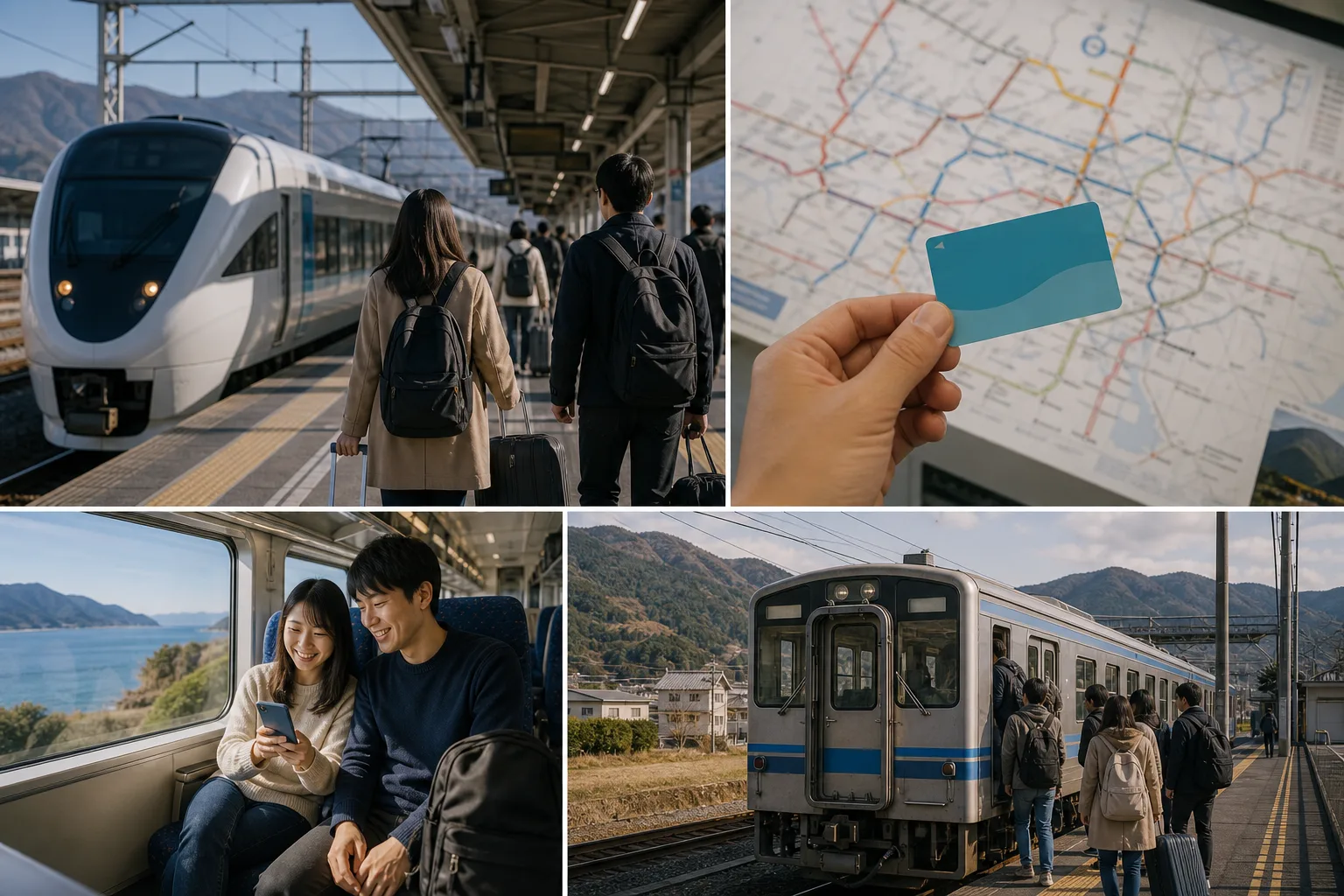
Japan's discount pass system makes a lot more sense once you stop thinking of it as one product and start treating it as a menu. The national JR Pass, regional JR passes, and private-rail passes like Kintetsu's are built for different trip shapes. If your itinerary is long-haul and rail-heavy, one pass can simplify everything. If your plan is focused on one region, a smaller pass often saves more money and hassle.
How Japan's Discount Pass System Works
The key idea is simple: Japan's rail discounts are not one-size-fits-all. National passes cover broad networks but come with restrictions and a higher upfront cost. Regional passes are cheaper and often better for travelers staying within one part of the country. Private operators also sell their own passes for the routes they control, which is where products like the Kintetsu Rail Pass become genuinely useful.
The best Japan pass is the one that matches your route, not the one with the biggest name. Use a national JR pass only when your long-distance JR rides add up. Use a regional or private-rail pass when you are staying inside one corridor or sightseeing area. For many short trips, point-to-point tickets plus an IC card are still the cheapest option.
The first mistake travelers make is assuming a pass automatically saves money. It does not. A pass only works if your route pattern fits the pass's coverage, validity window, and transfer rules. The second mistake is treating passes like all-day transit cards. They are usually designed around consecutive days, designated zones, and specific train categories. The third mistake is ignoring the split between JR lines and private railways. That split matters a lot in cities like Kyoto, Osaka, Nara, Nagoya, and Ise-Shima.
In practice, you should evaluate passes in this order:
- Map the cities and sightseeing areas you actually want to visit.
- Identify which operator runs the useful lines in those areas.
- Check whether the pass covers the exact train types you plan to use.
- Compare the pass price against the sum of point-to-point fares plus any required limited express supplements.
- Only then decide whether the pass is worth it.
That process sounds tedious, but it is faster than buying the wrong pass and discovering that your "unlimited" ticket does not include the fastest train, the specific bus you need, or the station you're actually using.
JR Pass vs Regional Passes
The Japan Rail Pass is the best-known option because it covers travel across the JR Group network nationwide. The official product currently comes in six types: 7, 14, or 21 days, each available for Green Car or Standard Car use. As of the official 2026 pricing page, the Standard Car adult prices are 50,000 yen, 80,000 yen, and 100,000 yen, while the Green Car adult prices are 70,000 yen, 110,000 yen, and 140,000 yen. Child pricing is roughly half.
That pricing structure tells you a lot. The JR Pass is no longer the casual default for every tourist. It is a deliberate purchase for travelers who will make enough JR intercity trips to justify the upfront cost. If your itinerary is Tokyo, Kyoto, Osaka, and Hiroshima in one sweep, the pass may still make sense. If you are mostly staying in Kansai with a day trip or two, a regional or private pass may be the smarter buy.
The JR Pass also has rules that matter in real travel:
- Reserved seats can be booked in advance only when you purchase on the official website.
- Seat reservations do not cost extra.
- The pass is not valid on Nozomi and Mizuho trains, although special tickets can be purchased for those services.
- Ticket office and reserved-seat machine hours vary by station, but the official maximum listed hours are 4:00 a.m. to 11:30 p.m. Japan local time.
That last point is useful because many travelers arrive late, connect through major hubs, and assume they can sort everything out anywhere at any time. You usually can, but not always in the exact way you expect. If your itinerary depends on specific reserved seats, buy and reserve earlier rather than later.
The Nozomi and Mizuho rule is another practical filter. If you are planning a trip around the fastest Shinkansen services, the JR Pass alone is not enough. The official JR site now sells a special supplement ticket for JR Pass holders, with example prices such as Tokyo-Kyoto at 4,960 yen and Tokyo-Hiroshima at 6,500 yen. That does not make the JR Pass useless, but it does mean you need to account for the supplement when calculating total trip cost.
Regional JR passes can be better if your trip is geographically tight. A regional pass often works because it bundles the exact lines you need without paying for the whole country. For a traveler staying in Kansai, Chubu, or Kyushu, that can be a cleaner and cheaper solution than a national pass.
The travel logic is straightforward:
- Use a national JR Pass when your itinerary involves several long JR segments across multiple regions.
- Use a regional JR pass when your plan is concentrated in one region and the operator's network matches your sightseeing list.
- Skip a pass entirely when your rail usage is light or mostly urban.
Kintetsu Rail Pass in Practice
Kintetsu's pass system is a good example of why private-rail passes matter. Kintetsu serves Osaka, Nara, Kyoto, Nagoya, and Mie, which makes it especially useful for travelers whose trip centers on Kansai and the Ise-Shima area rather than on JR trunk lines.
The official Kintetsu Rail Pass lineup currently includes 1-day, 2-day, 5-day, and 5-day plus options. The adult prices on the official English site are:
- 1-day: 1,900 yen
- 2-day: 3,700 yen
- 5-day: 4,900 yen
- 5-day plus: 6,700 yen
Child pricing is also published, and children under six travel free. The pass is sold as a digital ticket that can be used immediately after online payment. That matters because it removes some of the friction that older paper passes used to create.
The coverage difference between the four versions is the real decision point:
- The 1-day pass is tuned to Osaka, Nara, and Kyoto, with Kintetsu zone coverage and selected Nara Kotsu bus routes.
- The 2-day pass expands to all of Osaka, Nara, and Kyoto prefectures, with more bus coverage.
- The 5-day pass reaches all Kintetsu lines plus the Iga Tetsudo line.
- The 5-day plus pass adds bus coverage in the Nara Kotsu, Mie Kotsu, and Toba "Kamome" bus networks within designated areas, which makes it the most flexible of the group for Ise-Shima travel.
The practical value of Kintetsu is that it is area-specific in a good way. If you are spending time in Nara, moving through Kyoto's southern approaches, or basing part of the trip around Osaka to Mie/Ise-Shima, Kintetsu can be more efficient than a national rail strategy. You are paying for the exact geography you need, not for the rest of Japan.
There are a few rules you should not miss:
- Kintetsu Rail Pass is exclusively for foreign visitors to Japan.
- You must carry your passport with you if asked.
- The pass is non-transferable.
- To ride Limited Express trains, you must buy a separate Limited Express ticket.
- To go outside the valid zone, you need an additional basic fare ticket.
- If you bought online or through a travel agent, refunds cannot be handled at a Kintetsu station ticket office.
- Digital use requires an internet-connected device, typically a smartphone.
The Limited Express rule is the one that surprises people most often. Kintetsu's network has extremely useful sightseeing services, but the pass itself does not automatically unlock them. If your itinerary relies on limited express comfort or speed, budget for the supplement in advance.
That does not make the pass weak. It just means you should think of Kintetsu as a zone pass first and a comfort pass second. When used correctly, it is one of the best examples of a focused regional pass in Japan.
Choosing the Right Pass for Your Route
The correct pass depends on how your trip is stitched together. Here is the simplest way to think about it.
If your route is long-distance and mixed across multiple JR regions, the national JR Pass can still be relevant. If your trip is centered on one region with a lot of local sightseeing, a regional JR pass or a private-rail pass is usually a better bet. If your route is built around one private network, that operator's own pass often gives the best value.
Examples help:
- Tokyo to Kyoto to Osaka to Hiroshima in one trip can justify a national JR Pass if your intercity train usage is high enough.
- Osaka, Nara, and Kyoto over two to three days is often a better fit for a Kintetsu pass than for a national pass.
- Osaka to Nara with one or two day trips can sometimes be cheaper with a 1-day or 2-day private pass plus one or two point-to-point tickets.
- A slow trip with long museum days and lots of walking may not need a rail pass at all.
The point is not to hunt for the biggest discount. The point is to match the pass to your movement pattern. A pass with excellent coverage can still be a poor buy if you only make two rail trips. A smaller pass can be perfect if it covers the exact neighborhood you are exploring.
For Singapore-based readers planning Japan, the most common pattern is a short but efficient route: arrive in Tokyo, move once or twice by Shinkansen or limited express, then spend several days in one region. That kind of trip often favors a hybrid strategy. Buy a national or intercity pass only if the long-haul segment is truly doing work. Use area passes, IC cards, and direct tickets for the rest.
The hybrid strategy usually looks like this:
- Long-haul intercity travel: pass or point-to-point, depending on distance.
- Urban movement: IC card.
- Focused sightseeing corridors: regional or private pass.
- Premium express or fast-train supplements: only when required.
That mix keeps you from overpaying for unused coverage.
Practical Guide
Prices, Availability, and Booking
Current official pricing matters because Japan's pass landscape changes. The JR Pass prices on the official site are:
- Standard Car, 7 days: 50,000 yen adult, 25,000 yen child
- Standard Car, 14 days: 80,000 yen adult, 40,000 yen child
- Standard Car, 21 days: 100,000 yen adult, 50,000 yen child
- Green Car, 7 days: 70,000 yen adult, 35,000 yen child
- Green Car, 14 days: 110,000 yen adult, 55,000 yen child
- Green Car, 21 days: 140,000 yen adult, 70,000 yen child
Kintetsu's current English-site prices are:
- 1-day: 1,900 yen adult, 950 yen child
- 2-day: 3,700 yen adult, 1,850 yen child
- 5-day: 4,900 yen adult, 2,450 yen child
- 5-day plus: 6,700 yen adult, 3,350 yen child
Those numbers are not the whole story. You still need to compare them against your actual route, because one expensive train ride can erase the benefit of a pass. But they are enough to frame the decision.
Availability also matters. The JR Pass official site says online purchase is the easiest option and that online purchase is the only way to book reserved seats before pickup. Kintetsu's passes are digital and can be used immediately after online payment. In other words, the booking experience is moving toward digital for both products, but the exact flow still differs by operator.
How to Get There
The "how to get there" question depends on what you are riding.
For JR Pass users:
- Use major JR stations and ticket offices when you need pickup or assistance.
- Use reserved-seat ticket machines where available if you do not want to queue.
- Confirm whether your station supports the service before arrival.
For Kintetsu users:
- Purchase the digital ticket online.
- Use gates that accept digital tickets and Tap to Ride.
- If a station or gate does not accept digital tickets, show your ticket to station staff.
- Keep your passport handy because the pass is for foreign visitors and proof may be requested.
If you are traveling with luggage, the JR Pass rules for oversized baggage matter on Shinkansen routes. The official guidance notes that baggage with total dimensions of 160 cm to 250 cm on Tokaido, Sanyo, or Kyushu Shinkansen routes requires a seat reservation with an oversized baggage area. That rule is easy to miss when you are focused on fares instead of bags.
When a Pass Is Worth It
There are three strong signs that a pass is worth considering:
- You will make several medium-to-long rail trips in a short window.
- Your route stays inside one operator's network or one family of connected networks.
- You would otherwise pay for multiple expensive reserved or limited-express trips.
There are also three signs that you should probably skip the pass:
- Most of your movement is within one city.
- You only have one or two intercity rides.
- You are uncertain about dates and train times, which makes consecutive-day validity harder to use efficiently.
For many travelers, the strongest pass use case is a three-part trip: city arrival, regional sightseeing, and one long intercity transfer. If the pass covers the transfer and the sightseeing days cleanly, it can make sense. If not, individual tickets are often cheaper and easier.
Tips & Common Mistakes
The best advice is not the advice that sounds smart; it is the advice that saves you money or avoids a broken itinerary.
First, do not buy a national pass just because the brand is familiar. The JR Pass is famous, but fame does not equal value. Your route does.
Second, do not ignore private-rail passes. Kintetsu is a perfect example. Many travelers stay in Osaka, Kyoto, and Nara, then assume a JR-centric plan is the default. In reality, Kintetsu often goes where you want to go more directly or more cheaply.
Third, never forget supplement tickets. JR Pass users may need Nozomi or Mizuho supplements. Kintetsu Pass users need Limited Express tickets. A pass without the supplement can still be useful, but only if you understand the train you are actually boarding.
Fourth, watch your validity window. Consecutive-day passes are best when you have a dense travel block. They are worse when you want to rest one day, switch plans, or remain flexible. If your itinerary is loose, a pass can become a rushed obligation.
Fifth, use passes for the high-value segments and IC cards for the low-value ones. That hybrid model is often the real money saver. Passes are good at expensive or repetitive movement. IC cards are good at ordinary city transport and spontaneous detours.
Sixth, think in terms of geography, not operator branding. A lot of travel advice starts with "JR is the main rail company." True, but not always useful. In Kansai and surrounding areas, the useful question is which railway network reaches your destination most cleanly. Kintetsu, JR, and other private lines can each be the right answer in different parts of the same trip.
Seventh, do not buy a pass before you understand your arrival day. If you land late, have airport transfer uncertainty, or arrive with jet lag, your first pass day may be wasted. Starting the pass on your first true sightseeing day often gives better value.
Eighth, if you are using digital tickets, make sure your phone is ready. That means battery, data, and access to the ticket screen when you need it. A digital pass is only convenient if you can display it at the gate.
FAQ
Is the Japan Rail Pass still worth it in 2026?
Sometimes, but not automatically. The JR Pass is worth it when your route uses enough JR intercity travel to offset the upfront cost. The current official prices are high enough that many short or regional itineraries no longer justify it. If your trip is mostly one region, a regional or private pass can be better.
Can I use the JR Pass on Nozomi or Mizuho trains?
Not with the pass alone. The official JR site says those trains are not covered by the pass, but special tickets can be purchased for JR Pass holders. If speed matters, budget for the supplement before you build your itinerary.
Do Kintetsu Rail Passes include Limited Express trains?
No. The Kintetsu Rail Pass covers the designated zones and, depending on the version, some bus routes, but Limited Express use requires a separate Limited Express ticket. That is the main caveat to remember when comparing Kintetsu against JR products.
Which Kintetsu pass is best for Nara and Kyoto?
Usually the 1-day or 2-day pass is the first place to look. The 1-day pass is designed around Osaka, Nara, and Kyoto. The 2-day pass expands the zone and gives you more flexibility if you are combining temples, museums, and day trips. If your plan includes more of Kintetsu's wider network, the 5-day versions are worth comparing.
Should I use a pass for short city trips?
Usually not. City travel is often cheaper with an IC card, especially if you are not making repeated long-distance journeys. Passes shine when you have several expensive rides inside the validity window.
Conclusion
Japan's discount pass system works best when you stop asking, "Which pass is the best?" and start asking, "Which network matches my actual route?" The JR Pass is still useful for the right long-distance itinerary. Regional passes can outperform it when your travel stays local. Kintetsu's passes are especially strong for Kansai, Nara, Kyoto, Osaka, and Mie-based sightseeing.
The safest decision process is still the same: map your route, identify the operator, compare the pass against real fares, and remember the supplements. If the math works, the pass makes travel smoother. If it does not, you are usually better off with a mix of IC card fares and targeted point-to-point tickets.
For broader trip budgeting and logistics, the two most useful companion resources are How to Travel Japan on a Budget: Cheap Eats, Transport & Stays and Japan Travel Planning: Visa, IC Card, Rail Pass & Essential Logistics Guide.