Autumn Leaves Korea 2026: Peak Foliage Forecast and Best Spots

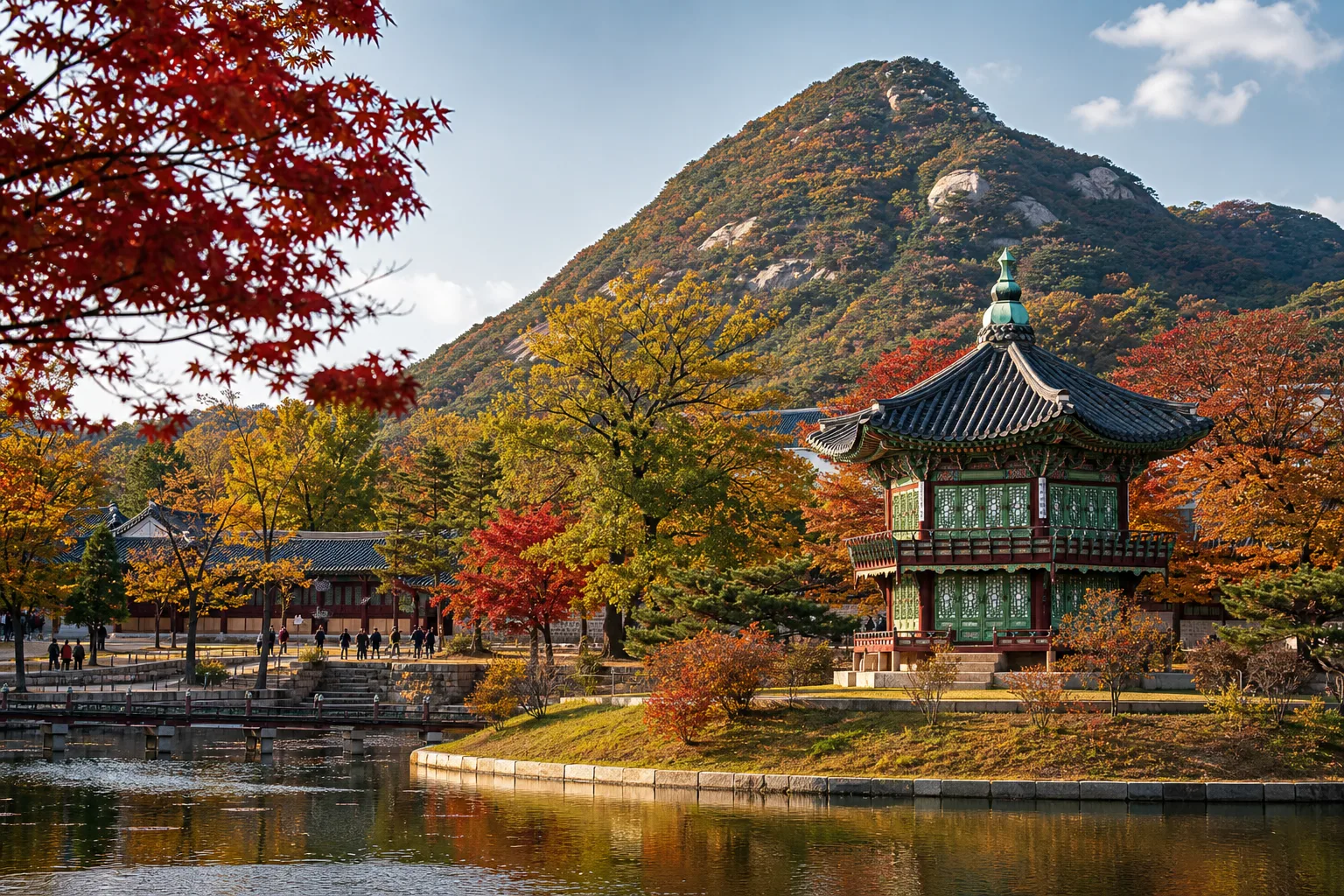
October and early November are the core autumn-leaves window in Korea, but the best week depends on where you are going. Northern mountains usually turn first, Seoul follows, and the southern provinces finish last. If you want red maples, yellow ginkgo trees, and fewer regrets, the trick is to plan by region, not by one national date.
2026 Korea autumn foliage forecast: how to read the season
The safest way to plan Korea autumn travel in 2026 is to treat the foliage season as a moving north-to-south wave. High mountains in Gangwon-do often peak first, central Seoul and the surrounding metro area follow in late October, and the southern parks can stay colorful into early November.
What drives the timing
Autumn color in Korea shifts with altitude, latitude, and the weather pattern in late September and October. A cold snap can push color forward by several days. A warm spell can slow things down. Heavy rain and wind can also shorten the best viewing window, especially in exposed mountain ridges.
For practical planning, think in three bands:
- Late September to early October: high-elevation parks and northern mountain ridges.
- Mid to late October: Seoul, central Korea, and most popular day-trip foliage spots.
- Late October to early November: southern Korea, inland valleys, and lower-elevation scenic areas.
That means you should not wait for a single “peak day” if you are building a serious trip. Pick a region, then book your transport and hotel around the likely 7- to 14-day sweet spot. If you are coming from abroad, the smart move is to leave one flex day in case the weather shifts.
How to use the forecast in 2026
As of mid-2026, the exact day-by-day foliage forecast for this autumn will only become reliable closer to the season. That is normal. What matters now is choosing destinations that fit the part of October you can actually travel. If your dates are fixed, choose spots that are statistically stable for that week rather than chasing the “most famous” mountain.
If your trip is in the first half of October, lean toward higher elevations and early-turning northern scenery. If your trip is in the second half of October, Seoul and central Korea become much safer bets. If you are traveling in late October or early November, the southern parks and temple valleys usually hold color better than the capital.
For a broader month-by-month view of how Korea changes through the year, see Korea Seasonal Travel Guide: Best Time to Visit by Month.
Best spots for autumn leaves in Korea
If you only care about where the colors are strongest, this is the shortlist that consistently makes sense for first-time visitors. The best spots depend on whether you want a classic hike, an easy scenic walk, or a full-day trip from Seoul.
Seoraksan for the earliest mountain color
Seoraksan is one of the most reliable early foliage bets in Korea because it gives you altitude, cliffs, valleys, and a dramatic mountain profile. It is a good choice if you are visiting in late September or early October and want the season to feel unmistakably autumnal, not just slightly yellow.
The upside is visual impact. The downside is crowds. Seoraksan is famous, which means weekends can be busy and the easiest viewpoints can feel congested. If you want the classic photo experience, go early in the day and avoid trying to “wing it” on a holiday weekend.
Naejangsan for the postcard autumn trip
Naejangsan is the destination many travelers imagine when they picture Korea in peak foliage: red maple tunnels, temple scenery, and a mountain setting that looks designed for autumn postcards. It usually belongs in the later part of October or early November planning window.
This is the place to choose if your priority is pure fall color rather than a long technical hike. It works well for travelers who want a more polished day-trip experience, especially if they value scenic walkways, temple views, and photogenic approach roads.
Bukhansan for Seoul travelers who want foliage without leaving the city
Bukhansan is the easiest way to get real mountain autumn color without leaving Seoul. It is the right answer for travelers who want a meaningful hike, quick access by subway or bus, and a day that still leaves time for dinner in the city.
If you want trail-level detail, route choices, and the tradeoffs between the main access points, use Hiking Bukhansan National Park: Top Trails Near Seoul. That guide pairs well with this article because Bukhansan is less about leaf forecasting and more about picking the right trail for your energy level.
Jirisan for long, atmospheric foliage days
Jirisan is not the easiest first choice for a short Korea trip, but it is excellent if you want a bigger landscape and a more layered autumn feel. The park is large enough that you can build a full day around it, and the mountain valleys give you a longer seasonal window than some of the flashier north-side destinations.
Jirisan is the better option for travelers who like hiking, slower pacing, and a trip that feels more local than headline-driven. It is also useful when Seoul is already at peak crowd levels and you want a quieter, more deliberate fall trip.
Odaesan and temple-adjacent scenery
Odaesan works well for travelers who want a mix of forest color, quieter roads, and temple scenery. It is often overlooked because it is not as instantly famous as Seoraksan or Naejangsan, but that can be an advantage if you want a less crowded autumn day.
If your idea of a good leaf trip includes crisp air, forest roads, and a slower pace, Odaesan deserves a look. It is especially appealing for photographers and travelers who do not want to spend the whole day fighting crowds for one viewpoint.
Easy Seoul color beyond the mountains
Not every autumn-leaf trip needs a summit. Seoul has excellent easy-access color at palaces, parks, riverside paths, and ginkgo-lined streets. These are ideal if you are traveling with children, older family members, or anyone who prefers flat walking paths over steep climbs.
This matters because a lot of first-time travelers overestimate how much hiking they will want to do after a flight, a transit transfer, or a full sightseeing day. A balanced trip often mixes one mountain day with one or two easy urban foliage walks.
How to build the trip around the forecast
The best Korea autumn itinerary is the one that matches your fixed dates instead of forcing your dates to match a single famous destination. If you can be flexible, plan for two foliage windows: one early and one late. If you cannot, choose a region that naturally peaks during your visit.
If you have 3 to 4 days
Stay in Seoul and pick one mountain day trip plus one easy city foliage day. That gives you enough weather flexibility to move things around if the forecast changes. This is the most efficient option for travelers who are combining autumn leaves with shopping, food, and museums.
If you have 5 to 7 days
Add a second region. A strong pattern is Seoul plus Gangwon-do, or Seoul plus a southwestern foliage destination. That way you can absorb weather risk and still catch a good color window somewhere even if one destination peaks a little early or late.
If you have 8 to 10 days
You can build a route that follows the season southward. Start in the mountains, then work your way into Seoul and central Korea, then finish in a southern foliage region. For a broader first-timer framework that helps you place autumn leaves inside a full-country trip, The Ultimate 10-Day South Korea Itinerary for First-Timers is the most useful companion piece.
The best trip logic by traveler type
- First-time visitor: prioritize Seoul plus one major day-trip foliage spot.
- Returning visitor: choose one early peak mountain and one late peak valley.
- Photographer: build around sunrise light, empty trails, and weekday timing.
- Family traveler: prefer easy walks, shuttle access, and minimal transfer friction.
- Hiker: choose altitude-driven spots first, then worry about leaf color by week.
This is also where your transportation choices matter. If you are trying to see foliage efficiently, do not waste half a day on a poorly timed intercity transfer. It is often better to stay one night near the foliage region than to force a same-day round trip back to Seoul.
Practical Guide
The basics are simpler than many autumn guides make them sound. Most leaf-viewing spots do not require special “foliage tickets.” What you usually pay for is transport, parking, cable cars, temple grounds, local shuttles, or nearby activities. In other words, the mountain may be free, but the convenience is not.
Hours / Admission / Prices
For most Korean national parks, there is no general admission charge for simply entering the park, but operating details can vary by area, trail, or facility. Parking fees, shuttle services, cable cars, and cultural sites near the park can all add to the final cost. If you are visiting a temple area or a landscaped garden, assume there may be a separate ticket.
Because 2026 schedules can change, confirm the exact hours before you go. This matters most for:
- cable cars and mountain transport
- temple opening and closing times
- park shuttle or special-season bus service
- holiday crowd controls and weekday-only services
The practical rule is simple: the best foliage days are often the busiest days, and the busiest days are the ones most likely to have parking pressure or transportation queues. If you are driving, arrive early. If you are not driving, leave more buffer than you think you need.
How to get there
From Seoul, the easiest foliage access is usually a combination of subway, express bus, train, or a pre-booked day tour. The right choice depends on whether the destination is a mountain park, a temple valley, or an easy urban walk.
Use this rough decision tree:
- Stay in Seoul and want flexibility: subway + taxi + hiking trail access.
- Going to a major mountain park: intercity bus, KTX, or a guided day tour.
- Traveling with family or heavy luggage: pre-booked transfer or tour.
- Visiting on a weekend or public holiday: reserve transport as early as possible.
For many visitors, the biggest mistake is assuming the last mile will be obvious once they arrive. It often is not. Korea’s autumn spots can have multiple gates, bus stops, visitor centers, and trailheads. Check the exact entry point before you leave the hotel, not after you reach the station.
Booking links if applicable
There is usually no need to book “autumn leaves” itself, but you may want to book the things around it:
- KTX or intercity bus tickets if your route depends on a fixed arrival time.
- Day tours if you want to bundle transport and a guide.
- Hotels near the foliage region if you are trying to catch sunrise or sunset.
- Shuttles or private transfers if you are traveling with a group.
If you do use a platform like Klook or MyRealTrip, compare the pickup point, return time, and cancellation terms before you pay. The cheapest option is not always the most efficient one once you factor in transfer time, queue time, and the cost of losing a half day to logistics.
The best booking strategy is to reserve the constraints first: transport, hotel, and any timed tickets. Then leave the actual leaf-watching flexible. Leaves do not respect your calendar, so the itinerary should absorb the uncertainty, not amplify it.
Tips & Common Mistakes
Most bad autumn trips come from a few predictable errors. The first is chasing the most famous destination without checking whether it matches your actual travel week. A late-September trip that is locked to a late-November peak location will disappoint you even if the destination itself is beautiful.
The second mistake is building a one-destination day with no backup plan. Korea weather can change quickly in autumn. If the mountain is foggy, a nearby temple or easy river walk may still be excellent. If the city is warm and leafy, the mountain may still not be fully turned. Good itineraries have an alternate scene.
The third mistake is underestimating crowd pressure. Autumn color is a national event in Korea. Parking fills, trailheads get busier, and popular viewpoints lose their calm early in the day. Weekdays are materially better than weekends, and sunrise departures are materially better than casual mid-morning starts.
The fourth mistake is ignoring footwear and layering. Autumn in Korea can feel mild at noon and cold by dusk, especially in mountain areas. Wear shoes you can walk in for several hours, bring a light wind layer, and carry water even on shorter hikes. Comfortable travelers see more color because they stay out longer.
The fifth mistake is treating urban foliage as a consolation prize. It is not. Seoul’s parks and tree-lined districts can be excellent, especially if your mountain plan gets derailed by weather or fatigue. A smart trip mixes one major foliage day with several lower-effort color stops.
One more thing most guides skip: the best autumn leaf photos are not always taken at the most famous overview. They are often taken on the approach road, at the trailhead, or in a quiet side path where the light is better and people are fewer. Build time for wandering, not just arriving.
FAQ
When is the best time to see autumn leaves in Korea in 2026?
For most travelers, late October is the safest target for Seoul and central Korea, while early October is stronger for higher mountains and late October into early November is better for the south. If you are choosing one flexible week, the middle and latter half of October is the most forgiving.
Is Seoul enough for an autumn leaves trip?
Yes, if you are short on time. Seoul can give you excellent color in parks, palace grounds, riverside paths, and nearby mountain access points. If this is your first Korea trip, Seoul plus one major foliage day trip is often the best balance of convenience and scenery.
Do I need a car to see the best autumn colors?
No. A car can help for some rural parks, but it is not required. Many of the best Korea autumn destinations are reachable by train, bus, subway, or day tour. In some cases, public transport is easier because parking pressure gets intense during peak foliage weekends.
Which destination is best for first-time visitors?
If you want the strongest single destination, Naejangsan is hard to beat for classic leaf scenery. If you want the most practical first-trip option, Seoul plus Bukhansan is usually easier. The right answer depends on whether you value iconic scenery or efficient logistics more.
What should I book first?
Book the things that are hardest to move: your flight, your hotel, and any long-distance transport. After that, keep the foliage day itself flexible. A one-day shift can make a big difference if the weather changes or if the peak window lands slightly earlier than expected.
Conclusion
Autumn leaves in Korea are not a single event. They are a sequence of regional peaks, and 2026 will be no different. If you plan by week, altitude, and region instead of by a vague “fall season” label, you will have a much better chance of landing in the right place at the right time.
Use the forecast like a route planner. Early October favors higher mountains. Late October is the safest bet for Seoul and central Korea. Early November can still be excellent in southern areas. Then choose the style of trip you actually want: a hard hike, a scenic day trip, or a relaxed city-and-mountain mix.
If you are still shaping the broader trip, pair this article with the monthly Korea travel guide, then use the 10-day first-timer itinerary to place foliage days inside a real route. If Seoul is your base, the Bukhansan hiking guide is the practical next step.