How do you spend half a day in Seongsu-dong, Seoul's factory-turned-cafe district?

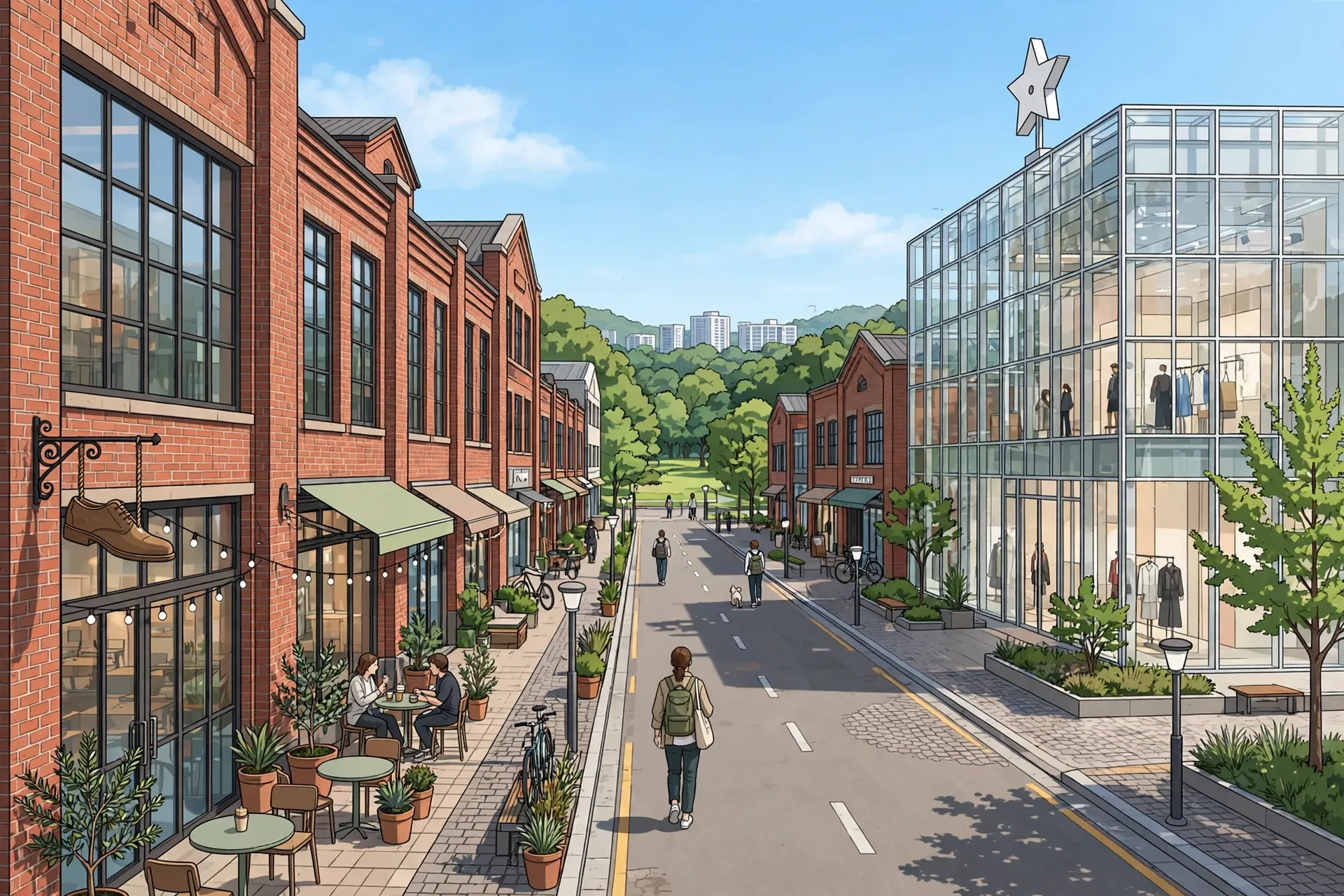
Seongsu-dong was a district of shoe factories and print shops. The factories are mostly gone, but the red-brick buildings stayed, and they now hold cafes, galleries, fashion flagships, and pop-up stores. Visit Seoul calls Yeonmujang-gil the street where that history shows most clearly, and the district has picked up the nickname "Brooklyn of Seoul" — about 70% of Korea's handmade-shoe makers still work here.
The half day below follows one walking order. Take Subway Line 2 to Seongsu Station and leave by Exit 4 onto Yeonmujang-gil. See the flagships first, check the pop-ups, walk the handmade shoe street, sit down for coffee, and finish in Seoul Forest, the free park at the district's western end with a deer enclosure and a footbridge to the Han River. Go on a weekday late morning if you can: shops open around 11:00, weekend afternoons are the busiest, and several indoor gardens close on Mondays.
Getting there: Line 2 to Seongsu Station, Exit 4 for Yeonmujang-gil
Seongsu Station is on Line 2. Exit 4 puts you on Yeonmujang-gil, next to the pop-up stores and the flagships, so it is the exit to use first. Exit 1 is the one for the handmade shoe street, about 110 metres away — save it for later in the walk, when you loop back through the old factory lanes.
One warning about the station itself: Exit 3 of Seongsu Station is the busiest at peak times, so stick to Exit 4 on a weekend afternoon.
Seoul Forest has its own stations, so do not walk there from Seongsu Station. Use Ttukseom Station on Line 2, Exit 8, or Seoul Forest Station on the Suin-Bundang Line, Exit 3. Seoul Forest Station is about 240 metres from the park, a 2 to 5 minute walk; from Ttukseom Station Exit 8 it is about a 10-minute walk.
Yeonmujang-gil first: the flagships, Dior Seongsu and Haus Nowhere
Start at Dior Seongsu, at 7 Yeonmujang 5-gil, about four minutes from Seongsu Station Exit 4. It opens 11:00 to 20:00, 9 hours a day. Visits can be booked on Naver or registered at the door, and queues form on weekends, so go before midday if you want a short wait.
Next is Haus Nowhere, Gentle Monster's building on Ttukseom-ro. Entry is free and it opens 11:00 to 21:00. It is the district's most photographed interior, and it sets the tone for the rest of the street: old factory shell, brand flagship inside.
Two more big stores sit on the same walk. Olive Young N Seongsu, Olive Young's biggest experience store, drew 2.5 million visitors in its first year, from November 2024 to November 2025, and opens 10:00 to 22:00 daily — bring a passport for the tax refund. Free makeup sessions and personal-color consultations there need a reservation, with slots opening every Friday at 12:00. Musinsa Megastore Seongsu, the platform's largest store, opened in April 2026.
The pop-ups: how to check what is on and whether to book
Seongsu's pop-up stores rotate every few weeks, so no guide can list what is on when you visit. Recent pop-ups have included Fwee, HERA, Torriden, Coach, and Oreo, but the lineup changes constantly.
Check the brand's notice or search Instagram for #성수팝업 the week you go. The popular pop-ups are often reservation-only, so check before you walk over — a reserved slot is the difference between walking in and joining a line that does not move.
The handmade shoe street and the old factory lanes
The shoe street is the district's working history, not a museum. Seongsu-dong grew up as a district of shoe factories and print shops, and it is still home to about 70% of Korea's handmade-shoe makers. The workshops sit in red-brick buildings along the old factory lanes, and many of them sell directly from the shop.
Walk it slowly after the flagships. The lanes behind Yeonmujang-gil are where the factory past is still visible — low brick buildings, small workshops, and the occasional print shop — before the street turns back into cafes and galleries.
Cafes and salt bread: where to sit down
Most Seongsu shops open between 10:00 and 11:30 and close between 19:00 and 22:00, so a late-morning start lines up with the district waking up. The classic cafe stop is Daelim Warehouse, a 1970s rice mill turned gallery cafe on Seongsu's main street, open daily 11:00 to 22:00.
Salt bread is the district's signature bakery item, and the popular bakeries draw lines on weekend afternoons — weekday mornings are calmer, so time your cafe stop before the afternoon crowd if you want a seat. Expect to queue at the best-known bakeries on a Saturday; the wait is shorter on a weekday.
Seoul Forest: the deer, the footbridge, and the river
Seoul Forest covers about 48 hectares and opened on 18 June 2005. The park is free and open 24 hours, and it is the green finish to the half day — a complete change of pace after the shops.
Head for the Eco Forest, the section with the deer enclosure. It opens 05:30 to 21:30, 16 hours a day. Deer feed has not been sold since 2020, so the deer are for watching only — do not bring food for them.
From the park, the footbridge leads toward the Han River. It is the natural end of the walk: forest, river, and the city skyline in one view, with no ticket and no closing time to worry about.
When to go: weekday mornings, weekend crowds, and Monday closures
Go on a weekday late morning. Shops open around 11:00, the flagships are quietest before midday, and the salt-bread queues are shortest. Weekend afternoons are the busiest time in the district.
On Saturdays and Sundays, Seongdong-gu restricts cars on parts of Yeonmujang-gil from 14:00 to 18:00, which makes the street easier to walk. That pedestrian-hours window runs from 28 March to 29 November 2026 — check the district notice for later weekends, since the dates after 29 November 2026 had not been confirmed when this guide was written.
Mind the Monday closures. The Insect Botanical Garden and Butterfly Garden in Seoul Forest close on Mondays, and the Butterfly Garden is closed from November to April. Plan a Monday visit around the outdoor park and the shops, which stay open daily.
If your trip continues to Busan after Seoul, the seafood stop there is Jagalchi Market — see our Jagalchi Market seafood guide for the plan.